



The Sites of Battles of Latvian and Lithuanian National Partisans – the Forest Brothers
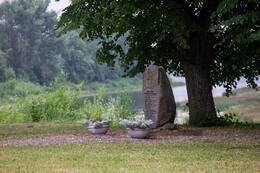
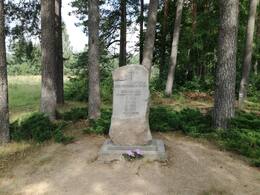
Memorial stone to Rihards Pārups' national partisan group
Located on Riga Street near the Krustpils Lutheran Church.
On September 22, 1996, a memorial stone was unveiled in Krustpils to Rihards Pārups and the national partisan group he led. The memorial stone was created by sculptor Ilgvars Mozulāns, and its creation was financially supported by the Speaker of the Saeima, Ilga Kreituse. This event was organized by the board of the Latvian National Partisan Association.
To the national partisans of Rihards Pārup,
who were murdered by a Cheka special group
Richard Parups (1914 – 2nd July 1946)
Group commander
Richard Stulpins (1923 – 1946. 2. VII)
Alberts Avotiņš (1912 – 2 July 1946)
Erik Juhna (1928 - 2 July 1946)
Aleksandrs Lācis (1919 – 2 July 1946)
Peter the Bear (1921 – 1946, 2nd July)
Jānis Ēvalds Zālītis (Āboliņš) (1911 – 1946, 2nd July)
Siegfried Bimstein, Theodore Schmidt (… – 2 July 1946)
Uldis Šmits (... - 1946. 2. VII)
Peter Lazdans (1926 – 1947)
Erik Konval (1929 – 1947. VI)
Niklāss Ošiņš (1908 – 12 October 1954) – executed in Riga
Alberts ħiķauka (1911 – 1972 II) – imprisoned in the Mordovian camp
Rihards Pārups was born on June 11, 1914 in “Kaķīši” of Krustpils parish. During World War II, he was a sergeant of the anti-tank division of the 15th Latvian division. He participated in national partisan operations in the Jēkabpils and Madona areas and was a member of the National Resistance Movement, the leader of a unit in the Jēkabpils and Madona areas. Rihards Pārups fell in battle with Cheka troops on July 2, 1946 in Vietalva parish. Unfortunately, the place of burial is unknown. A memorial plaque has been installed in the Riga Brothers' Cemetery. In the autumn of 1945, a national partisan group was formed in Jēkabpils district, led by R. Pārups. During its short existence, it participated in more than twenty armed clashes with units of the then Ministry of the Interior. The report of the Cheka Colonel Kotov to the Riga leadership states that the activities of the Soviet government in the Jēkabpils and Madona districts were effectively paralyzed during this time as a result of the group's activities. The national partisans led by R. Pārup found and destroyed several lists of deportations, thus saving the lives of many people. The leadership of the Security Committee, unable to destroy the national partisan unit in open battle, infiltrated it with four people from the Cheka special group, who shot ten partisans of the unit, including R. Pārup. In 1947, two more were shot near Jaunkalsnava, and in 1951 — one member of this unit. After twenty-five years of hard labor in a Mordovian camp, the fourteenth partisan of the group led by R. Pārup died a few days before liberation.
Memorial site to the members of the P. Prauliņš national partisan group and the site of the bunker
Pēteris Prauliņš (1911-1949) Birži parish national partisan group was part of the group led by Mārtiņš Pokļevinskis (1902-1951). The group carried out several partisan actions, in which Soviet collaborators were punished and food and property of the economic institutions of the occupation authorities were requisitioned. P. Prauliņš's group partisans did not observe sufficient conspiracy, many persons visited their settlement, which created an opportunity for betrayal. The lack of military experience was one of the shortcomings of the partisan armed movement.
P. Prauliņš's partisan group in the Kalna forest in the Birži parish was destroyed on May 16, 1949, during an operation by the Ministry of State Security of the Latvian SSR, in which military units also participated. The forest brothers had set up a bunker with perimeter defense, which was well camouflaged and was located at an undetermined height in a swampy area. The partisans fiercely resisted the Cheka troops for at least 40 minutes, but the entire group fell: Pēteris Prauliņš, Artūrs Bružuks, Jānis Kalvāns, Edvīns Slikšāns and Francis Skromanis. The shot forest brothers were thrown near the parish house, but their remains were later buried in nearby gravel pits. Irma Bružuka was seriously wounded, who was captured and died on May 17 in Jēkabpils Hospital. She was buried outside the cemetery, but when the cemetery was expanded after Latvia regained its independence, a monument was placed on her grave.
A memorial stone to the partisans of P. Prauliņš' group in Kalna parish was consecrated in November 1998. The site of P. Prauliņš' bunker is located in section 4 of Vidsala 99th block, Kalna parish. The stone on which P. Prauliņš sat has been preserved.
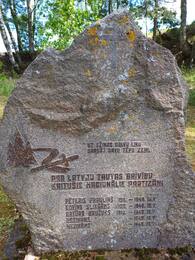
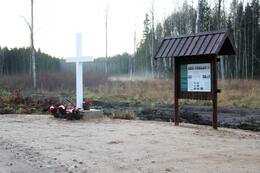
Atminimo vieta 1945 m. vasario 13 d. nacionalinių partizanų mūšio vietoje Kalnos parapijos Deimantų miške
Memorialinė vieta buvo sukurta rajoniniame kelyje P74 Siliņi – Aknīste, 12 kilometrų nuo Aknīstės, pasukus į Latvijos valstybinį mišką „Žagari kelias“.
Jau 1944 m. vasaros pabaigoje didžiulis Elkškių valsčiaus šiaurinės dalies miškų masyvas tapo žmonių, besiruošiančių ginkluotai kovai su sovietų okupacine valdžia, susibūrimo vieta. 1944 m. pabaigoje Aknystės apylinkėse pradėjo kurtis nacionalinių partizanų grupės. Tinkama vieta partizanų stovyklai įkurti buvo Deimantinis miškas , esantis Elkškių didžiojo miško pietiniame pakraštyje, netoli Aknystės Didžiosios pelkės. Ten, mažiau nei 10 kilometrų nuo Aknystės valsčiaus, nacionaliniai partizanai įrengė tris žiemos bunkerius žiemojimui. Miške susirinkusių vyrų susisiekimas buvo užtikrinamas padedant netoliese esančių namų – Baltimorės, Gargrodžių, Lyčių, Priedžių, Krūmų – ir kitų namų gyventojams, kaimynams bei partizanams.
Partizanų mūšis su Latvijos SSR Valstybės saugumo ministerijos kareiviais Deimantų miške įvyko 1945 m. vasario 13 d. Čekistai, paėmę įkaitus, juos nustūmė į priekį, kad atidengtų partizanų bunkerius. Miško broliai, pamatę pavojų, atidengė ugnį, negailėdami įkaitų. Mūšyje žuvo 10 sovietų okupacinių kariuomenės atstovų, aštuoni nacionaliniai partizanai ir keturi įkaitai. Nepaisant miško brolių nuostolių, čekistams nepavyko užimti partizanų bunkerių. Išlikę partizanai palaukė sutemų ir paliko gyvenvietę. Mūšyje sužeisti čekistų kareiviai, dejuodami, negalėjo palikti mūšio lauko. Po šio mūšio, kurį galima laikyti pirmuoju miško brolių „kovos krikštu“, partizanai jautėsi kaip broliai, o šautuvas atrodė brangesnis už viską, kaip vienintelis patikimas gelbėtojas.
Baltasis kryžius ir informacinis stendas Deimantų miške buvo įrengti Lačplėsio dieną – 2022 m. lapkričio 11 d. Atminimo vietos sukūrimą parėmė Jekabpilio regioninė valdžia, asociacija „Tēvzemes sargi“ ir Latvijos valstybiniai miškai. Informacinio stendo turinio autorius yra istorikas Haraldas Bruņinieksas.
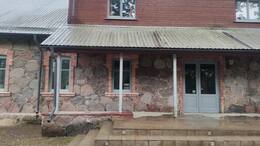
Бывший приходской дом в Сусейе, место нападения национальных партизан 7 июля 1945 года
Сегодня в бывшем здании прихода Сусейя располагается жилой центр Сан-Суси. На фасаде здания до сих пор сохранились следы от пуль, выпущенных национальными партизанами во время нападения 7 июля 1945 года.
Бывший дом Сусейского прихода, в котором в то время располагался местный исполнительный комитет советских оккупационных властей, 7 июля 1945 года подвергся нападению со стороны национальных партизан «Селии». Нападение на Сусейский исполнительный комитет было частью более широкой национальной партизанской кампании и произошло одновременно с нападениями на Вилкупский маслозавод и дом эсминца «Каунацкас».
Согласно заданию командира Сусейского национального партизанского отряда Альберта Каминскиса (1920–1946), лесные братья должны были уничтожить охрану местного исполнительного комитета, захватить оружие, форму милиции, документы и повредить телефонную связь. В нападении на Сусейский исполнительный комитет участвовало около 17 лесных братьев под руководством командира литовского партизанского отряда Йозаса Кувейкиса. Бой продолжался 15–20 минут, в ходе перестрелки погиб один литовский партизан, а с другой стороны – боец истребительного батальона Янис Какаранс. В ходе перестрелки были разбиты окна исполнительного комитета и поврежден телефон.
Второе нападение на Сусейский исполнительный комитет произошло 16 июля 1945 года, когда завязалась продолжительная перестрелка между «лесными братьями» и бойцами истребительного батальона, укрывшимися в здании исполнительного комитета. В ходе боя на помощь последним пришла группа советских солдат, которые открыли пулемётный огонь с фланга и вынудили партизан отступить. В бою погибло не менее пяти «лесных братьев» и пяти истребителей. Нападения на этот административный объект оккупационной власти подтвердили характер вооружённого сопротивления партизанской войны и стали предостережением о сопротивлении народа советской оккупационной власти.
Памятник Национальным партизанам Сусеи
Национальный партизанский отряд «Сусея» был сформирован из более мелких разрозненных групп лесных братств, поскольку поначалу не было лидера, способного их объединить. Некоторое время координировать действия партизан «Сусея» пытался Артурс Грабеклис, а позднее Маркейс Горовнёвс, павший зимой 1945 года. Национальный партизанский отряд «Сусея» был усилен после прибытия в Курляндию, на Селию, после общей капитуляции Германии бывшего легионера Альбертса Каминскиса. Он установил более строгую дисциплину и объединил более мелкие группы для совместной борьбы с советской оккупационной властью. Было также налажено сотрудничество с группами лесных братств из соседних волостей и районов, особенно с отрядом Гарсене и литовскими партизанами, обосновавшимися на границе Литвы и Латвии.
На ранних этапах вооружённого движения было очевидно, что «Лесные братья» не были готовы к нападению, не сумев занять ни хутор Каунацки, ни ворваться в здание Сусейского исполнительного комитета. Партизаны несли потери и не могли долго противостоять войскам ЧК, и основным методом борьбы было думать о своевременном отступлении. Также существовала проблема со снабжением партизан. Несмотря на трудности, национальное партизанское соединение «Сусея» всё ещё было способно активно противостоять советской оккупационной власти в первые послевоенные годы. Это партизанское формирование прекратило своё существование после падения его командира А. Каминскиса 14 мая 1946 года. За этим последовала легализация нескольких «Лесных братьев» и присоединение их к другим партизанским формированиям.
Памятник партизанам Сусейского отряда был открыт 11 ноября 1997 года по инициативе Гунарса Блузмаса, исследователя истории партизанского отряда Селии. Рядом с именами павших партизан Сусейского отряда на грубо обработанном камне под знаком креста высечен текст: «На голове ежа я повелел вам защищать отцовскую землю». В памятнике упоминаются павшие при нападении на Сусейский исполком 16 июля 1945 года - Янис Грабеклис (1923-1945), Адольф Раценис (1919-1945), Брониславс-Арвидс Бириньш (1919-1945) и Эдгарс Эрглис. (1920-1945), а позже были добавлены имена убитых Лины Каминской (1917-1945) и Альберта Каминскаса (1920-1946). В памятнике отсутствуют имена Арнольда Домбровскиса (1923-1945) и других национальных партизан, участвовавших в Сусейских национальных партизанских отрядах и павших в 1945-1946 годах.
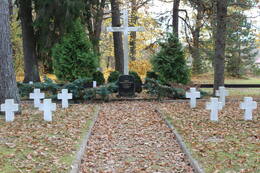
Cemeteries of the National Partisans of Sēlia
The Sēlija National Partisan Brothers Cemetery was opened on October 30, 2004 with the support of the Latvian Ministry of Defence and the Aknīste Municipality. The partisans who fell in the battle of December 19, 1949 in the Dimantu Forest of Kalna Parish are buried there: Alberts Karankevičs (1914-1949), Vilis Tunķels (1911-1949), Arnolds Tunķels (1926-1949), Osvalds Tunķels (1929-1949), Ēvalds Kundzāns (1927-1949).
In 2005, the partisans who fell in the battle of February 13, 1945 in the Elkšņi Forest were also reburied here: Juris Alfreds Voldemārs Lācis (1908-1945), Eduards Kaminskis (1910-1945), Osvalds Mežaraups (1911-1945), Alberts Mežaraups (1915-1945), Antons Bružiks (1911-1945), Jānis Britāns (1926-1945) and one unknown. The common cemetery also contains the remains of Marta Mežaraupe (1907-1945), Alberts Lācis (1902-1945), Juris Resnītis (1901-1945) and Pēteris Bite (1907-1945), who were taken hostage by the Soviet occupation authorities and fell during the battle, as well as Voldemārs Otto Sātnieks (1911-1950), a fallen partisan of the Indāns-Grāvelsons group. The Aknīste Brothers' Cemetery also houses a monument to Alfreds Silaraup (1925-1946), a national partisan of the Aknīste Company, who fell during a Cheka operation on July 30, 1946, on the narrow-gauge railway in the Elkšņu Forest.
At the foot of the White Cross erected at the Brothers' Cemetery of the National Partisans of Sēlija, a black granite stele with the emblem of the Latvian National Partisan Association and the text engraved below it, "To the National Partisans of Sēlija. You sacrificed your lives for Latvia in the fight against the communist occupation regime in 1944-1954." There is also a memorial stone in the cemetery with the inscription "There are tears that will be shed in silence. There are scars that will not heal when healed," which was erected by Stanislava Šadurska at the beginning of the Awakening near the pit where the Chekists buried the national partisans and hostages who had fallen the day before on February 14, 1955.
Partisan bunker and memorial cross in Plunksnotiai forest
Partisan Bunker and Memorial Cross can be found by turning off the regional road 3604 (Rokiškis-Maineivos- Naujasodė) between Juodupė and Žiobiškis in the direction of Plunksnočiai Forest.
In 1947, the partisans of the Gediminas Company of the Kunigaikštis Márgiris (King Márgiris) Unit, led by Juozas Bulavas- Iksas, were located in the Plunksnočiai forest stand. Until 1948, they did not have a permanent wintering place, so they took refuge with people who supported them. After World War II, Plunksnočiai Forest was a swampy area with a small mound in the middle of the swamp. In 1949, the partisans set up a hiding place there. However, they were betrayed by an infiltrated Russian security agent, who knew the location of the bunker. On 14 November 1949, after the partisans had fallen asleep, he threw antitank grenades into the bunker. Seven partisans died.
The partisan bunker has been restored and a memorial cross with the names of those who died there has been erected. Today, the surrounding forest is green and walkable. A monument and information signs have been erected in a small square a few dozen metres from the bunker, pursuant to the initiative of the Young Riflemen of Rokiškis.

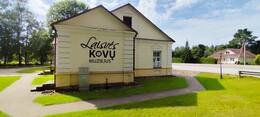
Museum of the History of Freedom Struggles in Obeliai
The Museum of the History of Freedom Fights is located on Vytauto Street, Obeliai (Obeliai-Zarasai road KK117) on the left side (a road sign is installed on the road).
Founded in 1998, the museum introduces the development of the Lithuanian state, the history of the Obeliai region and Lithuanian folk art. A large part of the exhibition is devoted to the theme of freedom fights.
The evidence of the freedom fights was collected and donated to the museum by a teacher and former partisan, Andriejus Dručkus (1928–2018).
In addition to the themes of Soviet repressions, deportations, the partisan war, the anti-Soviet resistance movement, and the rebirth of independence, which reflect the experiences of the Obeliai region, the museum also stands out due to its peculiar accents. The museum presents the history of the erection, destruction and restoration of the unique monument dedicated to the participants of the June 1941 uprising and the victims of Soviet terror. An overview of the Lithuanian defence system after 1990 is also provided, as well as uniforms of the Lithuanian Armed Forces and other services. The open-air exhibition of the museum has replicas of a Lithuanian partisan bunker and a Siberian barracks for deportees on display. The sites can be visited individually, and special educational programmes are also offered, which enable visitors to experience the everyday life of partisans and deportees to understand what it was like to live in a bunker or barracks.

Antazavė Battle Site and Partisan Dugout Shelter at Lake Vincežeris
The site can be accessed from the town of Antazavė by forest roads.
At the end of 1944, the Lokio Unit of Lithuanian partisans was formed in the area of Antazavė in north-eastern Lithuania. It was led by a former Lithuanian Army officer, Captain Mykolas Kazanas. The unit established five dugout shelters at Lake Vinčežeris, in the uplands of the dense spruce and pine forests of Antazavė.
On 26 December 1944 (27 December according to other sources), the Battle of Antazavė Forest took place here. It was one of the largest partisan battles in eastern Lithuania. The partisan camp was surrounded by Soviet Army units from Utena and Zarasai, as well as soldiers stationed in Antazavė Parish. After a day-long struggle, 85 partisans managed to break the siege and successfully retreated. One partisan died during the retreat.
Currently, two partisan dugouts have been built on the site of the partisan camp, and battle positions, a cross, a memorial plaque, and benches for visitors to the camp have been installed at the site. The partisans’ dugouts are outstanding in terms of their size – they are relatively large and massive underground structures and differed significantly from partisan bunkers that were later built in the forests of Lithuania.

Museum of the Battles for Freedom in Utena
The museum is located in Utena, near the junction of the Kaunas-Daugpilis (A6) and Vilnius-Utena (A14) trunk roads. The museum was established in 2015 at the former narrow gauge railway station building of Utena. The museum claims to be a form of poetry that tacitly exposes the post-war truth. The exhibition “A Common European Identity in the Context of Totalitarian Regimes” offers to explore the past of Lithuania and Europe through the history of one Lithuanian region. It tells the story of secret documents and the division of Europe in 1939, the Soviet occupation of Lithuania, the forced participation of Lithuanians in World War II, exile, post-war resistance and the organisation of collective farms in the Utena region. The painful events of 1940–1965 in the Utena region and the events in Lithuania are contrasted with life behind the Iron Curtain. The history of the narrow-gauge railway station also has tragic pages. From here, in 1941 and from 1945–1953, train cars with deportees were sent to Siberia.
Along the Trails of the Partisan Battles of the Algimantas Military District
Located in Šimonys Forest, along road No. 1216 (a sign and a stand have been installed). Šimonys Forest was known in the post-war Lithuanian partisan struggle as the centre of activity of the largest partisan unit in Aukštaitija, the Algimantas military district. Approximately 200 partisans were operating in the area in 1945, while by 1952, there were only 20–30. From 1947 to 1949, the Šimonys Forest was used by the commander of the East Lithuania (King Mindaugas) partisan territory, Captain Jonas Kimštas-Žalgiris, and in 1949, by the commander who took over from him, Antanas Starkus–Montė, as hiding places – command posts from which the partisan movement in Aukštaitija was coordinated. The route of the partisan battles of the Algimantas military district invites you to get acquainted with six partisan hideouts of the Algimantas military district, created by the partisans of the Žalioji, Šarūnas and Kunigaikštis Márgiris (King Márgiris) units, who hid and fought here. There are two walking routes of different lengths (5 and 10 km) in Šimonys Forest, which invite you to follow the paths of the partisans.

Ida-Leedu (kuningas Mindaugase) piirkonna Leedu partisanide juhtimispunkt
Pärast Andrioniškise kalmistust möödasõitu (seal on viit) jääb alles säilinud peidupaik – komandopunkt. Aastatel 1944–1949 tegutses selles peidupaigas Ida-Leedu (kuningas Mindaugase) piirkonna Leedu partisanide komandopunkt. 1944. aasta suvel rajas Balys Žukauskas koos vendade Petrase ja Juozas Jovaišosega peidupaiga, et pääseda Punaarmee poolt 1944. aastal välja kuulutatud mobilisatsioonist. 1945. aasta lõpus hakkas peidupaika kasutama Antanas Slučka-Šarūnas. Ta oli esimene, kes moodustas Troškūnai piirkonnas partisanide üksuse ning ühendas hiljem Rokiškise, Anykščiai, Kavarskase, Troškūnai ja Andrioniškise partisanid Šarūnase üksuseks. 1947. aastal sai A. SlučkaŠarūnas Algimantase rajooni ülemaks ja 1949. aastal Ida-Leedu partisanide piirkonna ülemaks. See tähendas, et alates 1949. aastast sai peidupaigast Ida-Leedu piirkonna Leedu partisanide juhtimispunkt. Peidupaik, mis oli viis aastat edukalt partisane varjanud, reedeti 28. oktoobril 1949. Talu, kus partisanid end varjasid, piirasid KGB väed sisse; partisanid keeldusid alistumast ja lasid end õhku.
Punker on säilitatud ning paigaldatud on langenute mälestuseks rist ja monument.

Algimantase sõjaväeringkonna partisanidele pühendatud monument
Monument asub Troškūnai kesklinnas Anykščiai rajoonis Püha Kolmainu kiriku lähedal. Aastatel 1944–1953 toimunud partisanisõja ajal oli Leedu territoorium jagatud üheksaks partisanide sõjaväepiirkonnaks. Aastatel 1947–1950 tegutsesid Panevėžysi ja Anykščiai piirkonnas Leedu Algimantase piirkonna partisaniüksused, mille loomine on tihedalt seotud Troškūnais. Selle linna elanikud organiseerisid partisaniüksusi Aukštaitias. Algimantase piirkonna esimene partisanide ülem Antanas Slučka-Šarūnas sündis ja elas Troškūnais.
1996. aastal püstitati Troškūnais Leedu Genotsiidi ja Vastupanu Uurimise Keskuse algatusel Algimantase sõjaväeringkonna partisanidele pühendatud monument. Monumendi autoriteks on skulptor Jonas Jagėla ja arhitekt Audronė Kiaušinienė. Monumendi põhiosa on must kivivärav, mis sümboliseerib langenud kodumaa kaitsjaid. Värava külgedel olevad pronksist ristid sümboliseerivad kristlikku usku, pronksist mõõk aga, nagu ka peaingel Miikaeli mõõk, usu ja lootuse valgust. Monumendi ees oleval väljakul mälestab must kivitahvel Algimantase piirkonna kolme üksust: Šarūnas, Žalioji ja Kunigaikštis Márgiris.
