



Läti ja Leedu rahvuspartisanide – metsavendade – lahingupaigad
Rihards Pārupsi rahvuspartisanide rühma mälestuskivi
Asub Riia tänaval Krustpilsi luteri kiriku lähedal.
22. septembril 1996 avati Krustpilsis mälestuskivi Rihards Pārupsile ja tema juhitud rahvuspartisanide rühmitusele. Mälestuskivi lõi skulptor Ilgvars Mozulāns ning selle loomist toetas rahaliselt Saeima esimees Ilga Kreituse. Ürituse korraldas Läti Rahvuspartisanide Ühingu juhatus.
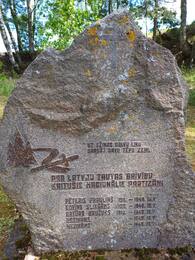
Rihards Pārupi rahvuspartisanidele,
kelle Tšekaa erirühm mõrvas
Richard Parups (1914 – 2. juuli 1946)
Rühmaülem
Richard Stulpins (1923 – 1946. veebruar 7)
Alberts Avotiņš (1912 – 2. juuli 1946)
Erik Juhna (1928 - 2. juuli 1946)
Aleksandrs Lācis (1919 – 2. juuli 1946)
Karu Peeter (1921 – 2. juuli 1946)
Jānis Ēvalds Zālītis (Āboliņš) (1911 – 1946, 2. juuli)
Siegfried Bimstein, Theodore Schmidt (… – 2. juuli 1946)
Uldis Šmits (... - 1946. 2. VII)
Peter Lazdans (1926–1947)
Erik Konval (1929 – 1947. VI)
Niklāss Ošiņš (1908 – 12. oktoober 1954) – hukati Riias
Alberts ħiķauka (1911–1972 II) – vangistatud Mordva laagris
Rihards Pārups sündis 11. juunil 1914 Krustpilsi kihelkonnas „Kaķīšis“. Teise maailmasõja ajal oli ta 15. Läti diviisi tankitõrjediviisi seersant. Ta osales rahvuslikes partisanide operatsioonides Jēkabpilsi ja Madona piirkonnas ning oli Rahvusliku Vastupanuliikumise liige, Jēkabpilsi ja Madona piirkonnas asuva üksuse juht. Rihards Pārups langes lahingus Tšekaa vägedega 2. juulil 1946 Vietalva kihelkonnas. Kahjuks on matmiskoht teadmata. Mälestustahvel on paigaldatud Riia Vendade kalmistule. 1945. aasta sügisel moodustati Jēkabpilsi rajoonis rahvuslik partisanide rühmitus, mida juhtis R. Pārups. Oma lühikese tegutsemisaja jooksul osales see enam kui kahekümnes relvastatud kokkupõrkes toonase siseministeeriumi üksustega. Tšekaa polkovnik Kotovi aruandes Riia juhtkonnale öeldakse, et Nõukogude valitsuse tegevus Jēkabpilsi ja Madona rajoonis oli sel ajal grupi tegevuse tagajärjel sisuliselt halvatud. R. Pārupi juhitud rahvuspartisanid leidsid ja hävitasid mitu küüditatute nimekirja, päästes sellega paljude inimeste elusid. Julgeolekukomitee juhtkond, suutmata rahvuspartisanide üksust avalikus lahingus hävitada, infiltreeris sinna neli Tšekaa erigrupi liiget, kes lasid maha üksuse kümme partisani, sealhulgas R. Pārupi. 1947. aastal lasti Jaunkalsnava lähedal maha veel kaks ja 1951. aastal üks selle üksuse liige. Pärast 25 aastat kestnud sunnitööd Mordva laagris suri R. Pārupi juhitud grupi neljateistkümnes partisan paar päeva enne vabanemist.
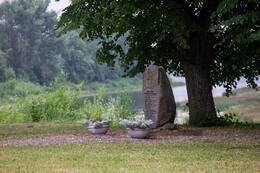
P. Prauliņši nimelise rahvuspartisanide rühmituse liikmete mälestuspaik ja punkri asukoht
Pēteris Prauliņši (1911–1949) Birži kihelkonna rahvuspartisanide rühmitus kuulus Mārtiņš Pokļevinskise (1902–1951) juhitud rühmitusse. Rühm viis läbi mitmeid partisaniaktsioone, mille käigus karistati Nõukogude kaastöölisi ning rekvireeriti okupatsioonivõimude majandusasutuste toitu ja vara. P. Prauliņši rühma partisanid ei järginud piisavalt vandenõu reetmist, paljud isikud külastasid nende asulat, mis lõi võimaluse reetmiseks. Sõjalise kogemuse puudumine oli üks partisaniliikumise puudusi.
P. Prauliņši partisanide rühm Birži kihelkonnas Kalna metsas hävitati 16. mail 1949 Läti NSV Riikliku Julgeoleku Ministeeriumi operatsiooni käigus, milles osalesid ka sõjaväeosad. Metsavennad olid rajanud perimeetrikaitsega punkri, mis oli hästi maskeeritud ja asus määramata kõrgusel soises piirkonnas. Partisanid osutasid Tšekaa vägedele vähemalt 40 minutit ägedat vastupanu, kuid kogu rühm langes: Pēteris Prauliņš, Artūrs Bružuks, Jānis Kalvāns, Edvīns Slikšāns ja Francis Skromanis. Maha lastud metsavennad visati kihelkonnamaja lähedale, kuid nende säilmed maeti hiljem lähedalasuvatesse kruusakarjääridesse. Irma Bružuka sai raskelt haavata, kes võeti vangi ja suri 17. mail Jēkabpilsi haiglas. Ta maeti kalmistu äärde, kuid kui kalmistut pärast Läti taasiseseisvumist laiendati, püstitati tema hauale monument.
Kalna kihelkonna P. Prauliņši grupi partisanide mälestuskivi pühitseti sisse 1998. aasta novembris. P. Prauliņši punkri asukoht asub Kalna kihelkonna Vidsala 99. kvartali 4. sektsioonis. Kivi, millel P. Prauliņš istus, on säilinud.
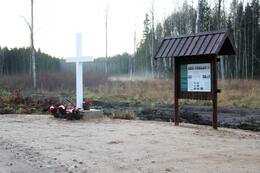
Mälestuspaik 13. veebruaril 1945 toimunud partisanide lahingu toimumiskohas Kalna valla Teemantmetsas
Mälestuspaik loodi piirkondliku maantee P74 Siliņi - Aknīste äärde, 12 kilomeetri kaugusel Aknīstest, keerates Läti riigimetsale "Žagari ceļa".
Elkšķi kihelkonna põhjaosa ulatuslik metsamassiiv sai juba 1944. aasta suve lõpus kogunemiskohaks inimestele, kes valmistusid relvastatud võitluseks Nõukogude okupatsioonivõimu vastu. 1944. aasta lõpus hakkasid Aknīste piirkonnas moodustuma rahvuspartisanide rühmitused. Sobivaks kohaks partisanide laagri rajamiseks oli Teemantmets , mis asus Elkšķi suure metsa lõunaservas Aknīste suure soo lähedal. Seal, vähem kui 10 kilomeetri kaugusel Aknīste kihelkonnast, rajasid rahvuspartisanid talvitumiseks kolm talvepunkrit. Metsas kogunenud meeste side tagati lähedalasuvate majade - Baltimore'i, Gargrodes'i, Līči, Priedes'i, Krūmi - ning teiste majade elanike, naabrite ja partisanide toetusel.
Partisanide lahing Läti NSV Riikliku Julgeoleku Ministeeriumi sõduritega Teemantmetsas toimus 13. veebruaril 1945. Tšekistid, olles pantvange võtnud, ajasid nad edasi, et paljastada partisanide punkrid. Metsavennad, nähes ohtu, avasid tule, pantvange säästmata. Lahingus langes 10 Nõukogude okupatsioonivägede esindajat, kaheksa rahvuspartisani ja neli pantvangi. Vaatamata metsavendade kaotustele ei õnnestunud tšekistidel partisanide punkreid vallutada. Ellujäänud partisanid ootasid pimedust ja lahkusid asulast. Lahingus haavata saanud tšekistlikud sõdurid ei suutnud oigates lahinguväljalt lahkuda. Pärast seda lahingut, mida võib pidada metsavendade esimeseks "lahinguristimiseks", tundsid partisanid end vendadena ja vintpüss tundus kõigest kallim, nagu ainus usaldusväärne päästja.
Valge Rist ja infostend Teemantmetsas paigaldati Lāčplēsise päeval - 11. novembril 2022. Mälestuspaiga loomist toetasid Jēkabpilsi piirkondlik valitsus, ühing "Tēvzemes sargi" ja Läti Riigimetsad. Infostendi sisu autor on ajaloolane Haralds Bruņinieks.
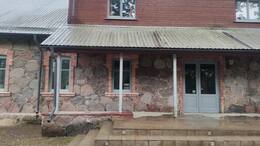
Endine Susēja kogudusemaja, rahvuspartisanide rünnaku koht 7. juulil 1945
Tänapäeval asub endises Susėja kogudusemajas Sanssouci elamukeskus. Hoone fassaadil on endiselt näha jälgi rünnakust, mille jätsid maha rahvuspartisanide poolt 7. juulil 1945 tulistatud kuulid.
Endine Susēja kogudusemaja, mis sel ajal toimis Nõukogude okupatsioonivõimude kohaliku täitevkomiteena, kannatas Sēlija rahvuspartisanide rünnaku all 7. juulil 1945. Rünnak Susēja täitevkomiteele oli osa laiemast rahvuspartisanide kampaaniast ja toimus samaaegselt rünnakutega Vilkupe võivabrikule ja hävitaja Kaunackase majale.
Susėja rahvuspartisanide grupi ülema Albert Kaminskise (1920–1946) juhiste kohaselt pidid metsavennad hävitama kohaliku täitevkomitee julgeoleku, võtma relvad, miilitsa vormiriietuse, dokumendid ja kahjustama telefonisidet. Susėja täitevkomitee rünnakus osales umbes 17 metsavenda Leedu partisanide ülema Jozas Kuveikise juhtimisel. Lahing kestis 15–20 minutit, tulevahetuse käigus langes üks Leedu partisan ja teisel pool hävituspataljoni Jānis Kakarānsi võitleja. Tulevahetuse käigus purunesid täitevkomitee aknad ja kahjustati telefoni.
Teine rünnak Susēja täitevkomiteele toimus 16. juulil 1945, kui toimus pikaajaline tulevahetus metsavendade ja täitevkomitee hoonesse varjunud hävituspataljoni võitlejate vahel. Lahingu käigus tuli viimastele appi rühm Nõukogude sõdureid, kes avasid küljelt kuulipildujatule ja sundisid partisanid taanduma. Lahingus langes vähemalt viis metsavenda ja viis hävitajat. Rünnakud sellele okupatsioonivõimu haldusobjektile kinnitasid partisanisõja relvastatud vastupanu olemust ja olid hoiatuseks rahva vastupanu kohta Nõukogude okupatsioonivõimule.
Monument to the National Partisans of Susėja
The Susēja national partisan unit was formed from smaller fragmented forest brotherhood groups, because initially there was no leader who could unite them. For a short time, Artūrs Grābeklis tried to coordinate the activities of the Susēja partisans, and later Markejs Gorovņovs, who fell in the winter of 1945. The Susēja national partisan unit was strengthened after the former legionnaire Alberts Kaminskis arrived in Courland, Sēlija, after the general capitulation of Germany. He established stricter discipline and united smaller groups for a joint fight against the Soviet occupation power. Cooperation was also established with forest brotherhood groups from nearby parishes and areas, especially with the Gārsene group and Lithuanian partisans who had settled on the border of Lithuania and Latvia.
In the early stages of the armed movement, it is clear that the Forest Brothers were not prepared for attacks, unable to occupy either the Kaunacki farmstead or break into the building of the Susėja executive committee. The partisans suffered losses and were unable to resist the Cheka troops for a long time, and the main method of fighting was to think about retreating in time. There was also a problem with the supply of the partisans. Despite the existing difficulties, the Susėja national partisan unit was still able to actively resist the Soviet occupation power in the first post-war years. This partisan group ceased to exist after the fall of its commander A. Kaminskis on May 14, 1946. This was also followed by the legalization of several Forest Brothers, as well as joining other partisan groups.
The monument to the national partisans of the Susēja company was opened on November 11, 1997, at the initiative of Gunārs Blūzmas, a researcher of the history of the national partisans of Sēlija. Next to the names of the fallen Susēja national partisans, a text is carved into a roughly worked boulder under the sign of a cross: “On the head of a hedgehog, I ordered you to protect your father’s land.” The monument mentions those who fell in the attack on the Susēja executive committee on July 16, 1945 - Jānis Grābeklis (1923-1945), Ādolfs Rācenis (1919-1945), Broņislavs-Arvīds Bīriņš (1919-1945) and Edgars Ērglis (1920-1945), and later the names of the murdered Līna Kaminska (1917-1945) and Albert Kaminskas (1920-1946) were added. The monument is missing the names of Arnolds Dombrovskis (1923-1945) and other national partisans who were active in the Susēja national partisan groups and who fell in 1945-1946.
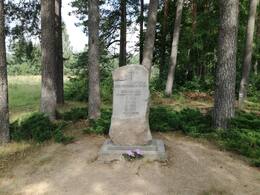
Cemeteries of the National Partisans of Sēlia
The Sēlija National Partisan Brothers Cemetery was opened on October 30, 2004 with the support of the Latvian Ministry of Defence and the Aknīste Municipality. The partisans who fell in the battle of December 19, 1949 in the Dimantu Forest of Kalna Parish are buried there: Alberts Karankevičs (1914-1949), Vilis Tunķels (1911-1949), Arnolds Tunķels (1926-1949), Osvalds Tunķels (1929-1949), Ēvalds Kundzāns (1927-1949).
In 2005, the partisans who fell in the battle of February 13, 1945 in the Elkšņi Forest were also reburied here: Juris Alfreds Voldemārs Lācis (1908-1945), Eduards Kaminskis (1910-1945), Osvalds Mežaraups (1911-1945), Alberts Mežaraups (1915-1945), Antons Bružiks (1911-1945), Jānis Britāns (1926-1945) and one unknown. The common cemetery also contains the remains of Marta Mežaraupe (1907-1945), Alberts Lācis (1902-1945), Juris Resnītis (1901-1945) and Pēteris Bite (1907-1945), who were taken hostage by the Soviet occupation authorities and fell during the battle, as well as Voldemārs Otto Sātnieks (1911-1950), a fallen partisan of the Indāns-Grāvelsons group. The Aknīste Brothers' Cemetery also houses a monument to Alfreds Silaraup (1925-1946), a national partisan of the Aknīste Company, who fell during a Cheka operation on July 30, 1946, on the narrow-gauge railway in the Elkšņu Forest.
At the foot of the White Cross erected at the Brothers' Cemetery of the National Partisans of Sēlija, a black granite stele with the emblem of the Latvian National Partisan Association and the text engraved below it, "To the National Partisans of Sēlija. You sacrificed your lives for Latvia in the fight against the communist occupation regime in 1944-1954." There is also a memorial stone in the cemetery with the inscription "There are tears that will be shed in silence. There are scars that will not heal when healed," which was erected by Stanislava Šadurska at the beginning of the Awakening near the pit where the Chekists buried the national partisans and hostages who had fallen the day before on February 14, 1955.
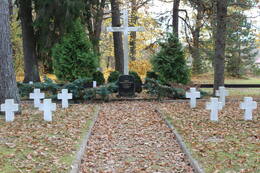
Partisan bunker and memorial cross in Plunksnotiai forest
Partisan Bunker and Memorial Cross can be found by turning off the regional road 3604 (Rokiškis-Maineivos- Naujasodė) between Juodupė and Žiobiškis in the direction of Plunksnočiai Forest.
In 1947, the partisans of the Gediminas Company of the Kunigaikštis Márgiris (King Márgiris) Unit, led by Juozas Bulavas- Iksas, were located in the Plunksnočiai forest stand. Until 1948, they did not have a permanent wintering place, so they took refuge with people who supported them. After World War II, Plunksnočiai Forest was a swampy area with a small mound in the middle of the swamp. In 1949, the partisans set up a hiding place there. However, they were betrayed by an infiltrated Russian security agent, who knew the location of the bunker. On 14 November 1949, after the partisans had fallen asleep, he threw antitank grenades into the bunker. Seven partisans died.
The partisan bunker has been restored and a memorial cross with the names of those who died there has been erected. Today, the surrounding forest is green and walkable. A monument and information signs have been erected in a small square a few dozen metres from the bunker, pursuant to the initiative of the Young Riflemen of Rokiškis.

Museum of the History of Freedom Struggles in Obeliai
The Museum of the History of Freedom Fights is located on Vytauto Street, Obeliai (Obeliai-Zarasai road KK117) on the left side (a road sign is installed on the road).
Founded in 1998, the museum introduces the development of the Lithuanian state, the history of the Obeliai region and Lithuanian folk art. A large part of the exhibition is devoted to the theme of freedom fights.
The evidence of the freedom fights was collected and donated to the museum by a teacher and former partisan, Andriejus Dručkus (1928–2018).
In addition to the themes of Soviet repressions, deportations, the partisan war, the anti-Soviet resistance movement, and the rebirth of independence, which reflect the experiences of the Obeliai region, the museum also stands out due to its peculiar accents. The museum presents the history of the erection, destruction and restoration of the unique monument dedicated to the participants of the June 1941 uprising and the victims of Soviet terror. An overview of the Lithuanian defence system after 1990 is also provided, as well as uniforms of the Lithuanian Armed Forces and other services. The open-air exhibition of the museum has replicas of a Lithuanian partisan bunker and a Siberian barracks for deportees on display. The sites can be visited individually, and special educational programmes are also offered, which enable visitors to experience the everyday life of partisans and deportees to understand what it was like to live in a bunker or barracks.

Antazavė Battle Site and Partisan Dugout Shelter at Lake Vincežeris
The site can be accessed from the town of Antazavė by forest roads.
At the end of 1944, the Lokio Unit of Lithuanian partisans was formed in the area of Antazavė in north-eastern Lithuania. It was led by a former Lithuanian Army officer, Captain Mykolas Kazanas. The unit established five dugout shelters at Lake Vinčežeris, in the uplands of the dense spruce and pine forests of Antazavė.
On 26 December 1944 (27 December according to other sources), the Battle of Antazavė Forest took place here. It was one of the largest partisan battles in eastern Lithuania. The partisan camp was surrounded by Soviet Army units from Utena and Zarasai, as well as soldiers stationed in Antazavė Parish. After a day-long struggle, 85 partisans managed to break the siege and successfully retreated. One partisan died during the retreat.
Currently, two partisan dugouts have been built on the site of the partisan camp, and battle positions, a cross, a memorial plaque, and benches for visitors to the camp have been installed at the site. The partisans’ dugouts are outstanding in terms of their size – they are relatively large and massive underground structures and differed significantly from partisan bunkers that were later built in the forests of Lithuania.

Museum of the Battles for Freedom in Utena
The museum is located in Utena, near the junction of the Kaunas-Daugpilis (A6) and Vilnius-Utena (A14) trunk roads. The museum was established in 2015 at the former narrow gauge railway station building of Utena. The museum claims to be a form of poetry that tacitly exposes the post-war truth. The exhibition “A Common European Identity in the Context of Totalitarian Regimes” offers to explore the past of Lithuania and Europe through the history of one Lithuanian region. It tells the story of secret documents and the division of Europe in 1939, the Soviet occupation of Lithuania, the forced participation of Lithuanians in World War II, exile, post-war resistance and the organisation of collective farms in the Utena region. The painful events of 1940–1965 in the Utena region and the events in Lithuania are contrasted with life behind the Iron Curtain. The history of the narrow-gauge railway station also has tragic pages. From here, in 1941 and from 1945–1953, train cars with deportees were sent to Siberia.
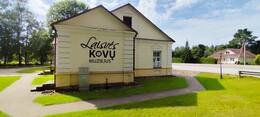
Along the Trails of the Partisan Battles of the Algimantas Military District
Located in Šimonys Forest, along road No. 1216 (a sign and a stand have been installed). Šimonys Forest was known in the post-war Lithuanian partisan struggle as the centre of activity of the largest partisan unit in Aukštaitija, the Algimantas military district. Approximately 200 partisans were operating in the area in 1945, while by 1952, there were only 20–30. From 1947 to 1949, the Šimonys Forest was used by the commander of the East Lithuania (King Mindaugas) partisan territory, Captain Jonas Kimštas-Žalgiris, and in 1949, by the commander who took over from him, Antanas Starkus–Montė, as hiding places – command posts from which the partisan movement in Aukštaitija was coordinated. The route of the partisan battles of the Algimantas military district invites you to get acquainted with six partisan hideouts of the Algimantas military district, created by the partisans of the Žalioji, Šarūnas and Kunigaikštis Márgiris (King Márgiris) units, who hid and fought here. There are two walking routes of different lengths (5 and 10 km) in Šimonys Forest, which invite you to follow the paths of the partisans.

Eastern Lithuania (King Mindaugas) region Lithuanian partisan command post
After driving past Andrioniškis Cemetery (there is a signpost), there is a preserved hideout – a command post. From 1944– 1949, a command post of the Lithuanian partisans of the Eastern Lithuania (King Mindaugas) region operated in this hiding place. In the summer of 1944, Balys Žukauskas, with brothers Petras and Juozas Jovaišos, established the hiding place to evade the mobilisation announced by the Red Army in 1944. At the end of 1945, Antanas Slučka-Šarūnas started to use the hiding place. He was the first one to form a partisan unit in the Troškūnai area and later united the partisans of Rokiškis, Anykščiai, Kavarskas, Troškūnai, and Andrioniškis to form the Šarūnas Unit. In 1947, A. SlučkaŠarūnas became the commander of the Algimantas district, and in 1949 – the commander of the Eastern Lithuania partisan region. This means that from 1949, the hiding place became the command post of the Lithuanian partisans in the Eastern Lithuania region. The hiding place, which had successfully sheltered partisans for five years, was betrayed on 28 October 1949. The farm where the partisans were hiding was besieged by KGB troops; the partisans refused to surrender and blew themselves up.
The bunker has been preserved, and a cross and a monument to the fallen have been installed.

Monument dedicated to Algimantas Military District partisans
The monument is located in the centre of Troškūnai, Anykščiai district, near the Church of Holy Trinity. During the partisan war of 1944–1953, the territory of Lithuania was divided into nine partisan military regions. From 1947–1950, partisan units of the Algimantas region of Lithuania, the establishment of which is closely related to Troškūnai, were active in the Panevėžys and Anykščiai area. The inhabitants of this town organised partisan units in Aukštaitija. The first partisan commander of the Algimantas region, Antanas Slučka-Šarūnas, was born and lived in Troškūnai.
In 1996, pursuant to the initiative of the Genocide and Resistance Research Centre of Lithuania, a monument dedicated to the partisans of the Algimantas Military District was erected in Troškūnai. The monument was created by sculptor Jonas Jagėla and architect Audronė Kiaušinienė. The main part of the monument is a black stone gate that symbolises the fallen defenders of the homeland. The bronze crosses on the sides of the gate symbolise the Christian faith, while the bronze sword, like the sword of St Michael the Archangel, symbolises the light of faith and hope. In the square in front of the monument, a black stone plaque commemorates the three units of the Algimantas region: Šarūnas, Žalioji and Kunigaikštis Márgiris.
