
Widerstand gegen das sowjetische Besatzungsregime in Zemgale
Der Brüderfriedhof der Īle-Nationalpartisanen auf dem Virkus-Friedhof in der Pfarrei Bērze
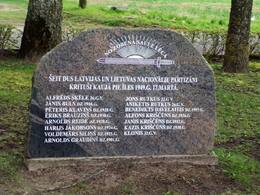
Der Nationalfriedhof der Partisanenbrüder von Īle auf dem Friedhof Virkus der Gemeinde Bērze wurde am 14. November 1992 errichtet, als hier 15 Partisanen beigesetzt wurden, die am 17. März 1949 in der Schlacht um Īle gefallen waren. Dies war möglich, nachdem die Nationalgarde am 18. Juli 1992 gemeinsam mit der Organisation „Daugavas Vanagi“ und der lettischen Forschungsgruppe für Geschichte „Ziemeļblāzma“ sowie unter Beteiligung von Vertretern anderer national orientierter Organisationen die sterblichen Überreste von 15 lettischen und litauischen Partisanenbrüdern exhumiert hatte, die in einem gesprengten Partisanenbunker im Waldgebiet Īle der Gemeinde Zebrene bestattet waren.
Der Gedenkstein für die im Kampf um Īle gefallenen Partisanen wurde am 29. Mai 1993 enthüllt. Er wurde von Alfons Kalniņš („Edgars“) entworfen, einem der Überlebenden der Schlacht vom 17. März 1949. Die regelmäßig geformte Granitplatte zeigt ein Schwert und eine aufgehende Sonne und trägt die Namen von 15 gefallenen Partisanen sowie die Inschrift:
„Die Sonne ging aus dem Schwert auf. Hier ruhen die lettischen und litauischen Partisanen, die in der Schlacht von Īle am 17. März 1949 gefallen sind.“
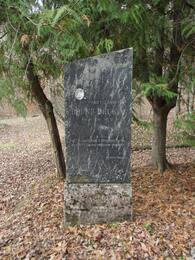
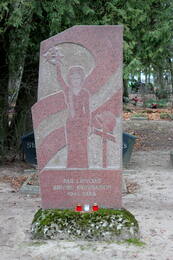
Der Grabstein des nationalen Partisanen Bruno Druķis, der 1941 fiel, auf dem Friedhof Jaunsesava in der Gemeinde Naudīte.
Grabstein für Bruno Druķis, einen Partisanen aus der Gemeinde Naudīte, der am 30. Juni 1941 in einem Gefecht mit den bewaffneten Verbänden der sowjetischen Besatzungsbehörden fiel. Eine Granitstele mit der Inschrift: „Dem Partisanen Bruno Druķis gewidmet. Gefallen am 30. Juni 1941. Dieses Land ist ein heiliges Erbe unseres Volkes. Und gesegnet sei, wer für ihn fällt. Gemeinde Naudīte.“ Das Keramikmedaillon mit dem Porträt von B. Druķis wurde nach dem Zweiten Weltkrieg zerstört.
Nach Beginn des deutsch-sowjetischen Krieges versammelten sich am 27. Juni 1941 etwa zehn örtliche Wachleute im Wald von Ružēni und bildeten unter der Führung von Žanis Gelsons eine nationale Partisaneneinheit. Am folgenden Tag besetzten die Partisanen das Gemeindebüro von Naudīte sowie die örtliche Maschinen- und Pferdevermietung und nahmen die dortigen Traktoren, Landmaschinen und Pferde in Besitz. Am 30. Juni versuchte die Partisaneneinheit aus Naudīte, eine Kolonne von Rotarmisten unter Führung zweier Offiziere auf der Straße bei Meļļi abzufangen. Bei dem Gefecht fielen die beiden sowjetischen Offiziere sowie der pensionierte Korporal Bruno Druķis vom lettischen Kavallerieregiment.
Nationaler Partisanenbunker in Īle
Der Bunker befindet sich in der Gemeinde Zebrene, im Waldgebiet Īle, an der Abzweigung der Straße P104 Biksti-Auce.
Die Kārlis Krauja-Gruppe der nationalen Partisanen von Īle wurde 1947 gegründet. Zum Gruppenführer wurde V.Ž. Brizga (Spitzname K. Krauja) ernannt. Im Oktober 1948 schloss sich die Krauja-Gruppe mit der litauischen Nationalen Partisanengruppe zusammen. Die Krauja-Gruppe agierte im Kreis Jelgava und bestand aus 27 nationalen Partisanen.
Im Oktober 1948 baute die Krauja-Gruppe in der Gemeinde Lielauce, Kreis Jelgava, in der Nähe der Forstwirtschaft Īle, 300 Meter nördlich des Hauses „Priedaiši“, einen unterirdischen Bunker. Seine Gesamtlänge mit den Kampfgängen betrug 45 Meter. Um den Bunker herum wurden 70 ferngesteuerte Minen gelegt. Der Bunker war mit einem Ofen, einem Brunnen, einer Toilette und einem Lagerraum ausgestattet.
Am 17. März 1949 kämpften die 24 Partisanen, die sich zu diesem Zeitpunkt im Bunker befanden, ihre letzte Schlacht gegen die 760 Mann starke Tscheka-Truppe. Nach der Schlacht wurden 9 Mitglieder der Gruppe verhaftet, 15 fielen jedoch in der Schlacht, darunter acht Letten und sieben Litauer.
Im Jahr 1992 grub die Landeswehr zusammen mit den Daugavas Vanagi (lettisch „Düna-Falken“) den gesprengten Bunker aus. An der Stelle wurden ein Weißes Kreuz, ein Gedenkstein und eine Granitstele errichtet.
Im Inneren des Bunkers sind ein Ofen, ein Tisch und schmale Bänke zu sehen, auf denen die Partisanen schliefen. Am Bunker befinden sich Informationstafeln und Gedenksteine mit den Namen der Partisanen.
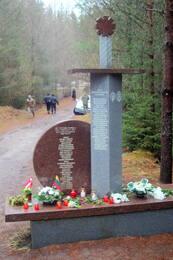
Memorialas kovos su sovietine okupacija ir komunistinėmis represijomis aukoms Zebrenės parapijoje
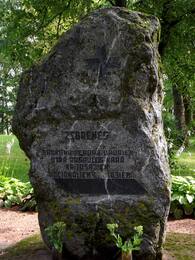
Memorialas kovojusiems su sovietų okupaciniu režimu ir komunistinių represijų aukoms Zebrenės parke, Rengės dvaro parke, buvo atidengtas 1995 m. rugsėjo 1 d. Ant grublėto riedulio pavaizduotas kryžius ir iškalti žodžiai: „Zebrenės raudonojo teroro aukoms, Antrajame pasauliniame kare žuvusiems tautos kovotojams“. Memorialo sukūrimą finansiškai parėmė organizacija „Daugavos Vanagi“.
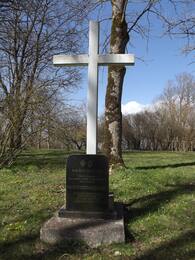
Latvijos ir Lietuvos nacionaliniams partizanams atminti skirtas paminklas Ukru parapijoje
Latvijos ir Lietuvos nacionalinių partizanų atminimo vieta prie buvusios Ukrų parapijos mokyklos buvo atidaryta ir pašventinta 2006 m. spalio 21 d. Joje pastatytas baltas kryžius, kurio papėdėje – granitinė stela su išgraviruotais dviejų Latvijos ir dviejų Lietuvos nacionalinių partizanų vardais ir tekstu: „Už Tave, Tėvyne. Ukrų parapijos nacionaliniams partizanams 1944–1954 m. Kovoje su komunistiniu okupaciniu režimu 1948 m. spalio 26 d. Ukrų parapijoje žuvo Eidis-Eduardas Ozolas, Kristaps Siļķe, Alfonsas Bugnius, Kostas Norvaitis“.
Atminimo vietą įkūrė Latvijos nacionalinė partizanų asociacija (LNPA) bendradarbiaudama su Lietuvos laisvės kovotojų asociacija (LLKS). Jos atidaryme dalyvavo Ukru parapijos tarybos pirmininkas Ainārs Āriņš, LNPA pirmininkas Ojārs Stefans, LLKS atstovas Jons Čepons ir kiti dalyviai.
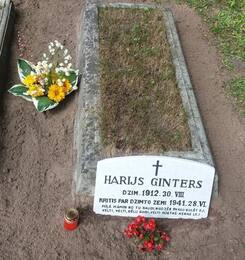
1941. gadā kritušā nacionālā partizāna Harija Gintera kapa plāksne Zaļenieku pagasta Ūziņu Priežu kapos
Kapa plāksne 1941. gada 28. jūnijā kritušajam Jēkabnieku pagasta nacionālajam partizānam Harijam Ginteram. Uz kapa uzstādīta plāksne ar tekstu: “Harijs Ginters. Dzim. 1912.30. VIII. Kritis par dzimto zemi 1941.28.VI. Mīļo māmiņ, Ko Tu raudi, nodzēs skalu gulēt ej,. Velti, velti, dēlu gaidi, velti rūgtas asras lej”. Kapa plāksne restaurēta 2016. un 2024. gadā pēc Zaļenieku pagasta Ūziņu bibliotēkas vadītājas Gunitas Kulmanes iniciatīvas un par viņas personīgajiem līdzekļiem.
Nākamajās dienās pēc Vācijas-PSRS kara sākuma 1941. gada 22. jūnijā, kārtības nodrošināšanai un padomju okupācijas varas izbeigšanai, Jēkabnieku pagastā izveidojās nacionālo partizānu vienība ar aizsargu vada komandieri V. Ritumu priekšgalā. Sākotnēji vājo bruņojumu – dažas pistoles un šautenes, papildināja ar trofeju ieročiem no pie Kalnanšiem un citās vietās aizturētajiem sarkanarmiešiem. Lielāka sadursme ar padomju bruņotajiem formējumiem notika 1941. gada 28. jūnijā Gudēnos, kurā tika sagūstīts un nomocīts līdz nāvei Jēkabnieku pagasta aizsargs un nacionālais partizāns H. Ginters.
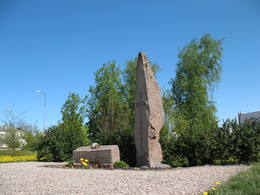
Piemineklis Jelgavas aizstāvjiem pret padomju okupāciju 1944. gadā Grēbnera parkā
Piemiņas vieta 1944. gada jūlija-augusta Jelgavas aizstāvēšanas cīņu dalībniekiem pret otrreizējo padomju okupāciju atklāta 1995. gada 8. maijā. Par godu šim notikumam notika dievkalpojums Jelgavas Sv. Annas evanģēliski luteriskā baznīcā un karogots gājiens cauri Jelgavai. Piemiņas vietā slejas neregulāras formas granīta stēla, kurā iekalts krusts, kas pāraug zobena smailē. Tai blakus pa kreisi guleniski novietots nošķeltas paralēlskaldņa formas granīta bluķis ar tekstu “Jelgavas aizstāvjiem 1944.28.VII-8.VIII”.
Karadarbība Jelgavā sākās pēc tam, kad PSRS karaspēks 1944. gada 27. jūlijā ieņēma Šauļus Lietuvā un turpināja uzbrukumu ziemeļu virzienā. Cenšoties atvairīt Sarkano armiju, jaunieceltais Jelgavas kara komandants ģenerālleitnants Johans Flugbeils pasludināja to par “pilsētu-cietoksni”, kā aizsardzībai bija jāizmanto visi pieejamie spēki. Sākotnēji Jelgavas aizstāvju kodolu veidoja vien 15. latviešu Ieroču SS divīzijas apmācības un rezerves brigādes karavīri pulkveža-leitnanta Hermaņa Jurko vadībā un dažas nelielas vācu vienības. 27. jūlija pēcpusdienā padomju 3. gaisa armija sāka Jelgavas bombardēšanu, uzbrūkot ne vien militāri stratēģiskiem objektiem pilsētā un tās pievārtē – dzelzceļa stacijai un ceļiem, bet aizdedzinot arī daļu no dzīvojamās apbūves. Pilsētas ēkas un civiliedzīvotāji cieta no reaktīvo raķešu sistēmu “Katjušu”, lielgabalu un mīnmetēju uguns, ko viena pret otru raidīja abas karojošās puses.
28. jūlijā uzbrukumu pilsētas dienvidu nomalei sāka padomju 3. gvardes mehanizētā korpusa vienības, bet panākumus neguva. 30. jūlijā rītā uzbrukumu pastiprināja 51. armijas 279. un 347. strēlnieku divīzijas. Kaut arī nākamajā dienā Maskavas radio jau ziņoja par pilsētas ieņemšanu, PSRS karaspēkam ar papildspēkiem bija izdevies ielauzties pilsētas centrā, bet ne ieņemt to pilnībā. Sarkanās armijas neieņemts bija palicis Lielupes labais krasts un nocietināts placdarms pie Driksas tilta. Sīvas kaujas norisinājās arī Jelgavas pilī, kas augusta sākumā nonāca padomju spēku kontrolē. Sarkanarmieši ievilka pilī lielgabalus un pa tās logiem apšaudīja vācu un latviešu karavīru pozīcijas uz Kalnciema ceļa. Sekoja vācu smagās artilērijas pretuguns, kas pili pamatīgi nopostīja. 4. augustā, saņemot papildspēkus no Rīgas, Jelgavas aizstāvjiem uz laiku izdevās pārņemt kontroli pār pilsētu. Tomēr padomju karaspēka masīvais trieciens piespieda vācu un latviešu karavīrus pēc trim dienām Jelgavu atstāt.
Jelgavas 2.vidusskolas ēka Filozofu ielā 50, kur 1945. gadā mācījās jaunatnes pretošanās organizācijas “Trīszvaigžņu kolonna” dalībnieces
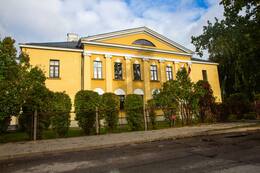
Tagadējās Paula Bendrupa pamatskolas (bijušās Kurlmēmo skolas) ēkā Filozofu ielā 50, pēc Jelgavas nopostīšanas PSRS-Vācijas kara darbībā 1944. gada jūlijā-augustā un pilsētas nonākšanas otrreizējās padomju okupācijas varas pakļautībā, atradās Jelgavas 2. (sieviešu) vidusskola. 1945. gada rudenī tajā mācījās vairākas jaunatnes pretošanās organizācijas “Trīszvaigžņu kolonna” dalībnieces.
Padomju drošības iestādes 1945. gada novembrī apcietināja 20, lielākoties tikai 16-17 gadus vecus, šīs organizācijas biedrus, to vidū 13 puišus un septiņas meitenes, kā arī vēl divus viņu atbalstītājus. Jelgavas jaunieši tika apsūdzēti nelegālu sanāksmju rīkošanā un pretpadomju aģitācijā, ieroču un munīcijas vākšanā, pārtikas piegādē Cukurfabrikas filtrācijas nometnē ieslodzītajiem, atbalsta sniegšanā nacionālajiem partizāniem Lietuvā, kā arī citos pret PSRS okupācijas režīmu vērstos noziegumos.
Baltijas Kara apgabala tribunāls 1946. gada 23. maijā notiesāja 19 organizācijas “Trīszvaigžņu kolonna” dalībniekus, sodot viņus ar 10 gadiem ieslodzījumā Gulaga nometnēs un tiesību ierobežošanu uz 5 gadiem. Pēc deviņiem gadiem ieslodzījumā Permā, Berezņikos, Noriļskā, Karagandā, viņu atgriešanās dzimtenē kļuva iespējama gadu pēc Staļina nāves 1954. gadā.
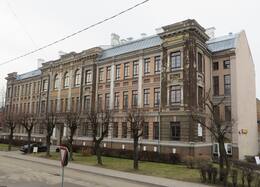
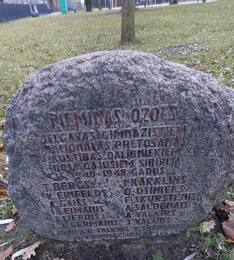
Piemiņas vieta padomju okupācijas režīma represētajiem Jelgavas 1. vidusskolas pretošanās kustības dalībniekiem Meiju ceļā 9
Piemiņas vieta 1941. gadā komunistu režīma represētajiem Jelgavas 1. vidusskolas jaunatnes pretošanās organizācijas dalībniekiem izveidota 2007. gadā pēc sabiedriski-politiskā darbinieka un vēsturnieka Andra Tomašūna iniciatīvas. Piemiņas vietā pie Jelgavas 1. ģimnāzijas (mūsdsienās - Jelgavas Tehnoloģiju vidusskola) iestādīts ozols un novietots laukakmens ar tajā iekaltu tekstu: “Piemiņas ozols Jelgavas ģimnāzistiem, nacionālās pretošanās kustības dalībnikiem – bojā gājušiem Sibīrijā 1940.-1948. gados. T. Bergs, V. Einfelds, A. Gaišs, I. Leimanis, J. Liepiņš, J. Jegermanis, I. Kārkliņš, O. Ošenieks, F. Skurstenis, A. Saldenais, A. Valkīrs, J. Vaļūns. 2000. g. O. Valkīrs, V. Treimanis un 1. ģimnāzija”.
Jelgavas skolēnu pretošanās organizāciju “Brīvā Latvija” 1940. gada 30. septembrī slepeni nodibināja seši Jelgavas 1. vidusskolas 11. klases audzēkņi Friča Skursteņa dzīvoklī Slimnīcas ielā 11-4. Organizāciju vadīja Juris Valūns un tās biedru skaits sasniedza ap 20 cilvēku. Viņi pulcējās nelegālās sanāksmēs, kur apsprieda organizācijas uzbūvi un darbību. Jaunieši iespieda pretpadomju uzsaukumu “Gatavojaties!”, kā 100 eksemplārus 14. oktobrī izlīmēja pilsētā. No 1940. gada 25. oktobra līdz 6. novembrim padomju drošības iestādes apcietināja trīspadsmit Jelgavas 1. vidusskolas audzēkņus, kurus ieslodzīja Jelgavas cietumā un ilgstoši pratināja.1941. gadā apcietinātos aizveda uz PSRS, kur 1942. gada 7. februārī PSRS Iekšlietu Tautas komisariāta Sevišķā apspriede viņus notiesāja uz 10 gadiem ieslodzījumā. To pārdzīvoja un Latvijā atgriezās vienīgi Voldemārs Treimanis, bet pārējie Jelgavas 1. vidusskolas pretošanās organizācijas dalībnieki mira Gulaga nometnēs 1942.-1943. gadā.
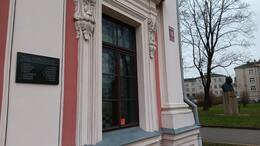
Memorial plaque to the resistance members of Jelgava 1st Secondary School repressed by the Soviet occupation regime at Akademijas Street 10
A memorial plaque to the members of the youth resistance organization of Jelgava 1st Secondary School (previously Hercogs Pēteris Gymnasium) repressed by the communist regime was installed by the Jelgava branch of the Latvian Politically Repressed Association on October 24, 1996. Initially, the plaque was located inside the Ģ. Elias Jelgava History and Art Museum, but after the renovation of the building's facade and premises in 2007-2008. it was moved to the outer wall of the museum to the right of the main entrance, alongside memorial plaques dedicated to other historical figures. The text engraved on the plaque reads: “On 26 October 1940, students of the Hercogs Jēkabs Gymnasium arrested and deported to Siberia – members of the anti-Soviet movement “Free Latvia” T. Bergs, V. Einfelds, A. Engurs, A. Gaišs, J. Jegermanis, I. Kārkliņš, I. Leimanis, J. Liepiņš, O. Ošenieks, A. Saldenais, F. Skurstenis, V. Treimanis, A. Valkīrs, J. Valūns.”
The Jelgava student resistance organization “Free Latvia” was secretly founded on September 30, 1940, by six 11th grade students of Jelgava 1st Secondary School in the apartment of Fričas Skurstenis at 11-4 Slimnīcas Street. The organization was led by Juris Valūns and its members numbered about 20 people. They gathered in illegal meetings where they discussed the organization’s structure and activities. The young people printed the anti-Soviet slogan “Get ready!”, 100 copies of which were pasted around the city on October 14. From October 25, 1940 to November 6, Soviet security authorities arrested thirteen students of Jelgava 1st Secondary School, who were imprisoned in Jelgava prison and interrogated for a long time. 1941. In 1942, the detainees were taken to the USSR, where on February 7, 1942, the Special Meeting of the USSR People's Commissariat of Internal Affairs sentenced them to 10 years in prison. Only Voldemārs Treimanis survived and returned to Latvia, while the other members of the resistance organization of Jelgava 1st Secondary School died in the Gulag camps in 1942-1943.
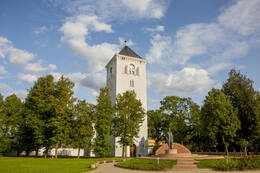
The Tower of Jelgava Holy Trinity Church
The Tower of Jelgava Holy Trinity Church is located in the centre of the city of Jelgava.
The history of the tower spans more than four centuries, becoming an important witness to the development of the city, as well as tragic events. The church was built in 1574 on the orders of the Duke of Courland and Semigallia, Gotthard Kettler, and its tower, completed in 1688 under the lead of the construction master Martin Knoch, became one of the most prominent structures of the city.
During the Second World War, Jelgava was severely destroyed and, in 1944, the church burnt down after a Soviet air raid. After the war, the Soviet authorities blew up the altar part of the church and demolished the walls. Only the tower was preserved as a strategic object, as it was the highest point in the city. During and after the war, the tower was used for military purposes. Enemy positions were observed and the surroundings were controlled from the tower.
During the post-war years, the tower also served as a strategic point for resistance activities. It became a secret meeting place and a base for the transfer of information that was essential for the fight against the Soviet regime. The tower, while retaining its historical significance, has been reborn today as a cultural and educational centre.
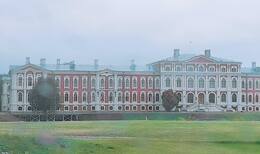
The building of the Agricultural Academy in Jelgava at Lielāja Street 2, where members of the Latvian Central Council worked in 1943-1944
Several members of the academic unit “Austrums” and the Central Council of Latvia, secretly established in Riga on August 13, 1943, worked at the Agricultural Academy in Jelgava (Mītava) (today - the Latvian University of Biosciences and Technologies) in 1943-1944 - professors Rūdolfs Markuss, Andrejs Teikmanis, Alfrēds Tauriņš and other teaching staff. On March 10, 1944, Vilis Eihe, an assistant professor at the Agricultural Academy, together with his wife Aleksandrs and assistant Hermanis Zeltiņš, printed the LCP’s illegal newspaper “Jaunā Latvija” in Jelgava using a duplicating machine. It provided news about Latvia’s international situation and set out further guidelines for Latvian political life. Among the 188 Latvian socio-political workers who, in the LCP memorandum of March 17, 1944, expressed the need to restore an independent and democratic Republic of Latvia based on the 1922 Constitution, were the academic staff of the Agricultural Academy in Jelgava - professors Jānis Vārsbergs, Pāvils Kvelde, A. Teikmanis and R. Markuss.
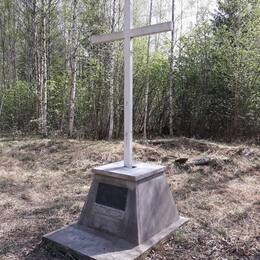
Мемориал членам национального партизанского отряда Й. Розенталса – Й. Фрейманиса в Иецавской волости
Мемориал партизанам национального партизанского отряда Яниса Розенталя – Яниса Фрейманиса был основан в 1996 году в Иецавской волости, на месте бункера отряда лесных братьев Я. Фрейманиса. На бетонном постаменте под белым берёзовым крестом можно прочитать надпись «За свободу Латвии павшим национальным партизанам» и имена лесных братьев – Яниса Фрейманиса, Яниса Капостиньша и Лаймониса Зиракса, павших 11 января 1950 года на территории бывшей Гарозской волости Елгавского района. За памятником видно место расположения бункера, а на краю площади расположен стенд с информацией, подготовленной историком Бауского музея Райтсом Абелниексом, о национальном партизанском отряде Я. Розенталса и братьев Думиньшей, действовавшем в Иецавской, Мисской и Залитской волостях в 1944–1947 годах.
Отряд «Лесных братьев» под командованием Яниса Розенталса был сформирован летом 1945 года, но к сентябрю в нём уже насчитывалось 11 партизан. Эта группа «Лесных братьев» действовала в Иецавской и Залитской волостных уездах Бауского уезда, а также в Гарозской, Салгальской и Петерниекской волостных уездах Елгавского уезда. 13 августа 1948 года чекистам удалось убить командира отряда и его брата, взять в плен ещё троих партизан, но оставшиеся «Лесные братья» этого отряда продолжили борьбу с оккупантами под руководством Яниса Фрейманиса.
Братское кладбище латышских воинов, павших при обороне Бауски от советских оккупантов в 1944 году на Буткском кладбище, Кодская волость
Мемориал на Буткском кладбище был создан после того, как Бауское отделение Клуба охраны природы осенью 1988 года очистило могилы около 30 латышских воинов, павших в боях за оборону Бауски в 1944 году, захороненных в двух колоннах, и приняло решение об установке памятника. После этого был организован сбор пожертвований на строительство памятника. Памятник из красного гранита, посвященный похороненным здесь воинам Бауского добровольческого батальона, был открыт 25 ноября 1989 года, но уже в ночь с 4 на 5 декабря 1990 года он был взорван оккупационной армией СССР. В 1992 году на месте памятника был установлен массивный деревянный крест. 13 октября 2002 года был открыт новый гранитный памятник, аналогичный разрушенному ранее, с высеченным на нем текстом: «За свободу Латвии павшим в 1944 году».
Мемориальный камень Баускому добровольческому батальону в парке Юмправмуйжа Межотненского прихода
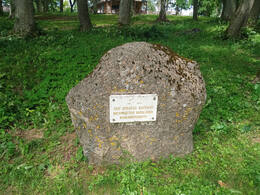
Мемориал Баускому добровольческому батальону в парке Юмправмуйжа был создан в 1990 году по инициативе бывшего солдата этого батальона Иманта Залтиньша. Он расположен на месте, где в конце июля 1944 года латышские солдаты не дали первым частям Красной Армии переправиться через Лиелупе. На грубо обработанном валуне закреплена белая мраморная доска с выгравированным золотым текстом: «28.7.1944 здесь находился командный пункт Бауского добровольческого батальона». Изначально на месте мраморной доски находилась бронзовая доска с гравировкой, но в 1990-х годах она была украдена цветными металлистами.
В конце июля 1944 года, при подходе советских войск к Бауске, в городе не было значительных немецких сил, которые ещё недавно находились в глубоком тылу. Немедленное падение Бауски было предотвращено решительными действиями майора Яниса Улюкса, начальника Бауского уезда и командира охранного полка, который в конце июля сформировал Бауский добровольческий батальон, состоявший из гвардейцев 13-го Бауского охранного полка, полицейских и добровольцев. Батальон занял оборону на берегу реки Лиелупе в Юмправмуйже, напротив островка Зиедони, и в первый же день вступил в бой с наступающей Красной армией. В ходе боёв к батальону присоединилась также группа литовских полицейских, отступивших из Литвы в Латвию. Многие литовцы погибли, сражаясь мужественно и не щадя себя. Первым погиб литовский капитан полиции, которого похоронили тут же, в парке Юмправмуйжа, рядом с могилами немецких солдат времён Первой мировой войны.
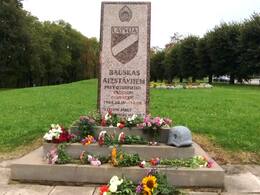
Памятник защитникам Бауски от советской оккупации в 1944 году в Замковом саду
Памятник защитникам Бауски 1944 года был открыт 14 сентября 2012 года по инициативе бывшего солдата Бауского добровольческого батальона Иманта Зелтиньша и при его финансовой поддержке и поддержке самоуправления. На красной гранитной стеле, установленной на трехъярусном бетонном постаменте, выгравированы тексты: «Защитникам Бауски от второй советской оккупации 1944.28.07.-14.09.» и «Латвия должна быть латвийским государством. Карлис Улманис». Открытие памятника вызвало протесты со стороны МИД России и Беларуси, а также местных российских СМИ, а весной 2024 года памятник даже подвергся нападению вандалов. Несмотря на это, ежегодно 14 сентября в 14:00 на этом месте проводится памятное мероприятие, посвященное защитникам Бауски.
В конце июля 1944 года, при подходе советских войск к Бауске, в городе не было значительных немецких сил, которые ещё недавно находились в глубоком тылу. Немедленное падение Бауски было предотвращено решительными действиями майора Яниса Улюкса, начальника Бауского уезда и командира охранного полка, который в конце июля сформировал Бауский добровольческий батальон, состоявший из гвардейцев 13-го Бауского охранного полка, полицейских и добровольцев. Батальон занял оборону на берегу реки Лиелупе в Юмправмуйже напротив островка Зиедони и в первый же день ему пришлось вступить в бой с наступающей Красной Армией. Поначалу батальон был очень слабо вооружён, и большую часть его автоматического оружия пришлось добыть в качестве трофеев. Несколько дней спустя 23-й, 319-й и 322-й пехотные полки. В боевых действиях приняли участие и латышские полицейские батальоны. До середины августа в обороне Бауски от второй советской оккупации участвовал также 15-й латышский резервный и дополнительный батальон СС, сформированный из учебных и медицинских рот. Всего в боях за Бауску участвовало 3000–4000 латышских солдат, которым в конце боев пришлось столкнуться с десятикратным превосходством противника. Советским войскам удалось взять Бауску лишь 14 сентября, после полутора месяцев сопротивления латышских и немецких солдат.
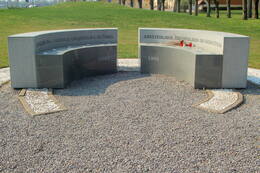
Мемориальный ансамбль в память о борцах с советской оккупацией и жертвах коммунистических репрессий в саду Бауского замка
Мемориальный ансамбль в саду Бауского замка был открыт в 90-ю годовщину Латвийской Республики – 18 ноября 2008 года. Мемориал создан по идее клуба политических репрессированных Бауского края «Рета». Двухчастный памятник из серого гранита изготовлен по проекту архитектора Инты Ванаги на средства Бауского городского самоуправления и спонсоров. На нём выгравирован текст: «Борцам с советским оккупационным режимом, арестованным, депортированным и замученным в 1940–1990 годах». Ежегодно 25 марта и 14 июня здесь проходят памятные мероприятия, посвящённые жертвам депортаций 1941 и 1949 годов.
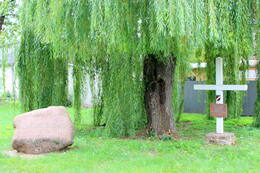
Memorial to the defenders of Bauska against the Soviet occupation in 1944 in the garden of the Holy Spirit Evangelical Lutheran Church
In the garden of the Bauska Holy Spirit Evangelical Lutheran Church, the defenders of Bauska – Latvian soldiers – were buried during the battles of 1944. During the years of the USSR occupation, playgrounds for a kindergarten were set up here. On November 9, 1996, a memorial stone created by sculptor Mārtiņš Zaurs was unveiled in the church garden. The text carved into the roughly worked red boulder under the Latvian Legion sleeve patch – a red-and-white representation of the shield – “Long live Latvia to you! To the defenders of Bauska in 1944.” The memorial stone was erected at the initiative of the Latvian National Soldiers’ Association and the Bauska branch of the organization “Daugavas Vanagi”. Financial support was also provided by the Bauska city and district municipalities. Next to the stone is a white-painted wooden cross, under which is attached a red-white-red painted replica of the legionnaires' shield, and even lower is a pink granite plaque with the text: "Here lie the legionnaires, the heroic defenders of Bauska, 1944.28.VII – 1944.14.IX"
Memorial plaque to the victims of repressions of the Soviet occupation regime in Bauska at Plūdoņa Street 54
House and memorial plaque for victims of Cheka repressions at the building in Bauska at Plūdoņa Street 54, where the Bauska district, later - district Cheka was located after World War II during the Soviet occupation. Here, national partisans and their supporters were imprisoned and interrogated in the basements, and the killed partisans were thrown into the courtyard for identification and intimidation of local residents. The memorial plaque was unveiled after 2000, it depicts stylized barbed wire, prison bars and the text: “The soles of boots clatter, a hundred people groan... Every day is a memory that the heart does not forget. During the Soviet occupation, this building housed the Bauska district department of the repression institution (NKVD, “Cheka”), where people were deprived of their homeland, home, family, freedom and life”. During the occupation, there was a memorial plaque next to this house to three fallen representatives of the occupation authorities who lost their lives in an unsuccessful attempt to defeat a national partisan – Jānis Gudžas.
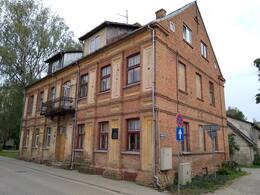
Memorial plaque to the participants of the school youth resistance at the Bauska city elementary school at Rīgas Street 32
A memorial plaque to the members of the youth resistance organization at the Bauska city elementary school at Rīgas Street 32, where the Bauska secondary school was located after World War II. The inscription on the plaque, unveiled in 2000, reads: "... And we carried only our hearts high. A group of youth national resistance studied in this school, which dedicated their youth to the fight against the communist occupation power (1948-1950)."
In the autumn of 1948, a national resistance group of patriotic youth was formed in Bauska, which, in the proclamations and slogans posted in the city, called for a fight against the occupiers and the restoration of Latvia's independence, as well as warned of the deportations expected by the communist regime on March 25, 1949. Several young people from Bauska studied in Riga after graduating from high school, but continued to work in this underground organization. Several young people had purchased weapons and explosives and staged an assassination attempt on the chairman of the collective farm in Codes parish. It was planned to attack other officials of the Soviet occupation authorities, as well as blow up the festive stands in Bauska, Baldone and Eleya. This did not happen, because arrests began in mid-1950. 12 young people were arrested in Bauska and Riga, several of them were arrested on the day of high school graduation – June 22. In February 1951, the Baltic War District Tribunal sentenced the organization's leaders Gunārs Zemtautis and Arvīds Klēugas to death, and six high school students and four students to 25 years in forced labor camps.
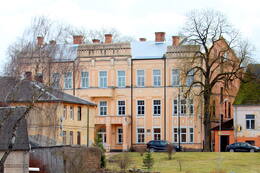
Memorial to Latvian and Lithuanian national partisans at Plūdoņas Cemetery, Ceraukste Parish
The memorial site for Latvian and Lithuanian national partisans was opened on September 11, 2011. It features a white-painted metal cross, at the foot of which is a granite stele with the names of fourteen national partisans and the text: “For You, Fatherland. Latvian and Lithuanian national partisans. Fallen in the fight against the communist occupation in Ceraukste, Panemune, Īslīce and Pabirži parishes (Lithuania) in 1945–1954. Jānis Gudža, Teodors Auniņš, Pēteris Varens, Žanis Strautiņš, Miķelis Dombrovskis, Vilis Krūmiņš, Olģerts Trans, Laimonis Auniņš, Jānis Ulinskis, Jānis Anilonis, Povilas Glinda, Petras Gibrjūnas, Petras Volosklāvičius, Alberts “Voldmerārs” “Director”. Your graves are unknown.”
The memorial site was established by the Latvian National Partisan Association with the support of the Bauska regional government, and the cross was made by precision mechanic Harijs Frīdemans from Dobele with his own money.
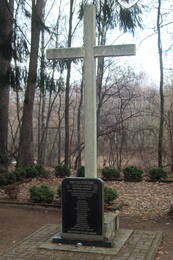
Memorial to Latvian and Lithuanian national partisans in the Mežgaļi School Park, Brunava Parish
The memorial site for Latvian and Lithuanian national partisans was opened on May 25, 2007. It features a white-painted cross, at the foot of which is a granite stele with the names of ten national partisans carved into it and the text: “For You, Fatherland! To the national partisans of Panėmūne. Those who fell in the fight against the communist occupation regime from 1944 to 1952. Jānis Dručka, Andrejs Bojasts, Arvīds Melducis, Augusts Juškēvičs, Willi Fischer, Stanislovas Naudžius – “Mykolas”, Juozas Krikščiūnas – “Karlis”, Juozas Balčiūnas – “Klemute”, Augustas Pareizis – “Kazys”, “Juozupas”, Jonas Sirbike – “Janis””. The memorial site was designed by the Latvian National Partisan Association, based on the project of architect Gunārs Blūzma.
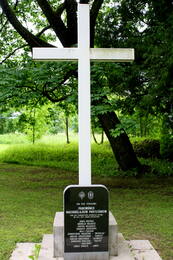
Monument to the Capuchin monks – supporters of the national resistance movement near the Skaistkalne Church
The monument is located near the Skaistkalne Catholic Church and the former monastery building of the Capuchin Order of Friars Minor – a place where national partisans and their supporters hid after World War II with the support of monks. The memorial stele, unveiled in 2011 and consecrated by Pauline Father Jānis Vīlaks, reads: “Monks of the Capuchin Order – supporters of the national resistance movement Kārlis Gumpenbergs OMC (1904-1980), Miķelis Jermacāns OMC (1911-1986), Kārlis Kiselevskis OMC (1906-1979), Miķelis Kļaviņš OMC (1906-1986), Jānis Pavlovskis OMC (1914-2001). They provided shelter and support to national partisans and illegally residing persons in Riga, Skaistkalne and Viļaka in 1945-1947.”
The consecration of the memorial stone dedicated to the Capuchin Fathers took place on October 8, 2011. The stone was consecrated by the Pauline Father of the Skaistkalne Catholic Church, priest Jānis Vīlaks. The event was attended by the Chairman of the Latvian National Partisan Association Ojārs Stefans, the Head of the Skaistkalne Parish Administration Ineta Skustā and other local residents.
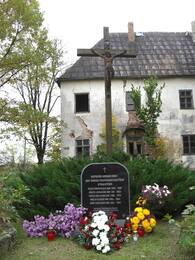
Memorial to national partisans in Kurmene parish
The memorial site for national partisans near the Kurmene parish hall was opened on May 4, 2023, at the site of a monument praising the occupation troops of the USSR, which was dismantled in accordance with the law “On the Prohibition of Exhibiting Objects Glorifying the Soviet and Nazi Regimes and Their Dismantling in the Territory of the Republic of Latvia” adopted by the Saeima of the Republic of Latvia in June 2022. A white-painted wooden cross has been installed at the memorial site, at the foot of which is a black granite stele with the text carved into it: “To the national partisans of Kurmene and surrounding parishes 1944-1953. They will break us, but they will not bend us.”
To the right of the memorial sign, a stand with information about the Kurmene national partisans prepared by Bauska Museum historian Raits Ābelnieks has been installed. The memorial site was established at the initiative of local residents and with the support of the Kurmene parish branch of the Bauska Region Elderly People's Association and the Bauska Region Council.
An active struggle against the Soviet occupation regime and repression by the authorities took place in the eastern part of Bauska region – in Skaistkalne, Kurmene, Bārbele and Valle parishes. In this area, since the second Soviet occupation in the autumn of 1944, there were many men hiding from the authorities. The Mežabrāļi were ready to resist the authorities’ attempts to capture them, so they were provided with weapons and ammunition. At that time, this was easy to do, because there was no shortage of such goods in the former battlefields.
Contacts were established between individual groups and larger partisan units were formed. They were joined by former Latvian Legion soldiers from Kurzeme, who had not laid down their arms and surrendered after the German capitulation, but continued to fight against the occupiers. In the period from July to September, a national partisan unit of approximately 20 men was formed, the core of which was formed by the inhabitants of Kurmene parish. It also included men and young people from Bārbele, Skaistkalne, Valle and the neighboring Mazzalve parish in Jēkabpils district.
Ludvigs Putnieks, born in 1912, from the Kurmene parish "Nagliņiem", became the commander of the unit, his deputy was the former legionnaire Viktors Ančevs from the same parish "Mūrniekim". In the 1930s, L. Putnieks led the Kurmene branch of the patriotic youth organization "Latvijas Vanagi".
This partisan unit carried out several attacks on officials of the occupation authorities in the autumn and winter of 1945, as well as robbed collaborators and state-owned dairies and shops. This was done so that the maintenance of the forest brothers would not be a heavy burden on their already almost completely bankrupt relatives and other supporters. Several fighters of the destroyer battalions, the so-called "istrebikes", and the occupation authorities' inserts in the Kurmene parish Partisan Village Council and the Skaistkalne parish executive committee fell from partisan bullets. Such partisan activity significantly reduced the willingness of the collaborators to carry out the orders of the occupation authorities.
However, an agent was infiltrated into L. Putnieks' partisan group, as evidenced by subsequent events. On January 14, 1946, when V. Ančevs was visiting his mother in "Mūrnieki", militiamen and "Istrebiķe" arrived there to detain him. A shootout broke out, in which the forest brother and his mother died in an unequal battle.
On February 2, units of the 288th Rifle Regiment of the USSR Internal Troops attacked partisan bunkers in the Mazzalve parish forest near the border of Kurmene parish. In a bloody battle against overwhelming odds, Jānis Teodors Meija from Valle parish, Vilips Saulītis from Skaistkalne parish, Arnolds Freimanis from Kurmene parish, Fricis Galviņš from Mazzalve parish and an unknown Riga resident with the nickname Ika or Jonelis fell. The other forest brothers managed to retreat and disappear in the bustle of the battle. No information has been found about the attackers' losses. In subsequent Chekist operations, several other partisans were killed or captured.
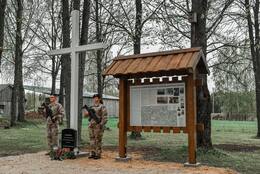
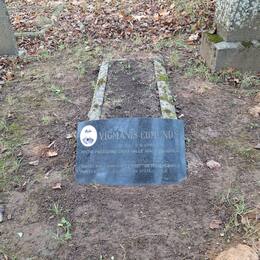
The gravestone of national partisan Edmunds Vigmanis, who fell in 1941, at Valle Cemetery
The gravestone in the Valle cemetery was erected here on July 4, 1941, for the national partisan Edmunds Vigmanis, who was buried here on July 30, 1941, and who fell on June 30 in a clash with Soviet armed formations. The plaque features a ceramic medallion with a photo of E. Vigmanis in a guard uniform and the following inscription: “Vigmanis Edmunds. Born on April 6, 1907. Fell in partisan battles in Valle on June 30, 1941. The countrymen who pass by me are burning with love for the Fatherland. For the beloved Fatherland, I pledge my life.”
After the start of the German-USSR war and the escape of the employees of the Taurkalne parish executive committee, on June 30, local residents gathered at the Taurkalne parish hall in Valle, hoisted the Latvian flag on the flagpole, and formed a 25-man national partisan unit, but only partially armed with rifles and shotguns, led by guard Osvalds Ivanovskis. On the same day, a clash with about twenty Red Army soldiers took place near Jaunbruntālie, during which additional trophy weapons were obtained and five were killed, eight were wounded, and the remaining Red Army soldiers were dispersed. The national partisan, the owner of Jaunbuki, Edmunds Vigmanis, fell in the battle, while O. Ivanovskis and the owner of Bārzdiņi, Jānis Krūmiņš, were wounded.