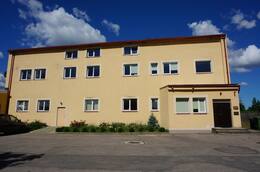

From the Awakening to the restoration of Latvia's independence
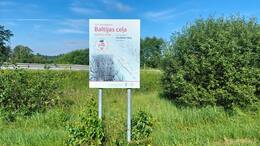
Commemorative sign dedicated to the 25th anniversary of the Baltic Way
During the campaign “Baltic Road” on August 23, 1989, people from Kurzeme and Zemgale - Liepāja, Saldus, Dobele, Kuldīga, Ventspils, Talsi, Tukums and their surroundings arrived on the Riga - Bauska highway section. The main task was to achieve the most even distribution of people and continuity of the chain. Where there was not enough arm length, people were asked to use flags, belts, or even jacket sleeves, just so that the blood circulation of community in this artery would not be interrupted. In total, about 400,000 Latvian residents participated in this campaign.
The memorial sign dedicated to the 25th anniversary of the Baltic Way in Ķekava municipality, at the 25th kilometer of the Riga-Bauskas highway near the Ķekaviņa River, was unveiled on August 23, 2014. Its ceremonial opening was attended by the Prime Minister of the Republic of Latvia, Laimdota Straujuma, a long-time employee of the State Joint-Stock Company “Latvijas Valsts ceļi” and a member of the Baltic Way, Uldis Birzleja, and other attendees. In 2014, 10 such memorial signs were erected on the Baltic Way section of Latvia in memory of this event. Four memorial signs were erected in Estonia, and nine in Lithuania. On July 30, 2009, the Baltic Way campaign was included in the UNESCO “Memory of the World” documentary heritage list.
Barricades Memorial "Eyes"
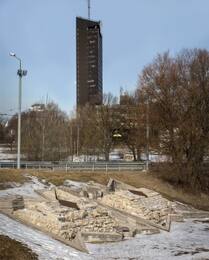
The environmental art object “Eyes”, created by Igors and Ruta Dobičin in 1991 (restored in 2012) in memory of the barricades, is dedicated to the 30 x 60-meter square. Dolomite and concrete pile and paving elements, similar to graphic signs, are placed in the 30 x 60-meter square, forming a cryptogram resembling a stylized “face”. A plaque is built into the symbolic ensemble with the inscription: “Eyes. Dedication to the guards of the Television Center during the barricades in 1991. There is strength in unity”. In 1991, a sculpture by Ojārs Feldbergs “By the Fire” was installed near the LTV building. The two-meter-high sculpture, carved in granite, contains a metaphor for people from four Latvian regions gathering around a common fire.
Television, like radio and the printed press, played a very important role during the Awakening not only as a source of information, but also as a driver of this process. The LTV program “Labvakar” (Good Evening), launched on January 31, 1988, gained immense popularity. It was the first program in Latvia in which Edvīns Inkēns, Ojārs Rubenis and Jānis Šipkēvics spoke about many previously forbidden topics. LTV broadcast live broadcasts from Latvian Popular Front congresses and mass demonstrations, and produced interviews and reports on politically important issues.
During the barricades in January 1991, the LTV building was one of the important objects guarded by volunteers. This was a difficult task, as the building is located in a large and easily accessible area. The barricades participants guarded the direct approaches to the building, as well as blocked the Salu bridge at night. From the Daugava side, the LTV center was guarded by three fishing boats. Remaining intact during the barricades, the LTV building was invaded by paratroopers of the USSR Army and members of the OMON unit during the August 1991 coup. After it was captured on August 19 at 7:30 p.m., the TV stopped broadcasting, but resumed its work after the coup failed and after the Soviet paratroopers left the LTV building on August 21 at 7:45 p.m.
Riga Lutheran Evangelical Lutheran Church
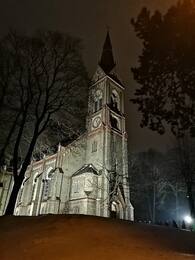
In the second half of the 1980s, meetings of the “Revival and Renewal” movement were held at Torņakalns Church. It was a group of pastors and parish activists of the Latvian Evangelical Lutheran Church, which on June 14, 1987, distributed a document on the founding of the group and its goals with an invitation to all LELB clergy to join this group. The group invited Archbishop Īriks Mesters and the Consistory to address the Councils for Religious Affairs of the Latvian SSR and the USSR with a request to jointly discuss, evaluate and possibly revise some points of the Regulation on Religious Associations of the Latvian SSR, which no longer correspond to the real situation and hinder the democratization process in the church.
On July 28, 1987, the first meeting of the group took place, where the basic principles of the organization renamed the "Revival and Renewal" movement and proposals on church-state relations and the internal life of the LELB were adopted. The LELB Consistory, under the leadership of Archbishop E. Mester, in July and August 1987, carried out repressions against members of the "Revival and Renewal" movement Jānis Priednieks, Roberts Akmentiņš, Aivars Beimanes and Modris Plātes, removing them from their positions. In December 1987, members of the movement Māris Ludviks and Jānis Kārkls were forced to leave Latvia. In April 1989, at the LELB Synod, members of the movement became the leaders of the LELB, and Kārlis Gailītis became the archbishop.
Arcadia Park
On April 27, 1988, about 10,000 people protested against the construction of the metro in Riga at a rally organized by the Environmental Protection Club in Arkadija Park. The demonstration began on the Esplanade at the Rainis Monument, but continued with a march along the Freedom Monument across the Stone Bridge to Arkadija Park, stretching for 2.5 kilometers. It was the first large rally of the Awakening era – unauthorized, but not prohibited. The Arkadija branch of the VAK held its meetings in the wooden building of the former Arkadija cinema (burned down in 2006, demolished two years later). Environmental activists gathered here, among whom ideas about nature protection were born, which gradually grew into demands for the restoration of Latvia’s independence.
In the summer of 1988, the Arkadija Park stage (burned down in 2000) was a gathering place for the radical national opposition. On July 10, the founding meeting of the Latvian National Independence Movement was held in the park, which was attended by about 2,000 people. As a venue for various mass events, Arkadija Park retained its importance throughout the Revival period. In November 2023, information stands of the municipal agency “Rīgas dārzi un parkis” “The wooden building of the Arkadija Cinema – one of the shacks of the Third Revival” and “Protest against the construction of the Riga Metro – the beginning of the restoration of Latvian independence” were installed in Arkadija Park.
Former Press House building
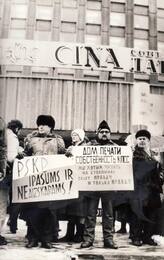
The publishing house and printing house complex built in 1978 housed the editorial offices of all newspapers and magazines of republican importance. Journalists played a very important role in the course of the Awakening, as their presence in the Press House facilitated mutual contacts and organization. It was here that the Latvian People's Front began to take shape. The idea of the need for such an organization was expressed at the plenum of the Creative Unions on June 1-2, 1988, and already on June 22, Viktors Avotiņš read its first, unpublished manifesto at a meeting of journalists. However, the idea was only realized after the Writers' Union and its chairman, Jānis Peters, became involved in its implementation.
The Press House belonged to the Central Committee of the Communist Party of Latvia, which had taken over and effectively monopolized the publication of all newspapers and magazines of republican significance. All profits from the publishing house and printing house went to the treasury of the Central Committee of the Communist Party of Latvia. During the Awakening, as efforts to restore Latvia's independence intensified, the issue of ownership rights to the Press House also arose. After the adoption of the Declaration of Independence on May 4, 1990, a dual government was effectively formed, as some Latvian institutions refused to submit to the government of the Republic of Latvia. The Latvian government established the Latvian Newspaper and Magazine Publishing House, but the USSR Council of Ministers and the Central Committee of the Communist Party of Latvia led by Alfred Rubiks considered the Press House to be the property of the USSR. The situation escalated in November 1990, when OMON attacks on the Press House took place, but on January 2, 1991, OMON completely took over the Press House and stopped printing publications supporting the LTF, expelling their employees from the Press House.
Demolition work on the Press House printing house began in 2020. The construction of the Press House block is currently underway, which will completely change its former appearance.
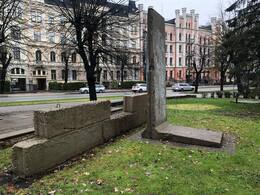
Monument "The Wall - Divider and Uniter"
The memorial site at Elizabetes Street in Kronvalda Park was opened in September 1992 after a fragment of the dismantled Berlin Wall was exhibited in Riga. In 1992, it was combined into a single memorial ensemble with a fragment of the concrete wall erected near the Saeima building during the 1991 Barricades and installed in Kronvalda Park at Elizabetes Street, next to the World Trade Center. An altar for laying flowers is attached to the monument with an inscription in Latvian and German: “After the exhibition of the Berlin Wall Museum “Haus am Checkpoint Charlie” in Riga in November 1990, the museum director Dr. Rainer Hildebrands presented this fragment of the wall to the capital of Latvia.”
In 2011, the monument was restored and the territory was improved. An information plaque with text in Latvian, German, English and Russian was installed. The barricade blocks were supplemented with historical inscriptions in Latvian and Russian: “The Berlin Wall divided us, the Riga Wall unites us. Let us only love our neighbor, and pray to God for our enemy.”
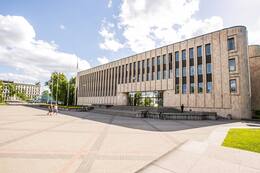
Riga Congress Center
The Congress Hall (at that time the Political Education Hall of the Central Committee of the Communist Party of Latvia) was one of the few meeting rooms in Riga where a larger number of people could gather. During the revival, a variety of events were held there - congresses of the Latvian Popular Front, founding events for various public organizations, discussions on history, etc. On June 1-2, 1988, an expanded plenum of the board of the Latvian Writers' Union was held here with the participation of other creative unions, to which the leadership of the Latvian SSR was invited. Many painful problems were discussed, but the effect of a bombshell was created by the speech of the well-known political commentator and 1940s activist Mavriks Vulfsons, in which he declared that there had been no socialist revolution in Latvia in 1940.
On June 14, 1988, a rally was held in memory of the victims of mass deportations at the Congress House. It was the first officially authorized rally, at which both officials (for example, the Secretary of the Central Committee of the Latvian Communist Party Anatolijs Gorbunovs) and representatives of the public (journalists Andrejs Cīrulis, Edvīns Inkēns, a representative of the Environmental Protection Club Valdis Turins, a priest Juris Rubenis, dissident Eduards Berklavs, etc.) spoke. The rally ended with a march to the Freedom Monument. During the march, Konstantīns Pupurs carried the Latvian flag. Many posters at the rally were quite radical, for example, "No — to the histories of Drīzulis and Karaļuns", "No to the kangaroo Voss of our day!" Modris Lujāns held a poster on which were pasted photos of Stalin and Ribbentrop with the caption "Curse on the murderers of the people" and photos of August Voss and other leaders of the Latvian Communist Party with the caption "No to the kangaroos!" A few days later, at the plenum of the Central Committee of the Latvian Communist Party, First Secretary Boriss Pugo condemned certain individuals and groups who “under the guise of reorganization tried to give the rally a distinctly nationalistic, provocative orientation.” A criminal case was initiated against M. Lujāns, but on September 30 the Supreme Court of the Latvian SSR fully acquitted him.
The next turning point in Latvian history was the 1st Congress of the Latvian Popular Front on October 8-9, 1988, which was also held at the Congress House. On December 10-11, the Forum of the Peoples of the Latvian SSR was also held here.
Daugavmala (11. November Embankment)
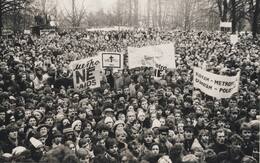
The Daugavmala or 11 November embankment between the Akmens and Vanši bridges in Riga was the site of popular demonstrations in 1989-1991. The largest of them were the demonstration "Let's prevent threats to the democratization process!" organized by the Latvian Popular Front on March 12, 1989 (200-250,000 people), the demonstration "For an independent Latvia" on November 18, 1989 (600,000 participants), and the Supreme Council pre-election demonstration "Both sides of the Daugav will never be divided" organized by the LTF on March 17, 1990.
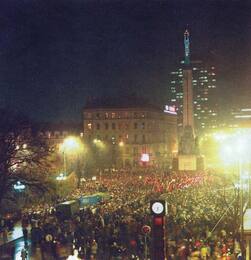
On the night of January 13, 1991, Soviet army tanks surrounded the building of the Supreme Council of Lithuania, Soviet soldiers seized Lithuanian TV, radio and telegraph, killing 14 and wounding 110 civilians. At 4:45 AM, LTF Chairman Dainis Īvāns called on Latvian radio to defend the country's most strategically important buildings. At 2:00 PM, a huge demonstration (500-600,000 people) took place on the 11th of November embankment in Riga, protesting against a possible armed coup and actions in Lithuania.
In addition to these large-scale demonstrations, other smaller-scale public demonstrations also took place on Daugavmala. Particularly emotional was the spontaneous gathering of more than 100,000 people on the 11th of November embankment on May 4, 1990, after the adoption of the Declaration “On the Restoration of the Independence of the Republic of Latvia”.
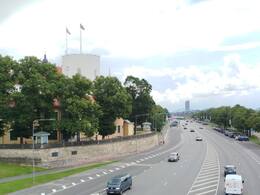
Riga Castle
On November 11, 1988, on Lāčplēsis Day, actor Ēvalds Valters and writer Alberts Bels raised the Latvian national flag on the Holy Spirit Tower of Riga Castle. Thousands of people had gathered on the Daugavmala.
On February 15, 1990, the Supreme Council of the Latvian SSR adopted a law and regulations on the national flag of the Latvian SSR, stipulating that the national flag is crimson red with a longitudinal white stripe in the middle, but on February 27, a solemn ceremony took place when academician Jānis Stradiņš raised the red-white-red flag at the building of the Supreme Council of the Latvian SSR. The Latvian flag was also raised above the buildings of the Council of Ministers of the Latvian SSR and the Riga City Council on that day.
On January 16, 1991, by a decision of the Supreme Council of the Republic of Latvia, the status of the national flag of the Republic of Latvia was restored.
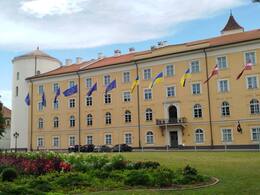
Dome Square in Old Riga
The importance of Dome Square during the Awakening was determined mainly by two circumstances – it was located in the immediate vicinity of the building of the Supreme Council of the Latvian SSR, as well as the fact that the building of Latvian Radio is located on the square. Various actions were held on Dome Square, putting forward demands to the Supreme Council, for example, on July 26, 1989, the Latvian Federation of Labor organized a rally attended by 60,000 people, demanding that the Supreme Council adopt the Declaration of Sovereignty. It was at this rally that the then popular slogan “Something in the past, but in free Latvia” was raised.
Dome Square was the main gathering place for the defenders of the barricades in January 1991, protecting the Supreme Council and the Radio House. The defenders of the barricades warmed themselves by the bonfires. They also stayed in the Radio House and the Dome Church. A first aid station was set up in the church, and services were held. In the evenings, popular rock bands performed on an improvised stage in the square. Every year, events commemorating the barricades are held in Dome Square.
Near the Dome Square, at Krāmu Street 3, there is a museum of the 1991 barricades. On January 13, 2018, the stained glass window “With passion for a free Latvia” by artists Krišs and Dzintars Zilgalvji was unveiled in the Dome Church - a dedication to the 1991 barricades and the independence of Latvia.
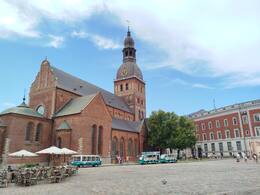
Parliament House (Saeima)
The former Vidzeme Knights' House has been the home of the Latvian Parliament since 1922. During the Soviet occupation, a pseudo-parliament - the Supreme Council of the Latvian SSR - was located here. In the elections to the Supreme Council held in March 1990, the main issue was the restoration of Latvia's state independence. This was done in accordance with the position of the Latvian Popular Front, which stated that it was more realistic to do this using the existing power structures of the USSR. In order to win a qualified vote in the Supreme Council, 134 votes were needed.
On May 4, 1990, the Supreme Council of the Latvian SSR adopted the Declaration “On the Restoration of the Independence of the Republic of Latvia”. 138 voted in favor of its adoption, 1 abstained, but 57 deputies who advocated Latvia remaining part of the USSR did not participate in the vote. By adopting the Declaration, the 1922 Constitution was restored in the territory of Latvia, but until the adoption of a new version of the Constitution, its operation was suspended, except for the first three articles of the Constitution. Such a transitional period was determined until the convocation of the Saeima of the Republic of Latvia. May 4 is celebrated as the Day of the Restoration of the Independence of the Republic of Latvia.
On May 15, 1990, opponents of independence attempted to seize the Supreme Council with the help of military cadets dressed in civilian clothes, but the spontaneously organized students of the Polytechnic Institute and the Institute of Physical Culture repelled the attack. The second attempt to attack the Supreme Council was stopped by the militia (the OMON unit, which in June 1990 refused to submit to the government of the Republic of Latvia and became the main strike force of the opponents of independence).
The Supreme Council was one of the most important points of barricade protection in January 1991. The approaches to it were fenced off with reinforced concrete blocks, and these protective structures were there until the unsuccessful coup attempt in Moscow on August 19-21, 1991. Soviet paratroopers and OMON fighters were unable to occupy the Supreme Council, and its deputies continued their work. On August 21, at 1:00 p.m., four OMON armored personnel carriers entered the Dome Square and remained there until 2:10 p.m., trying to intimidate the deputies, who at that time (at 1:10 p.m.) adopted the Constitutional Law on the State Status of the Republic of Latvia (111 deputies voted for, 13 against). This abolished the transitional period established on May 4, 1990 for the de facto restoration of state power in the Republic of Latvia, and Latvia regained full independence. In 2007, a memorial site for the January 1991 barricades was opened near the Saeima building on Jēkaba Street, and in 2000, in honor of the 30th anniversary of the restoration of the independence of the Republic of Latvia, a commemorative plaque was installed next to the main entrance of the Saeima with the inscription: "In this building, on May 4, 1990, the deputies of the Supreme Council adopted a declaration on the restoration of the independence of the Republic of Latvia."
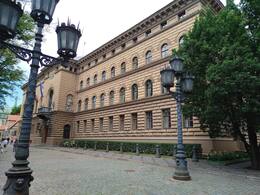
Bastejkalns neighborhood in Riga
The area around Bastejkalns includes several memorial sites from the barricade era. The square, located at the intersection of Smilšu and Torņa streets, opposite the Powder Tower, was named the 1991 Barricade Square in 2016. The heavy equipment stationed here protected Old Riga from invasion at a strategically important location. The nearby Latvian War Museum housed barricade post no. 1.
On January 20, 1991, an OMON attack on the Ministry of Internal Affairs took place in the vicinity of Bastejkalns, which took the lives of several people. In the canalside greenery, opposite Bastejkalns, at the places where the victims were mortally wounded, memorials have been erected - stones to militia lieutenant Vladimir Gamanovič, inspector of the internal affairs department Sergejs Kononenko, director of the Riga Film Studio Andris Slapiņš, schoolboy Edijs Riekstiņš and the shot cameraman Gvido Zvaigznes, who died on February 5. There is a version that the shooters were not only and not so much OMON members, but also some “third force” - either from the special unit “Alfa”, or employees of the USSR State Security Committee from Moscow, who provoked the OMON attack on the Ministry of Internal Affairs.
A memorial stone has also been installed in the canalside gardens to the victim of August 19, 1991, Raimonds Salmiņš, who was shot by riot police near the Riga City Police Department building at the intersection of Aspazijas Boulevard and 13. janvāra Street. In 2014, a memorial plaque dedicated to the victims of the January 20, 1991 attack on the Ministry of the Interior was installed near the former Ministry of the Interior building at the corner of Raina Boulevard and Reimersa Street.
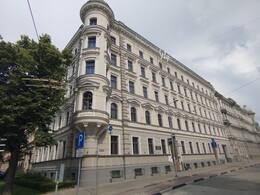
Freedom Monument in Riga
The Freedom Monument was one of the central symbolic points of the Awakening events. On June 14, 1987, the human rights group Helsinki-86 organized an unauthorized public flower-laying ceremony at the Freedom Monument. Two months later, on August 23, Helsinki-86 called for a rally at the Freedom Monument on the 48th anniversary of the Hitler-Stalin Pact of August 23, 1939. During this rally, Soviet police beat and arrested demonstrators. In the following years, flower-laying ceremonies at the Freedom Monument became a part of all major demonstrations and other mass events .
Located in the center of Riga, on Freedom Square.
The Freedom Monument is one of the most outstanding monuments of Latvian history, architecture and art. Built according to the project of Kārlis Zāle with public donations. It was unveiled in 1935 as a symbol of the Latvian people's freedom and love of their homeland. Together with the Riga Brothers' Cemetery ensemble, it belongs to the most valuable examples of monumental architecture and sculpture.
The Freedom Monument expresses the ethical and aesthetic values of Latvian culture. The symbols reflect the philosophical essence of freedom and the historical ideas of the Latvian nation about the stages of the struggle for independence. They point to the embodiment of physical and spiritual strength. The heroic language tells the story of the Latvian people as self-reliant, active creators of history and the determinants of their own destiny.
In its place, there was originally a monument to Russian Tsar Peter I. During World War I, it was dismantled to be transported by ship to Petrograd. The ship was torpedoed by a German submarine, and it sank off the Estonian island of Vormsi. The Soviet occupation regime planned to demolish the Freedom Monument several times, but this did not happen.
Today, you can see one of the symbols of Latvia and observe the traditions of the army honor guard.
A tactile Freedom Monument has been created on the canal bank, next to the Freedom Monument. This special bronze miniature was created by sculptor Ivars Miķelsons on a scale of 1:50.
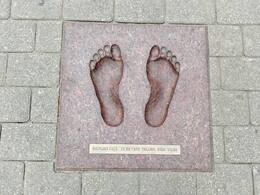
Памятный знак «Следы»
«Балтийский путь» (эст. «Balti kett», лит. «Baltijos kelias») — уникальное движение ненасильственного сопротивления, которое состоялось в 50-ю годовщину пакта Гитлера-Сталина — 23 августа 1989 года. В нём приняли участие почти 2 миллиона граждан Эстонии, Литвы и Латвии, которые, взявшись за руки на 15 минут, образовали живую цепь длиной 670 километров, соединившую столицы всех трёх прибалтийских государств, тем самым продемонстрировав общее стремление эстонцев, латышей и литовцев к восстановлению своей государственной независимости. 30 июля 2009 года движение «Балтийский путь» было включено в список документального наследия ЮНЕСКО «Память мира».
Памятный знак «Следы» в Риге, на перекрёстке улиц Вальню и Калькю, – подарок Риге от литовского художника Гитениса Умбраса и столицы Литвы Вильнюса к 25-летию празднования Балтийского пути. Торжественное открытие мемориальной доски состоялось 30 августа 2013 года в Старой Риге, на перекрёстке улиц Калькю и Валькю, в присутствии председателя Рижской думы Нила Ушакова, мэра Вильнюса Артура Зуокса и посла Эстонии в Латвии Мати Варманса. Аналогичная мемориальная доска была установлена 20 мая 2013 года в Вильнюсе на Соборной площади и 20 августа в Таллинне на площади Свободы.
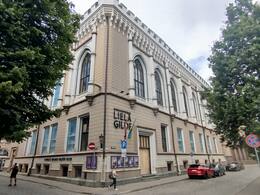
Великая Гильдия
30 апреля 1990 года в здании Большой гильдии (филармонии) состоялся I Съезд граждан Латвийской Республики. Конгресс граждан Латвийской Республики – организация, основанная в 1989 году во время Пробуждения, которая объявила себя избранным «законным представительством Латвийской Республики – государства, провозглашённого в 1918 году, признанного Россией в 1920 году и Советом Лиги Наций в 1922 году, бывшего члена Лиги Наций – Латвийской Республики», с целью «восстановить законную государственную власть Латвийской Республики, действие Конституции и строить отношения Латвийской Республики с СССР на основе мирного договора 1920 года».
Члены этой организации составляли наиболее радикальную часть сторонников независимости, объединявшихся вокруг Конгресса граждан Латвийской Республики и считавших, что Верховный Совет Латвийской ССР, как орган оккупационной власти СССР, не имел права объявлять о восстановлении независимости Латвии. Конгресс граждан выступал за так называемый международно-правовой путь восстановления независимости, посредством проведения референдума граждан Латвийской Республики под надзором ООН или других международных организаций. Однако победу одержал так называемый парламентский путь восстановления независимости, продвигаемый Народным фронтом Латвии. Это произошло во многом потому, что такой путь выбрали Эстония и Литва, а также благодаря поддержке части делегатов Конгресса граждан.
Штаб-квартира Народного фронта Латвии в Риге
Латвийский Народный фронт (ЛНФ) – общественно-политическое движение периода Пробуждения, сыгравшее решающую роль в восстановлении независимости Латвии. Его первыми председателями были Дайнис Иванс (1988–1990) и Ромуалдс Ражукс (1990–1992). 6 февраля 1989 года Совет Министров Латвийской ССР предоставил Латвийскому Народному фронту здание в Риге, по адресу: улица Вецпилсетас, 13/15. В здании размещались правление и совет ЛНФ, а также редакция газеты «Atmoda». С 1999 года в здании располагается Музей Народного фронта. 8 октября 2008 года в здании была открыта памятная доска с символикой ЛТФ и надписью: «В период Пробуждения в этом здании действовал Народный фронт Латвии, объединявший людей для восстановления латвийской государственности в 1988–1991 годах».
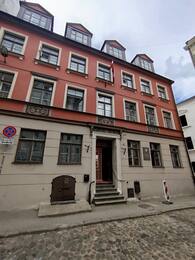
Здание Кабинета Министров
В январе 1991 года одной из целей противников независимости Латвии была нейтрализация правительства Латвийской Республики во главе с Иварсом Годманисом, сформированного после принятия Декларации независимости 4 мая 1990 года. 9 января 1991 года промосковским силам удалось добиться отставки правительства Казимира Прунскене в Литве, мобилизовав своих сторонников на протесты против повышения розничных цен. 10 января под тем же предлогом перед зданием Совета министров состоялся митинг, организованный организацией «Интерфронт». На нём около 10 000 участников потребовали отставки правительства И. Годманиса и попытались ворваться в здание. Милиции удалось предотвратить эти попытки. Правительство и Верховный Совет продемонстрировали единую позицию, и правительство в отставку не подало.
После трагических событий в Вильнюсе 13 января здание Совета Министров стало одним из первых объектов, вокруг которых были возведены баррикады из железобетонных блоков, брёвен, мешков с песком, а также грузовиков и тракторов. После подавления путча 1991 года, утром 25 августа, памятник Ленину напротив Совета Министров Латвийской ССР был демонтирован.
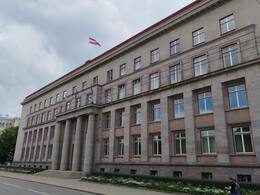
Здание Союза писателей
В бывшем Доме Беньямина в Риге, на улице Кришьяня Барона, 12, в период Возрождения располагались творческие организации – Союз писателей Латвийской ССР, Союз художников и Союз композиторов. В 1988 году Союз писателей в сотрудничестве с другими творческими союзами образовал центр, вокруг которого объединились силы, выступавшие за продолжение курса перестройки, демократизацию и защиту латышских национальных интересов. Союз писателей выступил своего рода посредником между Центральным Комитетом Коммунистической партии Латвии и обществом. 10 марта 1988 года Союз писателей создал Литературно-мемориальную комиссию по жертвам культа личности и Комиссию по реабилитации. 25 марта в память о жертвах сталинских депортаций творческие союзы писателей, художников, музыкантов, архитекторов, деятелей театра и кино впервые официально возложили цветы к статуе Матери-Латвии на Братском кладбище.
Союз писателей сыграл ведущую роль в организации Пленума творческих союзов, состоявшегося 1–2 июня 1988 года. Летом 1988 года под эгидой Союза художников началось формирование Латвийского Народного фронта. В здании Союза писателей действовал Координационный центр ЛНФ, велась подготовка к I съезду ЛНФ. После создания ЛНФ он взял на себя функции координатора политической оппозиции, однако роль писателей и других представителей интеллигенции, а следовательно, и творческих союзов, в процессах Пробуждения не уменьшилась. Сегодня у главного входа в Дом Беньямина установлена памятная доска с символикой ЛНФ и надписью: «29 июля 1988 года в этом здании начал работу Оргкомитет ЛНФ. Здесь зародилось крупнейшее и сплоченное в истории Латвии народное движение, восстановившее независимость Латвийского государства».
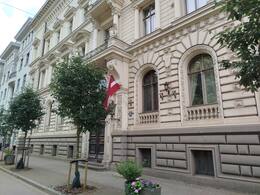
Театр Дайле
23 сентября 1988 года в театре «Дайлес» состоялось закрытие празднования столетия эпической поэмы Андрея Пумпура «Лачплесис». Впервые латышскому учёному из Канады – профессору психологии Монреальского университета Вайре Вике-Фрейберге (президенту Латвии с 1999 по 2007 год) – было разрешено выступить на публичном мероприятии. Впервые в Латвийской ССР на мероприятии такого уровня, в присутствии членов Бюро Центрального Комитета Коммунистической партии Латвии, стоя прозвучала народная молитва Бауманиса Карлиса «Боже, благослови Латвию!» (утверждённая в качестве гимна восстановленной Латвийской Республики 15 февраля 1990 года).
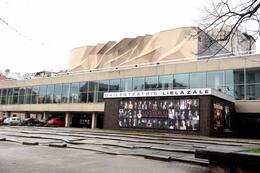
Мемориал Робертсу Мурниексу возле Вецмилгрависского моста
Памятник Робертсу Мурниексу, погибшему от рук бойцов ОМОНа 16 января 1991 года – первой жертве баррикад. База ОМОНа находилась в Вецмилграви, недалеко от моста, поэтому омоновцы пытались запугать защитников баррикад, возведённых у моста. Р. Мурниекс был водителем Министерства сообщения и проезжал мимо по служебному заданию, когда в него попала пуля, выпущенная омоновцами. Р. Мурниекс скончался 16 января в Рижской больнице № 1, похороны состоялись 19 августа на Марупском кладбище.
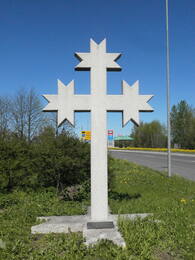
На месте ранения Р. Мурниекса, у дороги к мосту Вецмилгравьяс, установлен белый железобетонный крест. На месте его последнего места жительства в Баложи, ул. Кр. Барона, 2, Кекавский край, установлен памятный камень. В 2010 году за особые заслуги в защите независимости Латвии Р. Мурниекс был посмертно награждён орденом Виестураса и признан командором Большого креста ордена Виестураса. Зимой 2023 года на месте захоронения Р. Мурниекса на Марупском кладбище был установлен памятный камень.
Большая сцена Межапарка
16 июля 1988 года Клуб защиты окружающей среды организовал демонстрацию за восстановление государственного флага на Большой эстраде в Межапарке, требуя отмены запрета на использование красно-бело-красного флага независимого Латвийского государства. Указом Президиума Верховного Совета Латвийской ССР от 23 сентября этот запрет был снят. Накануне учредительного съезда Народного фронта Латвии – 7 октября 1988 года – в Межапарке прошла народная демонстрация «За справедливое государство».
На 150-тысячном митинге в Межапарке и последовавшем за ним двухдневном (8 и 9 октября) учредительном съезде Латвийской федерации художников, которому предшествовало богослужение в Домском соборе, латыши и представители других национальностей потребовали от руководства Советского Союза предоставить Латвии экономическое самоопределение, право накладывать вето на требования Москвы, положить конец школам атеистического воспитания и другие права, аналогичные требованиям, выраженным в резолюции, принятой представителями латышских писателей и других творческих союзов 1 и 2 июня того же года.
Мемориальный комплекс «Баррикада»
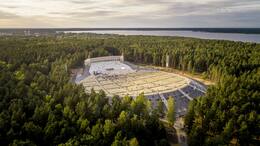
Мемориал «Баррикада» был установлен в Улброке, на обочине шоссе Рига–Эргли, у моста через реку Пикурга, где в январе 1991 года стояли два баррикадных поста: один охранял границу Риги, а другой – башню Латвийского радио в Улброке. Во время январских событий радио было основным способом получения информации, поэтому было важно не допустить прерывания радиосвязи. 125-метровую радиобашню, с которой транслировались программы Латвийского радио в диапазоне средних волн, охраняли как местные жители Улброки, так и соседи из Гаркалне, Адажи, Тинужи и Ропажи.
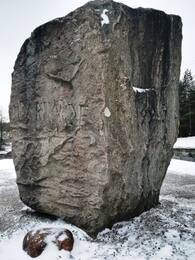
Текст «Ulbroka.1991.I» высечен на двух сторонах вертикально установленного каменного блока «Баррикада», открытого 11 ноября 1991 года и созданного скульптором Улдисом Стергисом. Ежегодно 20 января на этом месте проводятся памятные мероприятия, посвящённые январским баррикадам 1991 года. В 2003 году 33 жителя Стопиньской волости были награждены здесь правительственной наградой – Памятной медалью участника баррикад. В 2024 году библиотека Улброки создала виртуальную выставку «Баррикады в Улброке. Январь 1991 года».
Секретная площадка вещания Латвийского радио в Саласпилсе
Секретный передатчик Латвийского радио работал во время государственного переворота 1991 года 20 и 21 августа. Даже после января 1991 года сохранялась вероятность того, что руководство СССР решит применить силу против стран Балтии, введя военное положение и арестовав руководство страны и наиболее ярых сторонников независимости. Поэтому уже летом 1991 года в узле связи «Латвэнерго» в Саласпилсе был тайно установлен радиопередатчик на случай так называемого «часа икс».
Во время августовского переворота 1991 года деятельность средств массовой информации сыграла решающую роль, поэтому с началом переворота, вечером 19 августа, вооруженные формирования СССР заняли комплекс Латвийского телевидения на Закюсале и башню Латвийского радио в Улброке. На следующий день, 20 августа, ранним утром в 5:00 в здание Латвийского радио в Риге, на Домской площади, ворвались бойцы ОМОНа, а затем там разместились советские десантники. Угрозами и применением физической силы сотрудники Латвийского радио были вытеснены из здания Латвийского радио. Однако, несмотря на информационную блокаду, Латвийское радио продолжало работать, начав вещание из секретной подземной студии в Саласпилсе в 4:53 утра.
Мемориальная доска с надписью «Из этого дома в дни государственного переворота 1991 года тайно велась передача Латвийского радио» возле здания бывшего узла связи «Latvenergo» в Саласпилсе, по адресу ул. Гайсмас, 20c, была открыта в 2006 году, однако сегодня здание находится в частной собственности. В 2021 году в Музее Даугавы прошла выставка-инсталляция «Подпольная радиостудия 30», посвящённая деятельности Латвийского радио в период августовского переворота 1991 года.