
World War II and its Aftermath – Soviet Occupation in Southern Latvia and Latgale
Karosta, the Military port of Liepāja (tour)
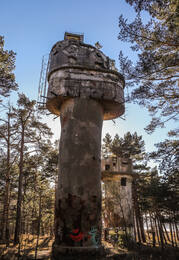
The Karosta is the largest historical military territory in the Baltics and occupies almost one third of the entire territory of Liepāja. The Karosta is a unique compound of military and fortification buildings on the shores of the Baltic Sea with a special meaning in the history and architecture of Latvia and the world. The Karosta features such military heritage sites as the North Pier and forts, the Redan, Karosta Prison, Karosta Water Tower, St. Nicholas Orthodox Maritime Cathedral, Oskars Kalpaks Bridge and others.
Cattle wagon used for deportations – museum at Skrunda train station
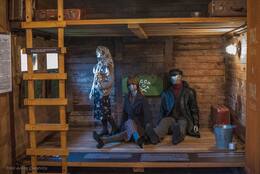
To commemorate the deportations of June 1941 and March 1949, a memorial stone and a four-axle wagon, which also serves as the museum dedicated to deportations, was erected at the Skrunda railway station. This is the first wagon-type museum in Latvia that holds a permanent exhibit of photos, letters, memoirs, documents and various items made by the people deported from the Skrunda station. Skrunda station was a location where deportees were gathered, and one of the three stations in the region to which people from the Skrunda and the Kuldīga area were brought. In 1941, the family of the first President of the restored Republic of Latvia, Guntis Ulmanis, was deported from here to Krasnoyarsk Krai in Siberia.
With the help of deportations, the Soviets dealt with supporters of the national partizans’ and at the same time intimidated the remaining rural population, forcing them to join the collective farms.
Saldus German Soldiers' Cemetery
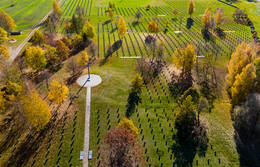
The Saldus German Soldiers' Cemetery is located on the Saldus–Ezeres highway. The cemetery, which covers an area of 8 hectares, contains the remains of around 25,000 German soldiers, as well as some Latvian legionnaires. Reburials have been taking place since 1997.
From May 1 to October 1, an exhibition about the battles of Courland can be viewed in the memorial room. During this period, the memorial room is open on weekdays from 9:00 to 17:00, and on Saturdays and Sundays a guide is also working in the cemetery. Registers of soldiers buried in the Saldus German soldiers' cemetery and soldiers who fell throughout Latvia are also available.
Ezere local history repository “Muitas Nams” (Customs House)
The Ezere Customs House is located in Ezere near the Saldus-Mažeikiai highway at the Latvian-Lithuanian border. The act of surrender of the German Army units ‘Kurzeme’ (Kurland) surrounded in the so-called ‘Courland Pocket’ was signed in this building on 8 May 1945. It is believed that World War II actually ended in Ezere. The customs house has an exhibit covering the events of the end of World War II and exhibits detailing the history of Ezere parish from ancient to modern days. In the morning of 7 May 1945, the commander of the Leningrad Front, Marshal L. Govorov, sent an ultimatum to the command of the army group ‘Kurzeme’ to lay down arms. The act of surrender was signed by the involved parties on May 8 and it detailed the procedure of surrender, weapons collection points, documents and information to be submitted and other practical measures.
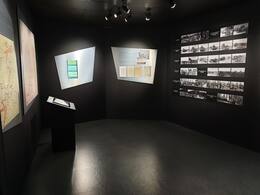
Soviet air force target firing ground in Zvārde
Zvārde landfill is located in Zvārde municipality, Saldus region. It is a former military aviation training ground of the USSR, covering more than 24 000 hectares.
The territory of the former airfield is home to several sites: the Officers' Kurgan, the ruins of the Zvārde and Ķērkliņi churches, the Rīteļi cemetery, the former army base "Lapsas", and others. Until the Second World War, the site of the observation tower was home to the "Vairogi" house. During the construction of the polygon, what was left of the farm - walls, the remains of the apple orchard, and part of the ruins of the Veczvārde manor - was piled together to form a mound and the observation tower was built on it. It was used as an observation point for coordinating the army's training manoeuvres. This place is popularly known as Kurgan. The mound overlooks the former training ground and the wooded areas of Zvārde Nature Park and Nature Reserve. A good place for bird watching. The surroundings of Kurgāns are not landscaped.
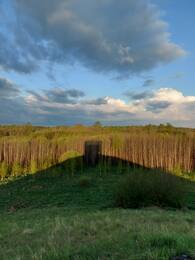
Īle National Partisan Bunker
The bunker is located in the Īle forestry of Zebrene Rural Territory, at the turn-off from the P104 Biksti-Auce Road.
The Kārlis Krauja Group of Īle National Partisans was formed in 1947. V. Z. Brizga (alias K. Krauja) was appointed the commander of the group. In October 1948, the Krauja Group merged with a group of Lithuanian national partisans. Krauja Group operated in Jelgava District and consisted of 27 national partisans.
In October 1948, Krauja Group built an underground bunker in Lielauce Parish, Jelgava County, not far from the Īle Forestry, 300 metres to the north of the “Priedaišu” house. Its total length, including battle passages, was 45 metres. 70 remote-controlled mines were planted around the bunker. The bunker was equipped with a furnace, a well, a toilet, and a storage room.
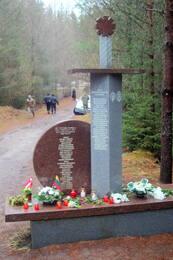
On 17 March 1949, the 24 partisans who were in the bunker at the time fought their last battle against the 760-strong troops of the Ministry of National Security or Cheka. After the battle, 9 members of the group were arrested, while 15 fell in the battle, with eight of them being Latvian and seven being Lithuanian. In 1992, the Home Guards, together with the Daugavas Vanagi (Hawks of the Daugava), unearthed the bunker that had been blown up. A White Cross, a memorial stone and a granite statue were erected at the site.
Inside the bunker, you can see a stove, a table, and narrow benches on which the partisans slept. Information boards and memorial stones with the names of the partisans have been installed at the bunker.
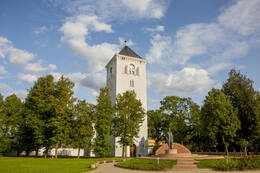
The Tower of Jelgava Holy Trinity Church
The Tower of Jelgava Holy Trinity Church is located in the centre of the city of Jelgava.
The history of the tower spans more than four centuries, becoming an important witness to the development of the city, as well as tragic events. The church was built in 1574 on the orders of the Duke of Courland and Semigallia, Gotthard Kettler, and its tower, completed in 1688 under the lead of the construction master Martin Knoch, became one of the most prominent structures of the city.
During the Second World War, Jelgava was severely destroyed and, in 1944, the church burnt down after a Soviet air raid. After the war, the Soviet authorities blew up the altar part of the church and demolished the walls. Only the tower was preserved as a strategic object, as it was the highest point in the city. During and after the war, the tower was used for military purposes. Enemy positions were observed and the surroundings were controlled from the tower.
During the post-war years, the tower also served as a strategic point for resistance activities. It became a secret meeting place and a base for the transfer of information that was essential for the fight against the Soviet regime. The tower, while retaining its historical significance, has been reborn today as a cultural and educational centre.
Jelgava History and Art Museum of Ģ. Eliass
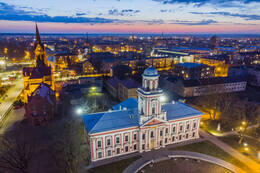
Jelgava History and Art Museum of Ģ. Eliass is located in a building that is called Academia Petrina (Peter’s Academy). It was built in 1775 as the first university in Latvia and is one of the few public buildings in Jelgava to survive and be restored after World War II. In the summer of 1944, Jelgava lost almost everything – a large part of its population and historic buildings, which were hardly restored after World War II. The predecessor of the current museum – the Kurzeme Provincial Museum – was founded in 1818. It was the second oldest museum in Latvia and the first one established outside Riga. The museum has been housed in the Academia Petrina building since 1952. Today, the museum features permanent exhibitions on the renowned Latvian artist Ģederts Eliass (1887–1975), the prehistory and Middle Ages of the Zemgale region, Jelgava during the era of the Duchy of Courland and Semigallia (1561–1795), the Courland Governorate (1795–1918), and the period of Latvia’s independence (1918–1940).
The museum exhibition “Life Continues Under Foreign Rule” explores life in Latvia during the German and Soviet occupations. The virtual exhibition “Wars and a Soldier Through the Ages of Jelgava” offers insight into the various wars that have affected Jelgava, including historical events from the First and Second World Wars.
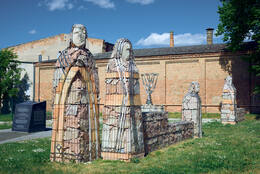
Memorial "Synagogue Garden"
The memorial is located in the city centre, not far from the Bauska Municipality Tourist Information Centre and Town Hall Square.
It was created thanks to the initiative and donations of the descendants of Bauska Jews living in Israel, the USA and Great Britain, as well as the support of the Bauska Municipality Council and Latvian Jewish congregations and communities.
The memorial was designed by sculptor Ģirts Burvis. It is the same size as the former Bauska Great Synagogue, and the stone images symbolise Jews coming out of the place of worship after the service. A symbolic bimah is situated in the centre of the memorial; it is a raised platform or table used in Jewish religious rituals in the synagogue. An inscription on it reads: “A tribute to the Jews of Bauska, who lived here for centuries and built this city, and who were killed by the Nazis and their local helpers in 1941. Honouring the memory of the Jewish people – the descendants of the Jews of Bauska and the people of Bauska.”
In 1935, almost 800 Jews lived in Bauska. After the Nazi occupation, in July 1941, many Jews were arrested and deported, and around 700 Jews were shot. Bauska Great Synagogue was destroyed during World War II.
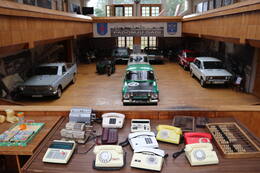
“Soviet Years” Exhibition at Aizkraukle Museum of History and Art
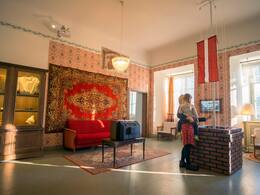
In November 2018, to celebrate the centenary of Latvia, the “Soviet Years” exhibition was opened at Aizkraukle Museum of History and Art – the largest exhibition in the Baltic states dedicated to the cultural and historical heritage of the 1950s–1980s. The exhibition is spread over three floors in an area of 1,060 m2. It reflects Soviet life in its multiple facets: everyday life, work and leisure, education and culture. Soviet-era cars are on display on the ground floor.
A separate library – the Red Corner has been set up. A wide-ranging exhibition invites visitors to explore everyday life and apartment interiors during the Soviet era – furniture and household items, tableware, textiles and electrical appliances.
Other exhibition spaces are dedicated to emigration, Soviet repressions, everyday life, medicine, state structures, tourism and sport, childhood and education. Soviet military paraphernalia and uniforms are also on display among various exhibits.
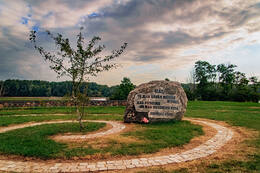
A memorial dedicated to the mothers of Siberia in the "Garden of Destiny"
The Garden of Destiny is located on an island of the River Daugava, near the ruins of Koknese Castle. It is designed as a landscape architectural ensemble and is dedicated to the memory of the Latvian people that Latvia lost in the 20th century – those who fell in wars, were repressed, were forced into exile or otherwise suffered due to their political opinions. Like the Freedom Monument in Riga, the Garden of Destiny was created thanks to donations.
In cooperation with the Latvian Association of Politically Repressed Persons, a memorial ensemble for women deported to Siberia – mothers of Siberian children – has been created in the centre of the virtual House of Silence. Two boulders engraved with the words “Mother, you gave me life twice. When I was born and when I did not starve to death. A child of Siberia.” remind one of the selflessness and great sacrifice of mothers.
World War I trenches have been preserved on the grounds of the Garden of Destiny. A memorial to the Latvian Riflemen has been created there, which was inaugurated on the 100th anniversary of the founding of the Riflemen Regiments. The composition of the site consists of two parts: The group of Latvian boulders symbolises those who stayed at home, while the row of boulders in the trenches of the First World War symbolises the Latvian Riflemen. The boulders were selected and artistically arranged by sculptor Ojārs Feldbergs.
Exhibition "Fights for Freedom in the 20th Century" at the Jēkabpils History Museum
Located in Krustpils Castle
Exhibition "Fights for Freedom in the 20th Century" on display
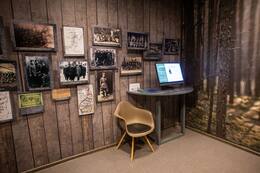
Soviet repressions. Hard memories. Sitting here in a club chair, you have the opportunity to listen to fragments of the book “There Were Such Times” by Ilmārs Knaģis, a resident of Jēkabpils. On one of the walls of the room, a list of citizens deported to Siberia slides dispassionately, like the credits after a movie. Right there, on an old TV, you can watch an amateur video about the removal of the Lenin monument in Jēkabpils. Visitors are interested not only in the content, but also in the technical capabilities - how this film was made on an old TV.
It is possible to listen to lectures prepared by museum specialists at the Jēkabpils History Museum or to register for a field trip: Jēkabpils and its surroundings during the First World War, Jēkabpils in 1990, The Time of the Barricades, 1949 Deportations - 70, Jēkabpilians - Cavaliers of the Lāčplēsis War Order, etc.
The average duration of lectures is 40 minutes. Information and registration for lectures can be found by calling 65221042, 27008136.
The Jēkabpils History Museum is located in Krustpils Castle. In 1940, after Latvia was incorporated into the USSR, the 126th Rifle Division was stationed in Krustpils Castle. During World War II, the castle housed a German infirmary, and after August 1944, a Red Army military hospital. After the war, Krustpils Castle and the adjacent manor buildings were occupied by the central warehouses of the 16th Long-Range Reconnaissance Aviation Regiment and the 15th Air Army of the Soviet Army.
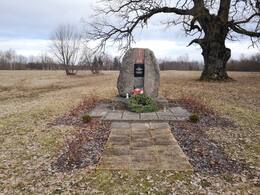
Monument to National Partisans in Jersika
The memorial stone is located near the Jersika railway station. It is engraved with the inscription: “LTS(p)A – Latvijas Tēvzemes sargu (partizānu) apvienības cīnītājiem” (For the Fighters of the Latvian Union of the Guardians of the Fatherland (Partisans)). The Union of Partisans united national partisans of six Latvian districts in the struggle against the communist occupation regime in 1945–1955. The memorial stone is the first stop on the hike “Jersika-Vanagi. Nacionālo partizānu leģendām pa pēdām.” (Jersika-Vanagi. On the Trail of the National Partisan Legends.) The route starts at Jersika station and offers an insight into the history of the national partisan movement, its most prominent figures and their activities. Further on the trail: the site of the national partisan bunker hidden in the forest; the place of the founding of the Fatherland Guards (Partisans) Association as mentioned in the testimonies; and the memorial place “Avotnīca” (in Latgalian “Olūtneica”) in the forest, where a bonfire has been set up. The destination of the hike is Vanagi Church, where the priest Antons Juhņevičs served. The film “Segvārds Vientulis” (Alias Hermit) was made here (producer Normunds Pucis). The film tells the story of a priest, who was involved in the national partisan struggle in post-war Latgale. The route also bears evidence of former farmsteads: stately oaks and ruins of buildings.
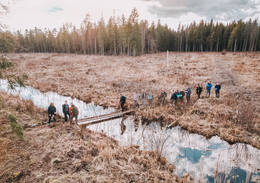
It passes through forests, swamps, fens, meadows, and country roads. The total length of the hike is approximately 22 km and it can be completed in 6 hours.
Jersika National Partisan Hiking Route
An object that is difficult to find in nature.
Hike length: approximately 22 km, can be completed in approximately 6 hours.
Difficulty level: medium fitness hike.
Starting point: Jersikas Elementary School in Līvāni municipality (can be reached by train, bus).
End point: Vanagi Church in Preiļi municipality (public transport does not run on weekends).
Note: The route includes a swimming break (during the summer season), fishing opportunities, a picnic area, and one public toilet. The route is also suitable for school-age children who already have experience in hiking of this length.
Go on a hike from Jersika to Vanagi, allowing yourself to be challenged in endurance, as the hike leads through forests, swamps, moors, meadows and country paths, and in the historical knowledge of the most prominent figures of the national partisan movement, their activities, see the most significant places about which local legends and written memories of fellow citizens are told. The path begins at the Jersika elementary school and leads to a memorial stone under an old oak tree, further along the way including the Jersika railway station. The inscription on the stone reads “LTS(p)A – For the fighters of the Latvian Fatherland Partisan Association. LTS(p)A united the national partisans of six Latvian districts in the fight against the communist occupation regime in 1945-1955”.
The walk continues along the railway tracks and winds along Lake Jersika, where the forest presents natural treasures: spring-flowering primroses and common sedge. The approach to the bog is indicated by the smell of primroses, but in spring it is especially surprising to see them blooming. A lazy walk is not possible, several ditches must be overcome, crossing the bog provides a tempering - water remains in the moss at every step, cranberry berries shine in the bushes. The bog is replaced by a forest and evidence of the former settlement of these places in homesteads - stately oaks, ruins of buildings, the site of a national partisan bunker surrounded by young growth. The path continues to the place mentioned in the testimonies as the place of founding of the Fatherland Guards (partisans) association. The forest massif also hides the memorial site “Avotnīca” (“Olūtneica”), where a campfire has been set up. The diversity of the forest is surprising, as is the width of the ditches. The destination of the hike is Vanagi Church, where priest A. Juhņevičs served, and about whom the film “Segvārds Vientulis” (directed by N. Pucis) tells the story.
At the beginning of the route, near Jersikas Elementary School, there is an information stand where, by scanning a QR code, you can listen to an audio story about historical events and partisan battles. The audio story is also available on the IziTravel platform HERE . The audio story is available in Latvian and English.
WW2 – World War II Exhibition
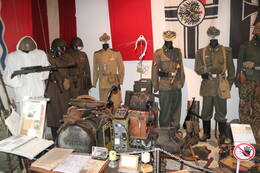
WW2 – World War II exhibition in Aglona or the War Museum was established in 2008 and is one of the most extensive and interesting expositions of this kind in Latvia. The collection has been continuously supplemented with new acquisitions and stories of war participants and people of the wartime generation.
The core of the museum consists of weapons, equipment, ammunition, and uniforms used during World War II. In addition, there are household objects, fragments of aircraft wrecks and other exhibits. One of the most precious and unique exhibits is the Feldpost (field post) correspondence between Oberleutnant August and his lover Martha, which created a dialogue between two loving people with a happy ending during the period of the five years of war. Wartime chronicles are displayed in the background of the exhibition.
The exhibition is not politicised and reflects both sides of the war equally, allowing viewers to perceive it without making judgements of good or bad, which makes the exhibition easy to understand.
Памятник Борцам за свободу Латвии на месте боёв 3-го Елгавского пехотного полка
Памятник освободительной борьбе 3-го Елгавского пехотного полка 16 января 1920 года в Латгалии. С надписью: «Место боёв 3-го Елгавского пехотного полка, победный марш по Латгалии. 16.1920. Мы принесли Латвии солнце, свободу и независимость».
Памятник был открыт в 1936 году. 16 августа генерал Жанис Бахс (1885–1941) освятил его пастор Адамс Визулис (1891–1970). Автором проекта памятника был инженер Зилевич.
Латгалийская освободительная операция (1918–1920) началась 3 января 1920 года. К середине января латышские и польские войска освободили Даугавпилс и большую часть Южной Латгалии до линии Дагда–Индра от захвативших власть в России большевистских войск. 9 января Латвийская армия начала наступление в Северной Латгалии, стремительно продвигаясь к станциям Карсава и Пыталово.
Между двумя направлениями наступления оставался контролируемый большевиками район Вараклян, Вилян и Резекне. 20 января части Латвийской армии начали операцию по освобождению Резекне. Резекне было освобождено 21 января. К концу января Латвийская армия по всему Восточному фронту вышла на границу латышских земель. Уже 1 февраля Советская Россия подписала с Латвией соглашение о перемирии.
С победой в Латгальских сражениях восточная граница Латвии была обеспечена, и появилась возможность присоединить Латгалию к Латвии. Латвийская армия добилась окончательного объединения и обретения независимости Латвии в 1920 году.
Памятник, датированный 16.1920 г., посвящен моменту выхода 3-го Елгавского пехотного полка на исходные позиции перед операцией по освобождению Резекне.
Музей пограничной охраны
Музей расположен в здании Колледжа Государственной пограничной охраны Латвии в Резекне.
В музее представлена экспозиция Исследовательского отдела истории Пограничной охраны, отражающая хронологию развития Пограничной охраны Латвии с 1919 года до наших дней. Собранные предметы и фотографии рассказывают о службе и повседневной жизни латвийских пограничников в период с 1919 по 1940 год, а также о трагической судьбе пограничников после оккупации страны в 1940 году. В то время пограничники, вместе с их родственниками, были одними из первых репрессированных. В музее представлены свидетельства службы возрожденной Пограничной охраны после восстановления независимости Латвии – форма, снаряжение, награды и знаки различия, которые и в наши дни непрерывно развиваются и изменяются.
Неотъемлемой частью экскурсии является посещение Кинологического центра, где можно посмотреть показательные выступления служебных собак.
Запись на прием должна быть сделана заранее.

Свободное государственное казначейство
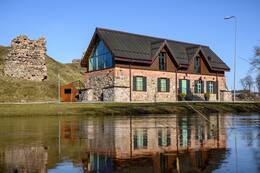
Сокровищница Свободного государства расположена рядом с руинами Резекненского замка.
Уникальная экспозиция включает сотни различных исторических свидетельств из латвийских и зарубежных частных коллекций, охватывающих период с 1918 по 1940 год, раскрывающих события в истории Латгалии и Резекне. Она знакомит с историей военных и гражданских наград Первого свободного государства Латвии, а также с деятельностью различных государственных и общественных организаций в период от Войны за независимость Латвии до Второй мировой войны.
Представленная здесь коллекция военных и гражданских наград и знаков отличия Латвийского Свободного государства — крупнейшая в Латвии.
На втором этаже расположен зал сменных выставок, где как минимум раз в год открывается новая экспозиция. К настоящему времени посетители смогли увидеть уникальную коллекцию фарфоровых изделий, роскошные часы из Франции и картины, изображающие различные виды Латгалии.
Denkmal „Einheitlich für Lettland“ oder Māra von Lettgallen
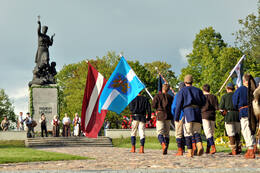
Das Denkmal „Einheitlich für Lettland“, im Volksmund „Māra von Lettgallen“ genannt, befindet sich in Rēzekne. Das zentrale Bild einer Frau mit einem Kreuz in der Hand symbolisiert Lettgallen, das 1920 von der bolschewistischen Herrschaft befreit wurde, und den Geist seiner christlichen Zivilisation.
Das Denkmal wurde in 20er Jahren des 20. Jahrhundert von Persönlichkeiten des öffentlichen Lebens in Lettgallen initiiert. Der Grundstein wurde am 8. Juni 1930 gelegt und eingeweiht. Im Juni 1934 wurde ein Wettbewerb für das Denkmal ausgeschrieben, den der Entwurf von Kārlis Jansons gewann. Das Denkmal wurde am 8. September 1939 eingeweiht, und der Einweihungsgottesdienst wurde von Bischof Jāzeps Rancāns geleitet.
Nach der sowjetischen Besatzung im November 1940 wurde das Denkmal abgerissen. Die Bronzeskulpturen konnten nicht zerstört werden und das Denkmal wurde am 22. August 1943 während der deutschen Besatzung restauriert. Als die sowjetische Besatzung zurückkehrte, wurde das Kreuz zunächst abgesägt, 1950 jedoch wurde es vollständig zerstört. Während der sowjetischen Besatzungszeit wurde an seiner Stelle ein Lenin-Denkmal errichtet, das unmittelbar nach der Wiedererlangung der Unabhängigkeit Lettlands im Jahr 1991 demontiert wurde.
Während des Erwachens im Jahr 1989 entstand die Idee, das historische Denkmal „Einheitlich für Lettland“ wiederherzustellen. Das Denkmal wurde von Andrejs Jansons, dem Sohn von Kārlis Jansons, in Zusammenarbeit mit Ints Folkmanis auf der Grundlage der Materialien und Fotos seines Vaters neu gestaltet. Das wiederhergestellte Denkmal wurde am 13. August 1992 anlässlich des Ersten Lettgallischen Welttreffens eröffnet.
Kulturhistorisches Museum von Lettgallen
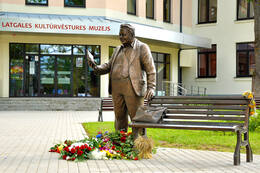
Das Kulturhistorisches Museum von Lettgallen in Rēzekne hat drei Dauerausstellungen. Eine davon – „Rēzekne im Wandel der Zeit“ – erzählt die Geschichte der Stadt über sieben Jahrhunderte. Ein großer Teil ist den Ereignissen, Kriegen und Veränderungen des 20. Jahrhunderts gewidmet: Der Erste Weltkrieg, der Unabhängigkeitskrieg, der Zweite Weltkrieg, die Zerstörung von Rēzekne im Jahr 1944 durch sowjetische Bomber und das Kriegsgefangenenlager Stalag 347. Die Ausstellung enthält Fotos über die Schicksale von Soldaten aus Rēzekne während des Krieges.
Während des lettischen Freistaats waren die Soldaten des 9. Infanterieregiments Rēzekne der lettischen Armee ein fester Bestandteil des öffentlichen Lebens und der Sportveranstaltungen der Stadt, insbesondere während der Feierlichkeiten am 11. und 18. November.
Denkmal für die Opfer des Zweiten Weltkriegs in Ančupāni
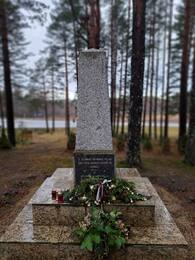
Das Denkmal befindet sich in Ančupāni, Bezirk Rēzekne. Es wurde geschaffen, um der Tragödie von Audriņi zu gedenken – der Vernichtung der Zivilbevölkerung während der deutschen Besetzung durch Nazis, die 1942 im Dorf Audriņi, Gemeinde Makašāņi, Kreis Rēzekne, stattfand.
Seit Herbst 1941 versteckten sich mehrere entkommene Kriegsgefangene der Roten Armee in Audriņi. Am 18. Dezember 1941 wurde ihr Aufenthaltsort entdeckt, und vier Hilfspolizisten wurden bei dem Beschuss getötet. Am 24. Dezember wurden 203 Einwohner von Audriņi verhaftet und im Gefängnis von Rēzekne inhaftiert. Am 3. Januar 1942 wurden die meisten Verhafteten in der Nähe des Ančupāni-Hügel, etwa 5 km von Rēzekne entfernt, erschossen, und am 4. Januar wurden 30 Männer, die im Dorf Audriņi verhaftet worden waren, auf dem Marktplatz von Rēzekne öffentlich erschossen, und das Dorf selbst wurde niedergebrannt. Die Gedenkstätte wurde am 27. Juli 1974 eröffnet. Der Autor ist Landschaftsarchitekt Alfons Kišķis (1910–1994). Die immergrünen Tannen auf der rechten Straßenseite symbolisieren die zum Erschießen aufgereihten Menschen, während die Steinmauer auf der gegenüberliegenden Straßenseite die Schützen darstellt. Im unteren Teil, dem Tal des Leidens, führt ein mit Steinen übersäter Weg an den Massengräbern der Erschossenen vorbei und endet an einer Betonwand mit der Inschrift: „Sie sind gestorben, damit du leben kannst.“ Dann führt eine Treppe zum Platz des Lebens, dessen zentrale Skulptur „Mutter Apfelbaum“ von der Bildhauerin Rasa Kalniņa-Grīnberga (1936) stammt.
Otrā pasaules kara bunkuri Malnavā un Hitlera vizīte vācu armijas grupas “Ziemeļi” štābā
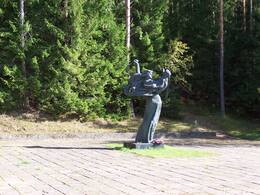
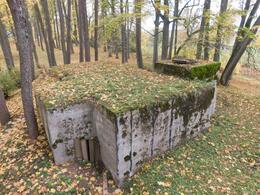
Hitlera vizīte Malnavā izvietotajā vācu armijas grupas “Ziemeļi” štābā un pretgaisa aizsardzības bunkurs tiek minēti kā saistītas lietas. Taču, izņemot atrašanās vietu – Malnavas muižu, citas saistības starp tiem nav.
Ļeņingradas virzienā uzbrūkošās vācu armijas grupas “Ziemeļi” štābs Malnavas muižā tika izvietots no 1941. gada 12. līdz 28. jūlijam. Izvēles iemesls bija praktisks – bijušās muižas ēkā izvietotā Malnavas lauksaimniecības skola bija ļoti moderni aprīkota: ar elektrisko apgaismojumu, centralizētu ūdensvadu, dušām un kanalizāciju. Grupas “Ziemeļi” štābs atradās vienā no muižas sānu korpusiem, savukārt pārējā ēkas daļā turpināja darboties lauksaimniecības skola.
Hitlera vizīte grupas “Ziemeļi” štābā Malnavā notika 1941. gada 21. jūlijā. Hitlers ar pavadoņiem atlidoja divās Junkers tipa lidmašīnās, kuras pavadīja deviņi Messerschmitt iznīcinātāji. Vizīte ilga tikai dažas stundas un ir iemūžināta gan vācu frontes kinohronikā, gan arī Malnavas skolēnu atmiņās.
Aptuveni 70 metru attālumā no muižas ēkas esošais pretgaisa aizsardzības bunkurs tika uzcelts 1944. gada sākumā, kad kara otrajā pusē gaisa telpā sāka dominēt padomju aviācija. Tajā laikā vācu karaspēks atradās atkāpšanās procesā. 1944. gadā grupas “Ziemeļi” štābs Malnavā uzturējās no februāra līdz jūlija vidum.
Atrodoties pie Malnavas muižas vārtiem, ir iespēja noskenēt QR kodu un noklausīties audio stāstu par Vācijas fīrera vizīti Malnavā un par bunkuru vēsturi. Audio stāstu var noklausīties arī IziTravel platfformā ŠEIT. Audio stāsts pieejams latviešu un angļu valodās.
Privātekspozīcija “Abrenes istabas”
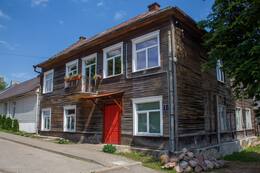
Ekspozīcija “Abrenes istabas” atrodas Viļakas pilsētā, ēkā ar daudzveidīgu vēsturi. Pirmsākumos ēka atradās uz senā Marienhauzenas tirgus laukuma, vēlāk tajā atradās dzīvokļi, biroji, dažādi veikali, bet Otrā pasaules kara laikā tur darbojās latviešu pašaizsardzības štābs, gestapo un arī čeka. Vairākas ekspozīcijas atklāj dažādus notikumus un vēstures posmus Viļakas pilsētā un tās tuvākajā apkārtnē laikā no 1920. līdz 1960. gadam, kad Viļaka ietilpa Jaunlatgales Abrenes apriņķī. Tajās redzami priekšmeti no Stompaku purva partizānu mītnes, kas saistīti ar nacionālo partizānu kustību Latgalē. Apskatāmi arī dokumenti un fotogrāfijas, kas saistīti ar Neatkarības karu. Jaunākā ekspozīcija ir veltīta kādreiz slavenajai motokrosa trasei “Baltais briedis”.
Viļakas muzejs. Ekspozīcijas par militāro mantojumu Viļakas apkārtnē
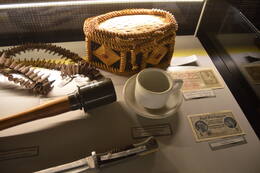
Viļakas muzejs atrodas divās ēkās – pilsētas kultūrvēsturei nozīmīgā 1913. gadā celtajā katoļu draudzes mājā, otra muzeja ēka – bijušajā kapucīnu mūku klosterī, kura pagrabi cieši saistīti ar nacionālo partizānu kustību Stompakos un padomju čeku. Pēc cilvēku atmiņām šajos pagrabos tika turēti un spīdzināti cilvēki. Vecajā muzeja ēkā atrodas vairākas ekspozīcijas, vienā no tām var apskatīt 1920. gada brīvības cīņu gaitu Ziemeļlatgalē, Otrā pasaules kara notikumus – ebreju holokaustu Viļakā un informāciju par nošautajām ģimenēm. Par katru ģimeni pēc dzīves vietas adreses var uzzināt sīkāku informāciju. Ekspozīciju papildina informācija par nacionālo partizānu kustību Stompakos – dažādas liecības, fotogrāfijas, priekšmeti. Muzeja apmeklētāji var uzzināt par militārā mantojuma objektiem Viļakas pilsētā un tās apkārtnē, piemēram, Brīvības cīnītāju piemineklis Jaškovā, kas tika nojaukts padomju laikā un atjaunots 1990. gadā, kā arī Lāčplēša kara ordeņa kavalieriem veltītu stēlu. Muzeja ekspozīcijā ir iestrādāta Otrā pasaules kara lidmašīnas skaņa, jo netālu no Viļakas atradies Vācu aviācijas lidlauks “Luftwaffe”. Muzejā ir iespēja apskatīt dažas atmiņas par Otrā pasaules kara notikumiem Viļakā, kā arī iegūt informāciju par vācu karagūstekņu nometni Račos.
Nacionālo partizānu mītnes dabas liegumā “Stompaku purvi”
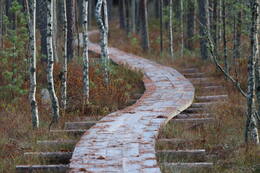
Stompaku purvā Otrā pasaules kara laikā atradās viena no lielākajām nacionālo partizānu nometnēm Baltijā. Šo dien teritorija ir iekļauta dabas liegumā “Stompaku purvi”. Uz purva salām esošajā apmetnes vietā var nokļūt, ejot pa marķētu laipu taku. 1945. gada sākumā Stompaku purvā nacionālo partizānu nometnē dzīvoja 350-360 cilvēku, tostarp 40-50 sievietes.
Nometnē bija 24 dzīvojamie bunkuri – līdz pusei zemē ie dziļinātas būves, kurās varēja dzīvot 3-8 cilvēki. Tajā dar bojās maizes ceptuve, baznīcas bunkurs, un atradās trīs virszemes slieteņi zirgiem. Partizāni no nometnes veica uzbrukumus okupācijas režīma amatpersonām. 1945. gada 2.–3. martā šeit norisinājās Stompaku kauja – lielākā Latvijas nacionālo partizānu vēsturē. Nometnē esošajiem 350–360 partizāniem uzbruka NKVD 143. strēl nieku pulks un vietējie istrebīķeļu (iznīcinātāju) bataljona kaujinieki – kopskaitā 483 vīri. Kauja ilga visu 2. marta die nu. Naktī uz 3. martu partizāniem izdevās izlauzties no no metnes un atkāpties uz iepriekšējām bāzes vietām. Kaujas rezultātā krita 28 partizāni, savukārt NKVD karaspēks zau dēja 32 kaujiniekus. Mūsdienās Stompaku nometnes vietā apskatāmi trīs at jaunoti bunkuri - baznīcas, štāba un dzīvojamais, kā arī 21 bijušo bunkuru vieta. Uzstādīti informatīvie stendi par nometni un kauju. Var pieteikt ekskursijas ar gidu.
Esot pie Stompaku purva takas sākuma var noskenēt QR kodu un noklausīties stāstu par notikumiem, kas saistīti ar nacionālo partizānu vēsturi. Audio stāstu var noklausīties arī IziTravel platformā ŠEIT. Stāsts ir pieejams latviešu un angļu valodās.
Ekspozīcija "Ziemeļlatgale brīvības cīņās" Balvu Novada muzejā
Muzejs atrodas Balvu muižas apbūves kompleksa teritorijā, bijušajā muižas klēts ēkā. Ekspozīcija ļauj ielūkoties Latvijas Neatkarības kara vēsturē no Ziemeļlatgales skatu punkta, izsekojot Latgales partizānu pulka izveidošanās un darbības vēsturei. Apskatāmi iepriekš citur neredzēti foto materiāli un dokumentu kopijas, tostarp, 1919. gada 5. jūlija pavēle par pulka izveidošanu. Unikālas ir pulka darbības iekšējās pavēles, kuras laikā no 1919. gada jūlija līdz oktobrim rakstītas krievu valodā. Tas atspoguļo pulka kā vietējās vienības veidošanās īpatnības un sastāvu, kur kopā cīnījās, latvieši, latgalieši, krievi un ebreji. Uz latviešu valodu iekšējās pavēlēs pulks pārgāja tikai pēc pilnīgas iekļaušanās Latvijas armijas sistēmā, kad to papildināja mobilizētie karavīri no citiem Latvijas novadiem. Ekspozīcijā atspoguļota arī Ziemeļlatgales atbrīvošanas operācija, kuras laikā no 1920. gada 9. līdz 15. janvārim Latvijas armijas Latgales divīzija ar kaujām atbrīvoja Viļakas, Jaunlatgales un Kārsavas apkārtni. Tajā apskatāmas liecības gan par operāciju kopumā, gan Latgales partizānu pulka kaujas darbību Kārsavas atbrīvošanas laikā.
Atrodoties pie Balvu novada muzeja var noskenēt QR kodu un doties pastaigā pa Balvu pilsētu, noklausoties audio stāstu par pilsētas vēstures līkločiem. Audio stāsts ir pieejams arī IziTravel platformā ŠEIT. Stāsts pieejams latviešu un angļu valodās.