



Military Heritage Tourism Audio Guides
Explore our list of audio guides that will allow you to discover the military heritage of the Baltics. When visiting these historical sites, these audio guides will give you a deeper insight into the events that shaped the history of our region.
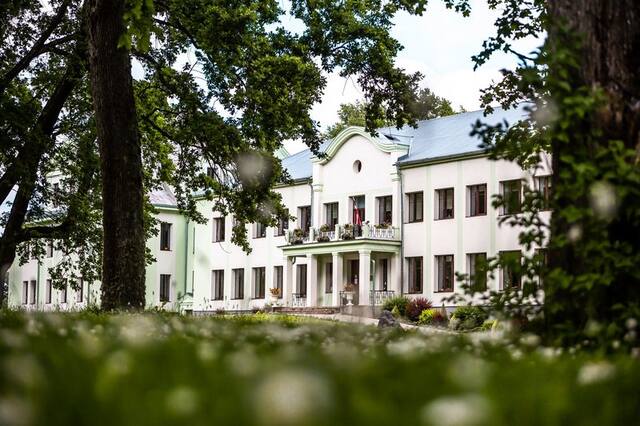
Hello and welcome to the historical audio guide tour of Malnava! Today, you will learn about the events that took place here during Second World War. We will focus on the operations of the German Army Group "North," Adolf Hitler’s visit, and the construction of bunkers in Malnava. You will also discover how these events affected the local population.
Zvārde landfill is located in Zvārde municipality, Saldus region. It is a former military aviation training ground of the USSR, covering more than 24 000 hectares.
The territory of the former airfield is home to several sites: the Officers' Kurgan, the ruins of the Zvārde and Ķērkliņi churches, the Rīteļi cemetery, the former army base "Lapsas", and others. Until the Second World War, the site of the observation tower was home to the "Vairogi" house. During the construction of the polygon, what was left of the farm - walls, the remains of the apple orchard, and part of the ruins of the Veczvārde manor - was piled together to form a mound and the observation tower was built on it. It was used as an observation point for coordinating the army's training manoeuvres. This place is popularly known as Kurgan. The mound overlooks the former training ground and the wooded areas of Zvārde Nature Park and Nature Reserve. A good place for bird watching. The surroundings of Kurgāns are not landscaped.
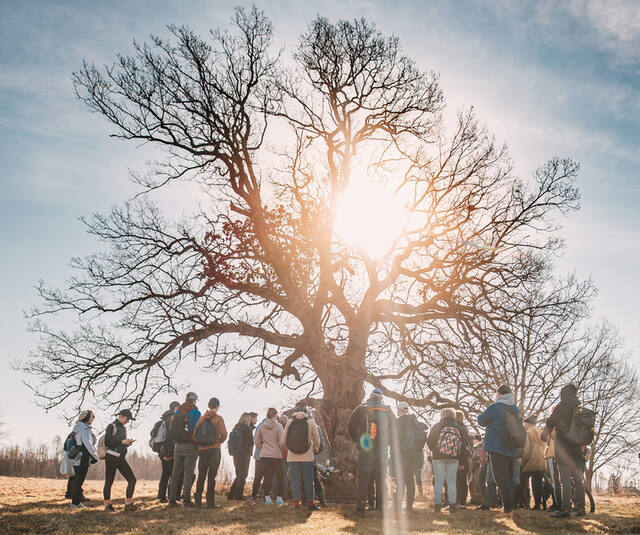
Hike from Jersika to Vanagi (approx. 22 km) is a good test of endurance – the route leads through forests, swamps, bogs, meadows, and country trails.
Along the way, you can listen to an audio guide about the most notable figures of the National partisan movement, their activities, and explore significant sites surrounded by local legends and preserved in the memories of those who lived through those times.
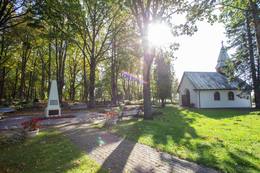
Located next to the Veselava cemetery chapel.
The first monument to commemorate the Battle of Cēsis and the fallen Estonian soldiers was unveiled on August 5, 1923.
Its opening was attended by the first President of the Republic of Latvia, Jānis Čakste, and the Estonian Ambassador to Latvia, Jūlijs Saljemā.
The cemetery contains the remains of 16 Estonian soldiers who fell in the battles of Cēsis with the Baltic Landeswehr and the Iron Division in June 1919. Four of them were later reburied in their homeland. The monument was built with donations collected from local residents. It was designed by craftsman Dāvis Gruzde, after the owner of the Ķikuri house, Kārlis Bierņš.
he marked cross-border cycling route No. 790 crosses the territory of Latvia and Lithuania.
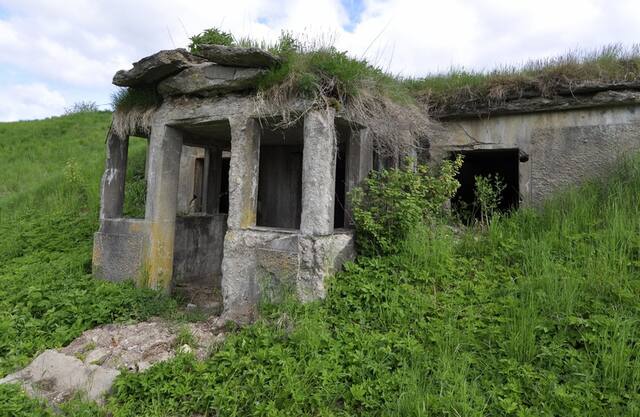
The First World War has left long-lasting scars not only in people’s destinies and hearts, but also in our land. Until our days, in the forests of Medumi parish in Augsdaugava district, countless bunkers, cannons and ammunition storages, trenches, and graves of soldiers who fought on both sides of the front have been preserved until our days.
On the route, it is possible to see several better-preserved bunkers, as well as the expositions of the First World War in Medumi and Turmantas (Lithuania), dedicated to the First World War.
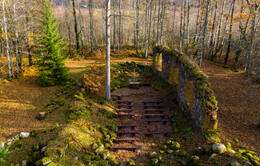
The ruins of Zvārde Church are located on the territory of the former Zvārde air target range, near the so-called "Kurgan of the Officers". After a kilometre and a half, you will pass a T-junction with the Rīteļi cemetery nearby.
The first wooden church and rectory were built here in 1567, and the stone church was built in 1783 at the expense of local peasants, Kurzeme nobles and Duke of Courland Peter Byron. During the Second World War, the church roof and tower were damaged in the fighting. In 1953, when the Soviet Ministry of Defence requested the establishment of an air-target range on the site, Zvārde Church, Ķerkliņi Church and Rīteļi Cemetery were placed in the centre of the air-target range - next to an artificial airfield with access roads and defensive positions, which was used as a target by Soviet pilots. Planes flew here from airfields in Latvia and elsewhere in the Soviet Union. In less than 40 years, the church, the cemetery, the former manor house and dozens of surrounding buildings were reduced to ruins.
On 1 January 1946, one of the biggest battles between the national partisans and the Cheka, or Soviet occupation State Security Committee, took place between Kabila and Renda near the "Apūznieki" houses. The partisans, among whom was the commander of the group, Fricis Kārkliņš, went after hay on the horses of the forest brigades. He left Ēvalds Pakulis as commander. The scouts reported that a Cheka unit was approaching the dugouts. Pakulis sent a partisan detachment - 25 well-armed men - to meet them. The bullets of the enemy wiped out the lives of three men - Kārlis Kristolds, Emītis Šmits and Ādolfs Kūrējs - but about 50 men fell on the Cheka side. Two of the fallen men are buried in the forest where these events once took place, and a memorial to them has been created.
Today, new bunkers are being discovered in the forests, which once sheltered almost 20 000 people who did not support the Soviet occupation and were uncooperative, or who hid in the forests for other reasons, such as fear for their lives, safety, etc.
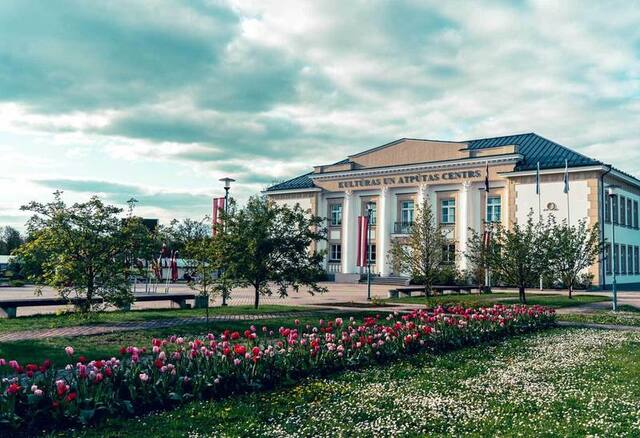
In the audio guide, explore the twists and turns of the Balvi region’s history – from the era of manor lords, through the freedom struggles of the national partisan movement, to the repeated occupation and its impact on the local population.
Take a walk through the town, follow the audio guide’s route instructions, and discover Balvi from a different perspective!
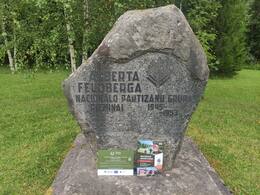
The memorial stone is located in the territory of Laumu Nature Park. Laumu Nature Park offers a variety of recreation for the whole family. It is a nature park created and maintained by the owners of the “Lauma” property, which offers several trails exploring natural processes: a plant trail, a bee trail, a forest trail, a bird trail. For the most active park visitors, there is also a sports trail with various obstacle courses for testing agility, sense of balance, jumping and other skills. The park is well-maintained, it has a cafe, a guest house, camping cabins, as well as tent, recreation and picnic areas.
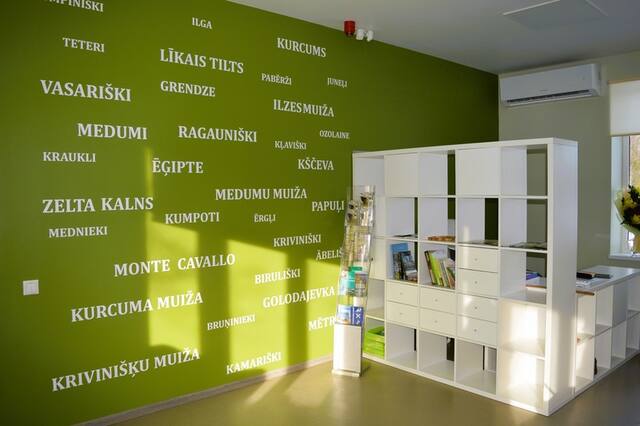
Before World War I, the area around Medumi was a beloved retreat, attracting artists, writers, and actors. Back in 1836, the St. Petersburg–Warsaw postal route, the longest road in the Russian Empire at the time, passed through Medumi. This important route came with its own infrastructure: stations, stables, and support buildings. For example, "stazharkas" were guard posts for road patrols who checked travelers, while "kasharkas" served as homes for road supervisors and soldiers.
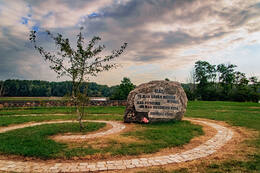
The Garden of Destiny is located on an island of the River Daugava, near the ruins of Koknese Castle. It is designed as a landscape architectural ensemble and is dedicated to the memory of the Latvian people that Latvia lost in the 20th century – those who fell in wars, were repressed, were forced into exile or otherwise suffered due to their political opinions. Like the Freedom Monument in Riga, the Garden of Destiny was created thanks to donations.
In cooperation with the Latvian Association of Politically Repressed Persons, a memorial ensemble for women deported to Siberia – mothers of Siberian children – has been created in the centre of the virtual House of Silence. Two boulders engraved with the words “Mother, you gave me life twice. When I was born and when I did not starve to death. A child of Siberia.” remind one of the selflessness and great sacrifice of mothers.
World War I trenches have been preserved on the grounds of the Garden of Destiny. A memorial to the Latvian Riflemen has been created there, which was inaugurated on the 100th anniversary of the founding of the Riflemen Regiments. The composition of the site consists of two parts: The group of Latvian boulders symbolises those who stayed at home, while the row of boulders in the trenches of the First World War symbolises the Latvian Riflemen. The boulders were selected and artistically arranged by sculptor Ojārs Feldbergs.
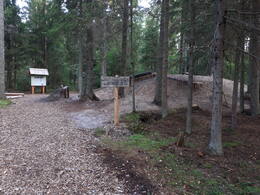
The bunker of the national partisans of Peter Chever is located in Lauciene municipality, about 4 km from the Talsi-Upesgrīva road. A trail covered with wood chips leads to the bunker. The renovated 31 square metre bunker is made of a concrete frame finished with half-logs of logs to create an authentic feel.
Captain Chever's group completed the bunker in the forest near Vangzene at the end of October 1949. It was planned to survive the winter of 1949-50. On 3 February 1950, the local forester betrayed the partisans and the bunker was attacked by a Cheka unit of more than 300 soldiers. At that time there were 19 people in the bunker - 17 men and two women. Six partisans fell in this unequal battle, but the others managed to break through two chains of Cheka siege by fighting their way through. By the end of the winter the partisans took refuge in surrounding houses with their supporters, but in the spring the group reunited until it was captured and destroyed in November 1950. After an attack by Cheka troops, the bunker was blown up and before it could be rebuilt, only a water-filled pit remained.
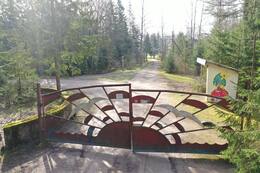
In 1962, one of the first underground launch complexes for R-12 ballistic missiles in the Soviet Union, the Dvina, was put into operation in Plokštinė Forest (Plungė district).
A military camp was set up 0.5 km from the missile launch site. It occupied an area of 12 hectares, and approximately 30 buildings were built here for various purposes, including residential houses (barracks), officers’ headquarters, two canteens, a boiler house, a power station, a medical post, a club, a pig farm, warehouses, garages, and other structures.
The Plokštinė underground missile launching complex was operational until 18 June 1978. The Soviet soldiers left the area, taking only their weapons with them. In 1979, the management of the former military complex was transferred to the Republican Association of Agricultural Recreation Facilities of Plungė District, and the Plateliai Pioneer Recreation Camp “Žuvėdra” was established at the military campus site. The site was reconstructed and adapted to the needs of the camp, which operated until 1990. After the restoration of Lithuanian independence, the Pioneer Camp was closed.
Since 1993, the site has been managed by the Žemaitija National Park Directorate. In 2017, many of the structures on the military campus were demolished due to their state of disrepair. Today, there are about ten buildings left at the site, and visitors may see them from the outside. Information boards about the former buildings and their functions have been installed.

G. Kirilovičs' story about the establishment of the Latvian state border after the restoration of Latvia's independence (interview in audio file, in Latvian)
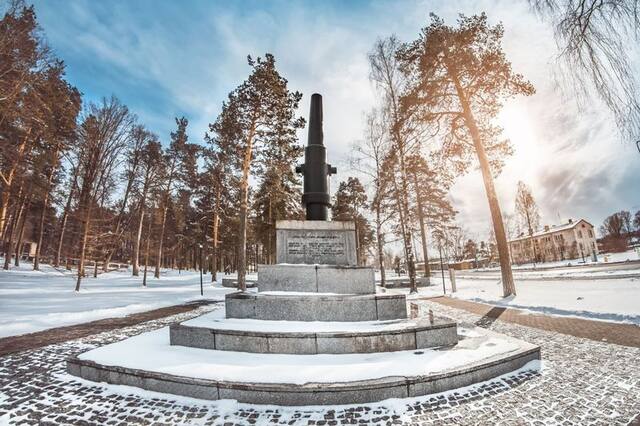
The Liberation Monument in Līvāni honors the events of year 1919, when the town was freed from Bolshevik control. Designed by architect Pēteris Dreimanis, it stands as a symbol of gratitude – a tribute to the people’s struggle and sacrifice for Latvia’s freedom.
During World War I, Līvāni sat on the front line for almost three years. A third of its 400 buildings were completely destroyed, including the Catholic church and cemetery. The local population was exhausted, starving, and desperate.
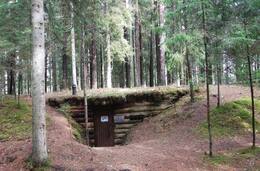
The restored dugout of the 2nd Company of the Rubenis Battalion is located in a forest by lake Ilziķi in the Usma parish. The dugout can be viewed from the outside for free at any time. However, tours inside the dugout must be booked in advance.
The Battalion of Lieutenant Robert Rubenis was part of a military unit formed by General Jānis Kurelis, and it is known for not surrendering to the German troops and showing heavy resistance. From November 14 to December 9 in 1944 fierce battles were fought in Ugāle, Usma, Renda and Zlēkas parishes between forces of the 16th German Army, SD and SS units under the command of the Police General Friedrich Jeckeln, and the battalion of the Kurelian unit commanded by Lieutenant Roberts Rubenis. The men under Rubenis’ command were well armed and organized and did not associate themselves with any of the two hostile occupying powers. Their actions are considered to be the most wide-spread and longest in the history of the Latvian national resistance movement. In battles near Renda and Zlēkas about 250 German soldiers fell, while only 50 casualties were suffered by Rubenis’ men. The events of those days are represented by the restored dugout in the forest (sod-covered, log cabin dug in the ground) where the men of the Rubenis Battalion once stayed.

The monument is located near Bauska Castle, on the banks of the River Mēmele. It is dedicated to the memory of all Latvian soldiers who died in the Latvian War of Independence, and it was built using donations by Bauska residents and organisations.
The inscription on the monument reads: “Par Latvijas brīvību kritušiem 1915–1920” (For the Ones Fallen for the Freedom of Latvia 1915–1920), with the lines by the poet Vilis Plūdonis engraved in the monument: “Tik tas ir liels, kas spēj priekš citiem mirt. Kam ausis dzirdēt, tas lai dzird!” (Only he is great, who can die for others. Who has the ears to hear, let them hear!) The monument was unveiled in 1929, with a church service at Bauska Church of the Holy Spirit, an address by the President of Latvia Gustavs Zemgals, and a parade by the home guards, schoolchildren and other organisations.

Welcome to the House of Treasures of the Free State – a place where the era of Latvia’s first independence comes to life!
This is no ordinary exhibition hall – it’s a true treasury, a source of pride not only for the people of Rēzekne but for all Latvians. Here, you’ll find hundreds of unique historical artifacts – medals, breast badges, uniforms, swords, documents, photographs, and more, telling the story of our nation from the War of Independence to the outbreak of World War II.
The most amazing about the exposition is that around 80% of these treasures have returned home from abroad, thanks to ten passionate collectors who spent years tracking the items down and preserving our history.
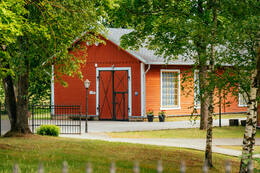
“Sēlija” museum in Viesīte contains several parts: Sēlija House (Sēlija cultural history exhibition) and Tourist Information Point (located in the former railway office building), the former Locomotive Repair Workshop of Viesīte Depot, Crafts Centre and Sēlija narrow-gauge railway history exhibition (located in the Locomotive Repair Workshop building). The most recognisable part of the Museum in Viesīte is the Little Train Park, which is located on the grounds of the former Viesīte Depot.
The narrow-gauge railway was originally built by the German Army from 1915–1916 to transport military cargo, but, after World War I, it was adapted for passenger transport. The museum displays a steam locomotive manufactured by the Schwarzkopff company in 1918, as well as a service cart built in 1916, a freight cart, a timber transport platform, a horsecar, a trolley, and an exhibition on the Sēlija railway. The museum also manages seven historical buildings of the station. The “Mazā Bānīša Parks” (Little Train Park) is friendly for visitors with children.
Not far from the Little Train Park – in the historical Viesīte Station Square – visitors can see the only narrow-gauge railway section in Latvia with a water pump that has been preserved. Several historic buildings are located near the station square: a railway freight warehouse, a cultural centre, a passenger station building and a dispensary.
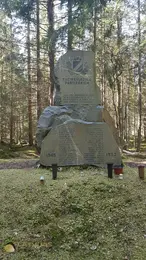
A monument to the memory of national partisans has been erected in the cemetery. The names of the partisans who served in the Puze-Piltene partisan group are carved into the stone. The granite slab at the foot of the monument has the numbers of the year (1945-1953) and the names of 36 fallen partisans engraved on it.
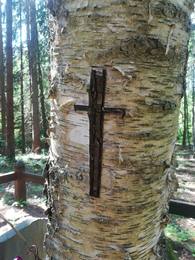
On February 23, 1946, a bloody battle took place in Tārgale parish near Vārnuvalkas between the Latvian national partisan group led by commander Brīvnieks at their camp site and the destroyer unit of the Soviet occupation army. Six partisans fell in the battle, who were secretly buried by local residents in the forest there. Later, two more who were shot were buried there without trial or sentence. Locally, this corner of the forest was called the Dzelzkalns Cemetery, which for many years only connoisseurs were able to find – by the sign of the cross in the spruce.
In the summer of 1989, members of the Ugāle branch of the Latvian National Liberation Army (LNNK) placed birch crosses at the national burial site of the Puze-Piltene group of those who fell on February 23, 1946, in the Dzelzkalni area of the Zūri forest, and searched for relatives of the fallen in Latvia and abroad.
On April 27, 1991, with the participation of relatives of the fallen and representatives of national organizations from several countries, the graves were consecrated by theology professor Roberts Akmentiņš, and they were named the Dzelzkalni Brothers' Graves.
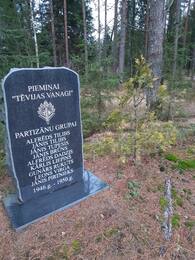
The "Duncs Bunker" with the memorial plaque "Patriotic Hawks" is located in Otaņķu municipality, in the place where the first bunker of the partisan group of the national resistance organisation "Patriotic Hawks" was located.
In the winter of 1945/46, in the village of Ķīburi in Barta parish, three patriotic men, led by Alfred Tilib (a former legionary of the 19th SS Division), founded the national resistance movement "Tēvijas Hawks", which soon had about 200 members from different places: Liepāja, Aizpute, Nīca, Dunika, Grobiņa, Barta, Gavieze. This movement fought for the liberation of Latvia.
The size of the bunker in which the partisans were housed was 4 x 4 m and was made of thick, horizontally laid logs. It was entered from above through a trapdoor with a small pine tree growing out of it, under which was a ladder. The hatches were on two floors, each with a place for 7-8 men to sleep. Unfortunately, the bunker was found and blown up in 1947.
Today, a depression can be seen in the ground where the bunker was. The site is located in the forest and can be freely accessed by anyone at any time without prior reservation.
A picnic area with a shelter is available nearby.
The memorial plaque was unveiled on 9 September 2005. The granite stele was erected by the Latvian National Partisans' Association in cooperation with the Municipality of Nīca, the Barta Forestry and the Rudes Primary School.
The object has the status of a cultural and historical monument of the region
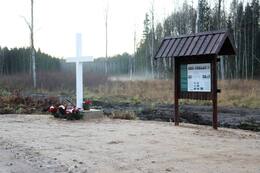
The memorial site was created on the regional road P74 Siliņi - Aknīste, 12 kilometers from Aknīste, turning onto the Latvian State Forest "Žagari ceļa".
The vast forest massif of the northern part of Elkšķi parish already at the end of the summer of 1944 became a gathering place for people who were preparing for armed struggle against the Soviet occupation power. At the end of 1944, national partisan groups began to form in the Aknīste area. A suitable place for establishing a partisan camp was the Diamond Forest , which was located on the southern edge of the Elkšķi large forest, near the Aknīste Great Swamp. There, less than 10 kilometers from Aknīste parish, the national partisans created three winter bunkers for wintering. Communications of the men gathered in the forest were ensured with the support of nearby houses - Baltimores, Gargrodes, Līči, Priedes, Krūmi and residents of other houses, neighbors and partisans.
The partisan battle with the soldiers of the Latvian SSR Ministry of State Security in the Diamond Forest took place on February 13, 1945. The Chekists, having taken hostages, drove them forward to reveal the partisan bunkers. The Forest Brothers, seeing the danger, opened fire, not sparing the hostages. 10 representatives of the Soviet occupation troops, eight national partisans and four hostages fell in the battle. Despite the losses of the Forest Brothers, the Chekists failed to capture the partisan bunkers. The surviving partisans waited for darkness and left the settlement. The Chekist soldiers wounded in the battle, groaning, were unable to leave the battlefield. After this battle, which can be considered the forest brothers' first "baptism of battle", the partisans felt like brothers and the rifle seemed more precious than anything, like the only reliable savior.
The White Cross and information stand in the Diamond Forest were installed on Lāčplēsis Day - November 11, 2022. The creation of the memorial site was supported by the Jēkabpils regional government, the association "Tēvzemes sargi" and the Latvian State Forests. The author of the content of the information stand is historian Haralds Bruņinieks.
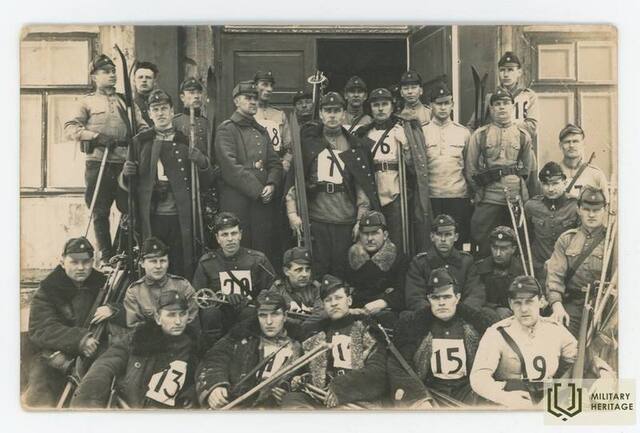
In this audio guide, you'll learn about the guardians of border along Latvia’s eastern border in Latgale – the border guards. You’ll discover what their daily lives were like between the founding of the Latvian state in 1918 and the Soviet occupation in 1940.
Today, thanks to modern technology, border surveillance might seem relatively straightforward. But hundred years ago, guarding the border was a serious challenge that demanded not only physical endurance but also great courage and a strong sense of responsibility. Back then, border guards had to rely entirely on their own skills, experience, and teamwork to protect the country – often in remote and difficult terrain.
It’s important to remember that borders are not just geopolitical lines. They are also home to real people, with their own social lives, cultures, and livelihoods.
We hope these stories will help you appreciate the dedication, professionalism, and bravery of Latvia’s border guards, past and present.
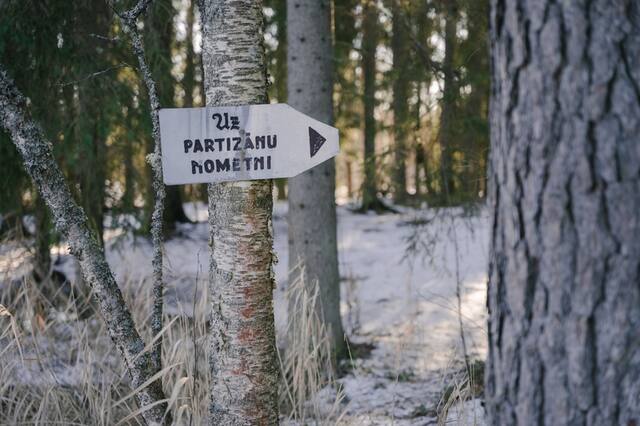
During WWII, Stompaki swamp was one of the largest national partisan camps in the Baltics, with 24 bunkers and several surface buildings. The Stompaki battle took place here on March 2, 1945, a major clash between partisans and Soviet forces.
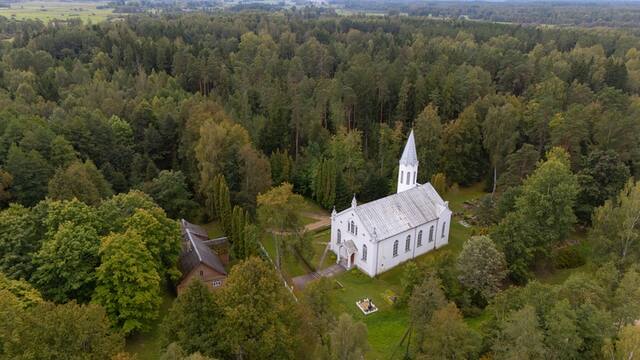
We are standing at the Church of the Holy Trinity in Vanagi – a small Roman Catholic church tucked away in a remote corner of Latgale. It may seem quiet and modest, but within its walls live stories that reflect both the deep faith of this region and the tragic events of the 20th century.
This is the story of the church – and the people who built and served it. Especially one man: its spiritual leader, priest Antons Juhņevičs.
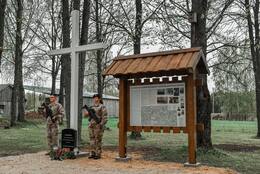
The memorial site for national partisans near the Kurmene parish hall was opened on May 4, 2023, at the site of a monument praising the occupation troops of the USSR, which was dismantled in accordance with the law “On the Prohibition of Exhibiting Objects Glorifying the Soviet and Nazi Regimes and Their Dismantling in the Territory of the Republic of Latvia” adopted by the Saeima of the Republic of Latvia in June 2022. A white-painted wooden cross has been installed at the memorial site, at the foot of which is a black granite stele with the text carved into it: “To the national partisans of Kurmene and surrounding parishes 1944-1953. They will break us, but they will not bend us.”
To the right of the memorial sign, a stand with information about the Kurmene national partisans prepared by Bauska Museum historian Raits Ābelnieks has been installed. The memorial site was established at the initiative of local residents and with the support of the Kurmene parish branch of the Bauska Region Elderly People's Association and the Bauska Region Council.
An active struggle against the Soviet occupation regime and repression by the authorities took place in the eastern part of Bauska region – in Skaistkalne, Kurmene, Bārbele and Valle parishes. In this area, since the second Soviet occupation in the autumn of 1944, there were many men hiding from the authorities. The Mežabrāļi were ready to resist the authorities’ attempts to capture them, so they were provided with weapons and ammunition. At that time, this was easy to do, because there was no shortage of such goods in the former battlefields.
Contacts were established between individual groups and larger partisan units were formed. They were joined by former Latvian Legion soldiers from Kurzeme, who had not laid down their arms and surrendered after the German capitulation, but continued to fight against the occupiers. In the period from July to September, a national partisan unit of approximately 20 men was formed, the core of which was formed by the inhabitants of Kurmene parish. It also included men and young people from Bārbele, Skaistkalne, Valle and the neighboring Mazzalve parish in Jēkabpils district.
Ludvigs Putnieks, born in 1912, from the Kurmene parish "Nagliņiem", became the commander of the unit, his deputy was the former legionnaire Viktors Ančevs from the same parish "Mūrniekim". In the 1930s, L. Putnieks led the Kurmene branch of the patriotic youth organization "Latvijas Vanagi".
This partisan unit carried out several attacks on officials of the occupation authorities in the autumn and winter of 1945, as well as robbed collaborators and state-owned dairies and shops. This was done so that the maintenance of the forest brothers would not be a heavy burden on their already almost completely bankrupt relatives and other supporters. Several fighters of the destroyer battalions, the so-called "istrebikes", and the occupation authorities' inserts in the Kurmene parish Partisan Village Council and the Skaistkalne parish executive committee fell from partisan bullets. Such partisan activity significantly reduced the willingness of the collaborators to carry out the orders of the occupation authorities.
However, an agent was infiltrated into L. Putnieks' partisan group, as evidenced by subsequent events. On January 14, 1946, when V. Ančevs was visiting his mother in "Mūrnieki", militiamen and "Istrebiķe" arrived there to detain him. A shootout broke out, in which the forest brother and his mother died in an unequal battle.
On February 2, units of the 288th Rifle Regiment of the USSR Internal Troops attacked partisan bunkers in the Mazzalve parish forest near the border of Kurmene parish. In a bloody battle against overwhelming odds, Jānis Teodors Meija from Valle parish, Vilips Saulītis from Skaistkalne parish, Arnolds Freimanis from Kurmene parish, Fricis Galviņš from Mazzalve parish and an unknown Riga resident with the nickname Ika or Jonelis fell. The other forest brothers managed to retreat and disappear in the bustle of the battle. No information has been found about the attackers' losses. In subsequent Chekist operations, several other partisans were killed or captured.
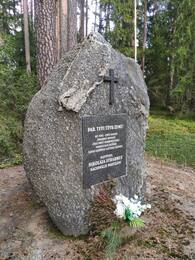
The memorial stone is located on the Sloka-Talsi highway, near the Rideļi mill.
The national partisan group of Captain Nikolajs Straume (“Buks”) was formed soon after the capitulation of the German army and operated in the forests of Tukums and Talsi districts. The core of the group was made up of officers and soldiers of the Latvian Legion, who were also joined by local residents. The names of 38 members are known. In December 1945, the group set up a winter bunker for 10–12 fighters in Lauciena parish. In January 1946, the troops of the Soviet People’s Commissariat of State Security attempted to surround the camp, but the entire group successfully escaped the encirclement without losses. Between March 1947 and October 1948, Soviet troops carried out several operations, arresting supporters of the national partisans and killing fighters in several battles. Nikolajs Straume was shot on October 13, 1948.
Nikolajs Straume was one of the leaders of the joint activities of the Talsi and Tukums national partisan groups.
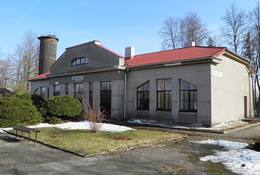
Vecumnieki railway station is located south of the village of Vecumnieki.
Vecumnieki railway station was built in 1904 as a station on the Ventspils-Moscow railway line. Initially, it was called “Neugut” (during the German occupation in 1916/1917, it was called “Neugut Kurland”). It gained greater importance during the First World War, when a European-wide railway branch was built from it. In 1916, when the German army's front line had strengthened and stabilized along the left bank of the Daugava, on March 15, a decision was made to build a 25 km railway line with a track gauge of 1435 mm from Vecumnieki to Baldone (station: Mercendarbe - Merzendorf) for the needs of supplying the front. On March 30, about 5,000 workers began work, and by May 1, the line had been built to Skarbe station, and by May 6, to Mercendarbe. The sequence of stations from south to north was as follows: Neugut Kurland, Nougut Nord, Birsemnek, Gedeng, Skarbe, Merzendorf. At the largest of the stations, Skarbe, cargo was transshipped, from where it was transported to the front by horse-drawn transport. This railway existed for only a few years, as late as 1921, logs and firewood were transported along the railway line, until it was demolished in 1925. The location of the railway line is very different in different sections - in places it is crossed by roads of various importance, in places, as the embankment is clearly visible, it crosses forest massifs. There are places that are difficult to pass during the vegetation period.
At the former Gediņi station ("Bahnhoff Gedeng"), a narrow-gauge railway branched off in a northeasterly direction, the tracks of which continued towards the Daugava. At the Sila house it crossed Silupi (Kausupi) (former station "Bhf. Sille"), but at the Podnieki house it branched off. The first branch went to the right to Berkavas, and the second to the left to Vilki mountains and then returned to the broad-gauge (1435 mm) railway at the Skarbe station.
In September 1917, the Germans built another narrow-gauge railway line (gauge of 600 mm) from Mercendarbe and Skarbe to the Daugava, where they built a pontoon bridge and opened traffic all the way to Ikšķile on October 1. The flood of December 4 washed away the aforementioned bridge.
Since 1919, the station has been called Vecmuiža. In 1926, a stone building (architect J. Neijs) was built on the site of the wooden station building destroyed in the war. In 1940, the station was renamed Vecumnieki. On June 14, 1941 and March 25, 1949, several hundred Latvian residents were deported from Vecumnieki station, as well as from many other Latvian railway stations. In total, 44,271 Latvian residents suffered as a result of the deportation actions of March 25, 1949 (until March 30).
In 2000, passenger train traffic was closed on the Jelgava-Krustpils line; currently, this line is used only for freight train traffic.
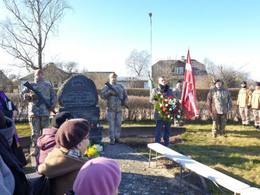
The memorial is located at the intersection of Striķu and Lauku Street.
The tragically bloody event that took place at this place took place during peacetime on 24 February 1950 in Saldus, on Striķu (then 5. augusta) Street, near the 33rd and 35th houses. In the 33rd house of this street, after the destruction of the Zemgale group of forest brigades with its headquarters bunker in the forests of Īle in March 1949, three forest brigades were still alive and uncaptured, including the group commander himself, Kārlis Krauja (real name Visvaldis Brizga), and his associate Vilis Krusts. They had hoped to spend the winter of 1950 at the Bergmanis' home in Saldus, but they were rounded up and tracked down. The two houses were besieged by about 30 Chekists and a fierce battle took place early in the morning. The Chekists were fired on from both houses, but, losing to overwhelming odds, the two partisans tried to escape to the nearby Veide forest. However, the Chekists shot partisan Krusta already on the stairs of the house, and Krauja - about 80 metres further towards the forest.
Both houses were set on fire, the occupants having been asked to come out beforehand and promised that their lives would be spared. There are reports that people did come out, but they were shot on the spot anyway. Among the people shot or suffocating in the smoke were the father and son Kursinski from House 35, who had supported the partisans, but also Leontine Ezerkalni, a resident of the Kursinski house, who had no knowledge of her landlord's connections with the forest brigades, was shot.
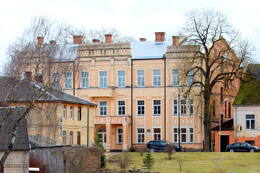
A memorial plaque to the members of the youth resistance organization at the Bauska city elementary school at Rīgas Street 32, where the Bauska secondary school was located after World War II. The inscription on the plaque, unveiled in 2000, reads: "... And we carried only our hearts high. A group of youth national resistance studied in this school, which dedicated their youth to the fight against the communist occupation power (1948-1950)."
In the autumn of 1948, a national resistance group of patriotic youth was formed in Bauska, which, in the proclamations and slogans posted in the city, called for a fight against the occupiers and the restoration of Latvia's independence, as well as warned of the deportations expected by the communist regime on March 25, 1949. Several young people from Bauska studied in Riga after graduating from high school, but continued to work in this underground organization. Several young people had purchased weapons and explosives and staged an assassination attempt on the chairman of the collective farm in Codes parish. It was planned to attack other officials of the Soviet occupation authorities, as well as blow up the festive stands in Bauska, Baldone and Eleya. This did not happen, because arrests began in mid-1950. 12 young people were arrested in Bauska and Riga, several of them were arrested on the day of high school graduation – June 22. In February 1951, the Baltic War District Tribunal sentenced the organization's leaders Gunārs Zemtautis and Arvīds Klēugas to death, and six high school students and four students to 25 years in forced labor camps.
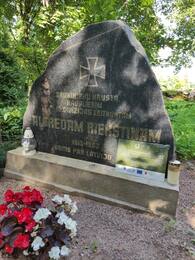
On September 11, 1952, tragic events took place in Dreimani farm. USSR security forces knew that on 30th of August 1952, Alfreds Riekstins and two other men had landed in Kurzeme as part of a mission led by USA Intelligence Services, and on September 11, they were followed and surrounded in the barn of Dreimani farm. A capsule of poison took the life of Alfreds Riekstins.
Aina Pupola is the granddaughter of Alfreds Riekstins' stepmother, and in 1952, she was 18 years old. She recalls:
"When Uncle Alfreds came to my grandmother's and mother's house, he said that he has come to help liberate Latvia and that it cannot remain under Russian occupation forever. Alfreds was like a father to me, and he used to call me Buddy. We found out that the whole neighborhood was surrounded. We saw large army trucks near the Kretuli farm. It was hard to imagine that all of this had been brought for only two people. There was no shooting. Alfreds came out and collapsed by the barn. Cheka operatives carried him here, near the well, and covered him with some fabric."
My parents were taken away to Vorkuta. My mother died there, longing in vain to come back to her motherland. I was not allowed to return to Dreimani farm for three months. A Cheka lieutenant, Krumins, followed my every step. He even followed me to my school in Sabile. They were waiting and trying to capture the third man for about three months.
They completely demolished our house and even knocked over all of the beehives. Cheka took all of our and Uncle Alfreds' photos and gave an order to the local collective farm known as Kolkhoz to take all of our belongings. Several Sabile teachers helped me. This was a horrible time.
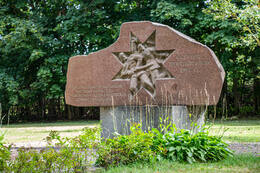
The Monument to the Defenders of Jelgava – the Daugavgrīva Home Guards who stopped the German Army from attacking Jelgava at the end of April 1915, was unveiled in 1991 next to Svēte School in Jelgava Municipality. At the beginning of May 1915, a large demonstration was held in Jelgava to commemorate this important event. The fact that the Latvian Home Guards managed to stop the German attack was used by Jānis Čakste and his as sociates to justify the idea of establishing Latvian Riflemen units during World War I.
The author of the monument is sculptor Alvīne Veinbaha (1923–2011)
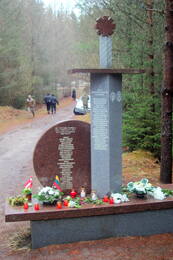
The bunker is located in the Īle forestry of Zebrene Rural Territory, at the turn-off from the P104 Biksti-Auce Road.
The Kārlis Krauja Group of Īle National Partisans was formed in 1947. V. Z. Brizga (alias K. Krauja) was appointed the commander of the group. In October 1948, the Krauja Group merged with a group of Lithuanian national partisans. Krauja Group operated in Jelgava District and consisted of 27 national partisans.
In October 1948, Krauja Group built an underground bunker in Lielauce Parish, Jelgava County, not far from the Īle Forestry, 300 metres to the north of the “Priedaišu” house. Its total length, including battle passages, was 45 metres. 70 remote-controlled mines were planted around the bunker. The bunker was equipped with a furnace, a well, a toilet, and a storage room.
On 17 March 1949, the 24 partisans who were in the bunker at the time fought their last battle against the 760-strong troops of the Ministry of National Security or Cheka. After the battle, 9 members of the group were arrested, while 15 fell in the battle, with eight of them being Latvian and seven being Lithuanian. In 1992, the Home Guards, together with the Daugavas Vanagi (Hawks of the Daugava), unearthed the bunker that had been blown up. A White Cross, a memorial stone and a granite statue were erected at the site.
Inside the bunker, you can see a stove, a table, and narrow benches on which the partisans slept. Information boards and memorial stones with the names of the partisans have been installed at the bunker.
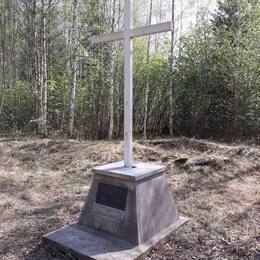
The memorial site for the members of the Jānis Rozentāls – Jānis Freimanis national partisan group was established in 1996 in Iecava parish, on the site of the bunker of J. Freimanis' forest brothers' group. On the concrete base under a white birch cross, you can read the inscription "For the freedom of Latvia to the fallen national partisans" and the names of the forest brothers – Jānis Freimanis, Jānis Kāpostiņš and Laimonis Zīraks, who fell on January 11, 1950 in the former territory of Garoza parish of Jelgava district. Behind the monument, the site of the bunker is visible, but on the edge of the square there is a stand with information prepared by Bauska Museum historian Raits Ābelnieks about the national partisan group of J. Rozentāls and the Dūmiņš brothers, which operated in Iecava, Misa and Zālīte parishes in 1944-1947.
The Forest Brothers unit led by Jānis Rozentāls was formed in the summer of 1945, but by September it already had 11 partisans. This Forest Brothers group was active in the Iecava and Zālīte parishes of Bauska district, as well as in the Garoza, Salgale and Pēternieki parishes of Jelgava district. On August 13, 1948, the Chekists managed to kill the unit commander and his brother, capture three other partisans, but the remaining Forest Brothers of this group continued the fight against the occupiers under the leadership of Jānis Freimanis.
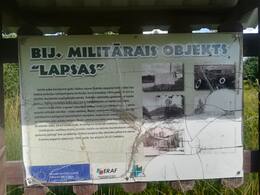
The landfill's service base is located approximately 2 kilometres east of Striķu Manor, on the Saldus-Auce road. The former Soviet Military Aviation Target Range (military unit No 15439) in Zvārde is located south of Saldus. The territory of the airfield is home to several sights - the ruins of Zvārde and Ķerkliņi churches, the ruined Rīteļi cemetery, the observation post of the airfield, the so-called "Officers' Kurgan" and the former airfield personnel base and shooting range "Lapsas".
The Zvārde air target range required a unit of approximately one company to service the air target range - to install targets, repair damage, guard the air target range and coordinate air flights. It was based on the site of the house called "Lapsas" until the Second World War. With the construction of the airfield, barracks, transport sheds, a flight control tower and a firing range for training personnel were built.
After Latvia regained its independence, the Zvārde Defence Forces Training Centre operated here, but since 2007 the site has been owned by the municipality and leased by several hunting collectives. The former barracks house an exhibition on the history of Zvārde parish.