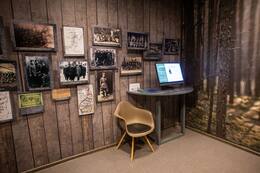

World War II and its Aftermath – Soviet Occupation in Southern Latvia and Latgale
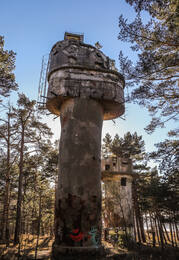
Karosta, the Military port of Liepāja (tour)
The Karosta is the largest historical military territory in the Baltics and occupies almost one third of the entire territory of Liepāja. The Karosta is a unique compound of military and fortification buildings on the shores of the Baltic Sea with a special meaning in the history and architecture of Latvia and the world. The Karosta features such military heritage sites as the North Pier and forts, the Redan, Karosta Prison, Karosta Water Tower, St. Nicholas Orthodox Maritime Cathedral, Oskars Kalpaks Bridge and others.
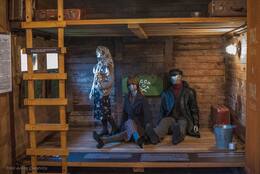
Cattle wagon used for deportations – museum at Skrunda train station
To commemorate the deportations of June 1941 and March 1949, a memorial stone and a four-axle wagon, which also serves as the museum dedicated to deportations, was erected at the Skrunda railway station. This is the first wagon-type museum in Latvia that holds a permanent exhibit of photos, letters, memoirs, documents and various items made by the people deported from the Skrunda station. Skrunda station was a location where deportees were gathered, and one of the three stations in the region to which people from the Skrunda and the Kuldīga area were brought. In 1941, the family of the first President of the restored Republic of Latvia, Guntis Ulmanis, was deported from here to Krasnoyarsk Krai in Siberia.
With the help of deportations, the Soviets dealt with supporters of the national partizans’ and at the same time intimidated the remaining rural population, forcing them to join the collective farms.
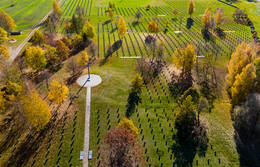
Saldus German Soldiers' Cemetery
The Saldus German Soldiers' Cemetery is located on the Saldus–Ezeres highway. The cemetery, which covers an area of 8 hectares, contains the remains of around 25,000 German soldiers, as well as some Latvian legionnaires. Reburials have been taking place since 1997.
From May 1 to October 1, an exhibition about the battles of Courland can be viewed in the memorial room. During this period, the memorial room is open on weekdays from 9:00 to 17:00, and on Saturdays and Sundays a guide is also working in the cemetery. Registers of soldiers buried in the Saldus German soldiers' cemetery and soldiers who fell throughout Latvia are also available.
Ezere local history repository “Muitas Nams” (Customs House)
The Ezere Customs House is located in Ezere near the Saldus-Mažeikiai highway at the Latvian-Lithuanian border. The act of surrender of the German Army units ‘Kurzeme’ (Kurland) surrounded in the so-called ‘Courland Pocket’ was signed in this building on 8 May 1945. It is believed that World War II actually ended in Ezere. The customs house has an exhibit covering the events of the end of World War II and exhibits detailing the history of Ezere parish from ancient to modern days. In the morning of 7 May 1945, the commander of the Leningrad Front, Marshal L. Govorov, sent an ultimatum to the command of the army group ‘Kurzeme’ to lay down arms. The act of surrender was signed by the involved parties on May 8 and it detailed the procedure of surrender, weapons collection points, documents and information to be submitted and other practical measures.
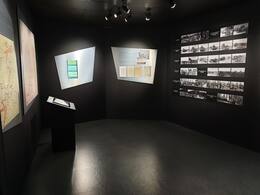
Soviet air force target firing ground in Zvārde
Zvārde landfill is located in Zvārde municipality, Saldus region. It is a former military aviation training ground of the USSR, covering more than 24 000 hectares.
The territory of the former airfield is home to several sites: the Officers' Kurgan, the ruins of the Zvārde and Ķērkliņi churches, the Rīteļi cemetery, the former army base "Lapsas", and others. Until the Second World War, the site of the observation tower was home to the "Vairogi" house. During the construction of the polygon, what was left of the farm - walls, the remains of the apple orchard, and part of the ruins of the Veczvārde manor - was piled together to form a mound and the observation tower was built on it. It was used as an observation point for coordinating the army's training manoeuvres. This place is popularly known as Kurgan. The mound overlooks the former training ground and the wooded areas of Zvārde Nature Park and Nature Reserve. A good place for bird watching. The surroundings of Kurgāns are not landscaped.
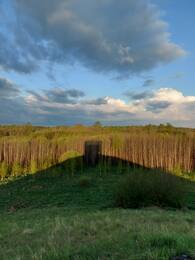
Īle National Partisan Bunker
The bunker is located in the Īle forestry of Zebrene Rural Territory, at the turn-off from the P104 Biksti-Auce Road.
The Kārlis Krauja Group of Īle National Partisans was formed in 1947. V. Z. Brizga (alias K. Krauja) was appointed the commander of the group. In October 1948, the Krauja Group merged with a group of Lithuanian national partisans. Krauja Group operated in Jelgava District and consisted of 27 national partisans.
In October 1948, Krauja Group built an underground bunker in Lielauce Parish, Jelgava County, not far from the Īle Forestry, 300 metres to the north of the “Priedaišu” house. Its total length, including battle passages, was 45 metres. 70 remote-controlled mines were planted around the bunker. The bunker was equipped with a furnace, a well, a toilet, and a storage room.
On 17 March 1949, the 24 partisans who were in the bunker at the time fought their last battle against the 760-strong troops of the Ministry of National Security or Cheka. After the battle, 9 members of the group were arrested, while 15 fell in the battle, with eight of them being Latvian and seven being Lithuanian. In 1992, the Home Guards, together with the Daugavas Vanagi (Hawks of the Daugava), unearthed the bunker that had been blown up. A White Cross, a memorial stone and a granite statue were erected at the site.
Inside the bunker, you can see a stove, a table, and narrow benches on which the partisans slept. Information boards and memorial stones with the names of the partisans have been installed at the bunker.
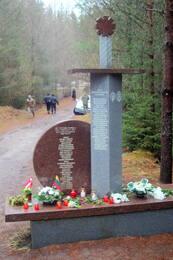
The Tower of Jelgava Holy Trinity Church
The Tower of Jelgava Holy Trinity Church is located in the centre of the city of Jelgava.
The history of the tower spans more than four centuries, becoming an important witness to the development of the city, as well as tragic events. The church was built in 1574 on the orders of the Duke of Courland and Semigallia, Gotthard Kettler, and its tower, completed in 1688 under the lead of the construction master Martin Knoch, became one of the most prominent structures of the city.
During the Second World War, Jelgava was severely destroyed and, in 1944, the church burnt down after a Soviet air raid. After the war, the Soviet authorities blew up the altar part of the church and demolished the walls. Only the tower was preserved as a strategic object, as it was the highest point in the city. During and after the war, the tower was used for military purposes. Enemy positions were observed and the surroundings were controlled from the tower.
During the post-war years, the tower also served as a strategic point for resistance activities. It became a secret meeting place and a base for the transfer of information that was essential for the fight against the Soviet regime. The tower, while retaining its historical significance, has been reborn today as a cultural and educational centre.
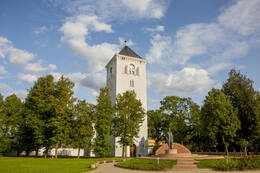
Jelgava History and Art Museum of Ģ. Eliass
Jelgava History and Art Museum of Ģ. Eliass is located in a building that is called Academia Petrina (Peter’s Academy). It was built in 1775 as the first university in Latvia and is one of the few public buildings in Jelgava to survive and be restored after World War II. In the summer of 1944, Jelgava lost almost everything – a large part of its population and historic buildings, which were hardly restored after World War II. The predecessor of the current museum – the Kurzeme Provincial Museum – was founded in 1818. It was the second oldest museum in Latvia and the first one established outside Riga. The museum has been housed in the Academia Petrina building since 1952. Today, the museum features permanent exhibitions on the renowned Latvian artist Ģederts Eliass (1887–1975), the prehistory and Middle Ages of the Zemgale region, Jelgava during the era of the Duchy of Courland and Semigallia (1561–1795), the Courland Governorate (1795–1918), and the period of Latvia’s independence (1918–1940).
The museum exhibition “Life Continues Under Foreign Rule” explores life in Latvia during the German and Soviet occupations. The virtual exhibition “Wars and a Soldier Through the Ages of Jelgava” offers insight into the various wars that have affected Jelgava, including historical events from the First and Second World Wars.
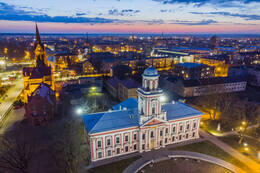
Memorial "Synagogue Garden"
The memorial is located in the city centre, not far from the Bauska Municipality Tourist Information Centre and Town Hall Square.
It was created thanks to the initiative and donations of the descendants of Bauska Jews living in Israel, the USA and Great Britain, as well as the support of the Bauska Municipality Council and Latvian Jewish congregations and communities.
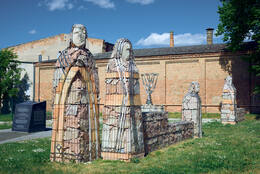
The memorial was designed by sculptor Ģirts Burvis. It is the same size as the former Bauska Great Synagogue, and the stone images symbolise Jews coming out of the place of worship after the service. A symbolic bimah is situated in the centre of the memorial; it is a raised platform or table used in Jewish religious rituals in the synagogue. An inscription on it reads: “A tribute to the Jews of Bauska, who lived here for centuries and built this city, and who were killed by the Nazis and their local helpers in 1941. Honouring the memory of the Jewish people – the descendants of the Jews of Bauska and the people of Bauska.”
In 1935, almost 800 Jews lived in Bauska. After the Nazi occupation, in July 1941, many Jews were arrested and deported, and around 700 Jews were shot. Bauska Great Synagogue was destroyed during World War II.
“Soviet Years” Exhibition at Aizkraukle Museum of History and Art
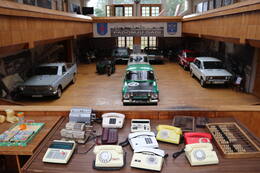
In November 2018, to celebrate the centenary of Latvia, the “Soviet Years” exhibition was opened at Aizkraukle Museum of History and Art – the largest exhibition in the Baltic states dedicated to the cultural and historical heritage of the 1950s–1980s. The exhibition is spread over three floors in an area of 1,060 m2. It reflects Soviet life in its multiple facets: everyday life, work and leisure, education and culture. Soviet-era cars are on display on the ground floor.
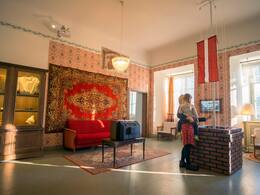
A separate library – the Red Corner has been set up. A wide-ranging exhibition invites visitors to explore everyday life and apartment interiors during the Soviet era – furniture and household items, tableware, textiles and electrical appliances.
Other exhibition spaces are dedicated to emigration, Soviet repressions, everyday life, medicine, state structures, tourism and sport, childhood and education. Soviet military paraphernalia and uniforms are also on display among various exhibits.
Siberi emadele pühendatud mälestusmärk "Saatuse aias"
Saatuseaed asub Daugava jõe saarel Koknese lossi varemete lähedal. See on kujundatud maastikuarhitektuurilise ansamblina ja pühendatud läti rahva mälestusele, kelle Läti 20. sajandil kaotas – neile, kes langesid sõdades, represseeriti, olid sunnitud pagendusse minema või kannatasid muul viisil oma poliitiliste vaadete tõttu. Nagu Riia Vabadusmonument, loodi ka Saatuseaed annetuste toel.
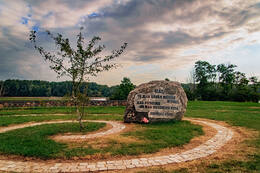
Koostöös Läti Poliitiliselt Represseeritud Isikute Ühinguga on virtuaalse Vaikuse Maja keskele loodud mälestusansambel Siberisse küüditatud naistele – Siberi laste emadele. Kaks rändrahnu, millele on graveeritud kiri „Ema, sa andsid mulle elu kaks korda. Kui ma sündisin ja kui ma nälga ei surnud. Siberi laps.“ meenutavad emade ennastsalgavust ja suurt ohverdust.
Saatuseaia territooriumil on säilinud Esimese maailmasõja kaevikud. Sinna on loodud Läti küttide mälestusmärk, mis avati küttrügementide asutamise 100. aastapäeval. Platsi kompositsioon koosneb kahest osast: Läti rändrahnude rühm sümboliseerib neid, kes jäid koju, samas kui Esimese maailmasõja kaevikutes olev rändrahnude rida sümboliseerib Läti kütte. Rännud valis ja kunstiliselt paigutas skulptor Ojārs Feldbergs.
Näitus "Vabadusvõitlused 20. sajandil" Jēkabpilsi ajaloomuuseumis
Asub Krustpilsi lossis
Näitus "Vabadusvõitlused 20. sajandil" on avatud.
Nõukogude repressioonid. Karmid mälestused. Siin klubitoolil istudes on teil võimalus kuulata katkendeid Jēkabpilsi elaniku Ilmārs Knaģise raamatust „Olid sellised ajad“. Toa ühel seinal libiseb erapooletult Siberisse küüditatud kodanike nimekiri, nagu filmi lõputiitrid. Sealsamas vanal teleril saate vaadata amatöörvideot Lenini monumendi eemaldamisest Jēkabpilsis. Külastajaid huvitab lisaks sisule ka tehnilised võimalused – kuidas see film vanal teleril tehti.
Jēkabpilsi ajaloomuuseumis on võimalik kuulata muuseumispetsialistide ettevalmistatud loenguid või registreeruda ekskursioonile: Jēkabpils ja selle ümbrus Esimese maailmasõja ajal, Jēkabpils 1990. aastal, Barrikaadide aeg, 1949. aasta küüditamised - 70, Jēkabpillased - Lāčplēsise sõjaordu kavalerid jne.
Loengute keskmine kestus on 40 minutit. Lisainfo ja registreerimine loengutele on võimalik telefonil 65221042 või 27008136.
Jēkabpilsi ajaloomuuseum asub Krustpilsi lossis. 1940. aastal, pärast Läti liitmist NSV Liiduga, paiknes Krustpilsi lossis 126. laskurdiviis. Teise maailmasõja ajal asus lossis Saksa laatsaret ja pärast 1944. aasta augustit Punaarmee sõjaväehaigla. Pärast sõda asusid Krustpilsi lossis ja sellega külgnevates mõisahoonetes Nõukogude armee 16. kaugluurelennurügemendi ja 15. õhuväe keskladud.
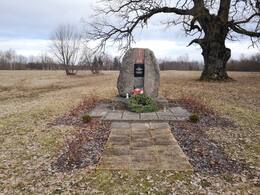
Jersika rahvuspartisanide monument
Mälestuskivi asub Jersika raudteejaama lähedal. Sellele on graveeritud kiri: „LTS(p)A – Latvijas Tēvzemes sargu (partisānu) apvienības cīnītiesjiem” (Läti Isamaa Kaitsjate Liidu (partisanide) võitlejatele). Partisanide Liit ühendas kuue Läti ringkonna rahvuspartisane võitluses kommunistliku okupatsioonirežiimi vastu aastatel 1945–1955. Mälestuskivi on esimene peatus matkal „Jersika-Vanagi. Nacionālo partizānu leģendām pa pēdām.” (Jersika-Vanagi. Rahvuspartisanide legendide rajal). Marsruut algab Jersika jaamast ja pakub ülevaate rahvuspartisaniliikumise ajaloost, selle silmapaistvamatest tegelastest ja nende tegevusest. Edasi rajal: metsa peidetud rahvuspartisanide punkri asukoht; Isamaakaitseväe (partisanide) ühingu asutamiskoht, nagu on mainitud tunnistustes; ja metsas asuv mälestuskoht „Avotnīca” (latgali keeles „Olūtneica”), kus on tehtud lõke. Matka sihtkohaks on Vanagi kirik, kus teenis preester Antons Juhņevičs. Siin on filmitud „Segvārds Vientulis” (teise nimega Erak) (produtsent Normunds Pucis). Film jutustab preestri loo, kes osales sõjajärgses Latgales rahvuslikus partisanide võitluses. Marsruudil on ka tõendeid endiste talude kohta: majesteetlikud tammed ja hoonete varemed.
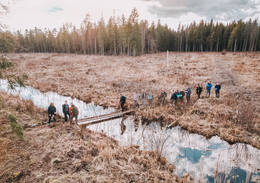
See läbib metsi, soode, rabasid, niite ja külavaheteid. Matka kogupikkus on umbes 22 km ja selle läbimiseks kulub 6 tundi.
Jersika riiklik partisanide matkarada
Loodusest raskesti leitav objekt.
Matka pikkus: umbes 22 km, läbitav umbes 6 tunniga.
Raskusaste: keskmise raskusastmega matk.
Alguspunkt: Jersika algkool Līvāni vallas (kohale pääseb rongiga või bussiga).
Lõpp-punkt: Vanagi kirik Preiļi vallas (ühistransport nädalavahetustel ei sõida).
Märkus: Marsruut sisaldab ujumispausi (suvehooajal), kalapüügivõimalusi, piknikuala ja ühte avalikku tualetti. Marsruut sobib ka kooliealistele lastele, kellel on juba kogemusi sellise pikkusega matkamisega.
Matka Jersikast Vanagile, lastes end vastupidavuses proovile panna, sest matk viib läbi metsade, soode, nõmmede, niitude ja külaradade ning tutvudes rahvusliku partisaniliikumise silmapaistvamate tegelaste ja nende tegevuse ajalooga, nägedes olulisimaid paiku, mille kohta räägitakse kohalikke legende ja kaaskodanike kirjalikke mälestusi. Rada algab Jersika algkooli juurest ja viib mälestuskivini vana tamme all, edasi mööda teed ka Jersika raudteejaama. Kivil on kiri „LTS(p)A – Läti Isamaa Partisanide Ühingu võitlejatele. LTS(p)A ühendas kuue Läti ringkonna rahvuslikke partisane võitluses kommunistliku okupatsioonirežiimi vastu aastatel 1945–1955“.
Jalutuskäik jätkub mööda raudteed ja lookleb mööda Jersika järve, kus mets pakub loodusrikkusi: kevadel õitsevaid priimulaid ja harilikku tarnat. Rabale lähenemist annab märku priimulate lõhn, kuid kevadel on eriti üllatav näha neid õitsemas. Laisk jalutuskäik pole võimalik, tuleb ületada mitu kraavi, soost läbimine pakub leevendust - igal sammul püsib vesi sambla sees, põõsastes säravad jõhvikamarjad. Raja asemele tuleb mets ja tõendid nende paikade endisest asustusest taludes - uhked tammed, hoonete varemed, noore kasvuga ümbritsetud rahvuspartisanide punkri asukoht. Rada jätkub kohta, mida tunnistustes mainitakse Isamaakaitse (partisanide) ühingu asutamiskohana. Metsamassiiv peidab ka mälestuspaika „Avotnīca” („Olūtneica”), kus on tehtud lõke. Metsa mitmekesisus on üllatav, nagu ka kraavide laius. Matka sihtkohaks on Vanagi kirik, kus teenis preester A. Juhņevičs ja millest räägib film „Segvārds Vientulis“ (režissöör N. Pucis).
Marsruudi alguses, Jersikase algkooli lähedal, on infopunkt, kust QR-koodi skannides saab kuulata ajaloosündmuste ja partisanide lahingute kohta käivat helilugu. Helilugu on saadaval ka IziTraveli platvormil SIIN . Helilugu on saadaval läti ja inglise keeles.
Teise Maailmasõja Muuseum Aglonas
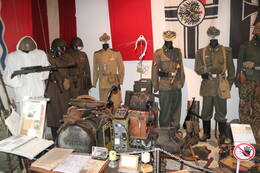
Teise maailmasõja näitus Aglonas ehk Sõjamuuseumis avati 2008. aastal ja see on üks ulatuslikumaid ja huvitavamaid seda tüüpi näitusi Lätis. Kollektsiooni on pidevalt täiendatud uute omandamiste ja sõjas osalejate ning sõjaaegsete inimeste lugudega.
Muuseumi tuumiku moodustavad Teise maailmasõja ajal kasutatud relvad, varustus, laskemoon ja vormiriietus. Lisaks on seal majapidamistarbeid, lennukivrakkide fragmente ja muid eksponaate. Üks väärtuslikumaid ja ainulaadsemaid eksponaate on ülemleitnant Augusti ja tema kallima Martha vaheline väliposti kirjavahetus, mis lõi viie sõja-aasta jooksul kahe armastava inimese vahele õnneliku lõpuga dialoogi. Näituse taustal on eksponeeritud sõjaaegsed kroonikad.
Näitus ei ole politiseeritud ja peegeldab võrdselt sõja mõlemat poolt, võimaldades vaatajatel seda tajuda ilma hea või halva kohta hinnanguid andmata, mis muudab näituse kergesti mõistetavaks.
Vabadussõja võidusammas
Monument 3. Jelgava jalaväerügemendi 16. jaanuari 1920. aasta vabadusvõitlusele Latgales. Pealdisega: „3. Jelgava jalaväerügemendi lahingute toimumiskoht, võidukäik läbi Latgale. 1920.16.1. Me tõime Lätile päikese, vabaduse ja iseseisvuse.“
Monument avati 1936. aastal. 16. augustil pühitses selle sisse kindral Žanis Bachs (1885–1941), kelle eest vastutas pastor Ādams Vizulis (1891–1970). Monumendi kavandi autor oli insener Zilēvičs.
Läti Vabadussõja (1918–1920) operatsioon Latgale vabastamiseks algas 3. jaanuaril 1920. Jaanuari keskpaigaks olid Läti ja Poola armeed vabastanud Daugavpilsi ja suurema osa Lõuna-Latgalest kuni Dagda-Indra jooneni Venemaal võimu haaranud bolševike vägede käest. 9. jaanuaril alustas Läti armee pealetungi Põhja-Latgales, liikudes kiiresti Kārsava ja Pitalova jaamade suunas.
Kahe rünnakusuuna vahele jäi bolševike kontrolli all olev ala Varakļāni, Viļāni ja Rēzekne ümbruses. 20. jaanuaril alustasid Läti armee üksused Rēzekne vabastamise operatsiooni. Rēzekne vabastati 21. jaanuaril. Läti armee jõudis kogu idarinde ulatuses lätlaste asustatud alade piirile jaanuari lõpuks. Juba 1. veebruaril sõlmis Nõukogude Venemaa Lätiga vaherahu lepingu.
Latgale lahingute võiduga kindlustati Läti idapiir ja avanes võimalus Latgale Lätiga liita. Läti armee saavutas Läti lõpliku ühendamise ja iseseisvuse 1920. aastal.
Monument, mis on dateeritud 1920.16.I., on pühendatud hetkele, mil 3. Jelgava jalaväerügement asus sisse oma lähtepositsioonidele enne Rēzekne vabastamise operatsiooni.
Border Guard Museum
The museum is located in the premises of the State Border Guard College of Latvia in Rēzekne.
The museum houses an exhibition of the Border Guard History Research Unit, which reflects the chronological development of the Latvian Border Guard from 1919 to the present day. The collected objects and photographs tell the story of the service and everyday life of Latvian border guards in the period from 1919 to 1940, and also about the tragic fate of the border guards after the occupation of the country in 1940. At that time, border guards, along with their relatives, were among the first to be repressed. The museum displays evidence of the service of the restored Border Guard after the restoration of the independence of Latvia – uniforms, equipment, awards and insignia, which have been undergoing continuous development and change even nowadays.
A visit to the Cynology Centre, where you can watch demonstrations by service dogs, is an integral part of the tour.
Appointments must be made in advance.

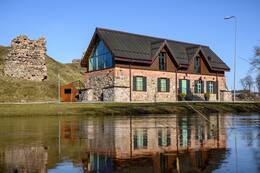
Schatzkammer des Freistaats
Die Schatzkammer des Freistaats befindet sich neben der Burgruine von Rēzekne.
Die einzigartige Ausstellung umfasst mehrere Hunderte verschiedene historische Zeugnisse aus lettischen und ausländischen Privatsammlungen, die den Zeitraum von 1918 bis 1940 abdecken und die Seiten der Geschichte von Lettgallen und Rēzekne enthüllen. Sie stellt die Geschichte der militärischen und zivilen Auszeichnungen des Ersten Freistaats Lettland sowie verschiedene Organisationen vor, die mit den Aktivitäten staatlicher und zivilgesellschaftlicher Organisationen in der Zeit zwischen dem lettischen Unabhängigkeitskrieg und dem Zweiten Weltkrieg in Verbindung stehen.
Die hier ausgestellte Sammlung von militärischen und zivilen Auszeichnungen und Insignien des lettischen Freistaats ist die größte in Lettland.
Im zweiten Stock befindet sich die Wechselausstellungshalle, in der mindestens einmal im Jahr eine neue Ausstellung gezeigt wird. Bisher hatten die Besucher die Gelegenheit, eine einzigartige Sammlung von Porzellanobjekten, Luxusuhren aus Frankreich und Gemälden zu sehen, die verschiedene Landschaften von Lettgallen darstellen
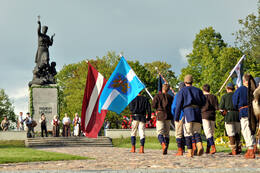
Denkmal „Einheitlich für Lettland“ oder Māra von Lettgallen
Das Denkmal „Einheitlich für Lettland“, im Volksmund „Māra von Lettgallen“ genannt, befindet sich in Rēzekne. Das zentrale Bild einer Frau mit einem Kreuz in der Hand symbolisiert Lettgallen, das 1920 von der bolschewistischen Herrschaft befreit wurde, und den Geist seiner christlichen Zivilisation.
Das Denkmal wurde in 20er Jahren des 20. Jahrhundert von Persönlichkeiten des öffentlichen Lebens in Lettgallen initiiert. Der Grundstein wurde am 8. Juni 1930 gelegt und eingeweiht. Im Juni 1934 wurde ein Wettbewerb für das Denkmal ausgeschrieben, den der Entwurf von Kārlis Jansons gewann. Das Denkmal wurde am 8. September 1939 eingeweiht, und der Einweihungsgottesdienst wurde von Bischof Jāzeps Rancāns geleitet.
Nach der sowjetischen Besatzung im November 1940 wurde das Denkmal abgerissen. Die Bronzeskulpturen konnten nicht zerstört werden und das Denkmal wurde am 22. August 1943 während der deutschen Besatzung restauriert. Als die sowjetische Besatzung zurückkehrte, wurde das Kreuz zunächst abgesägt, 1950 jedoch wurde es vollständig zerstört. Während der sowjetischen Besatzungszeit wurde an seiner Stelle ein Lenin-Denkmal errichtet, das unmittelbar nach der Wiedererlangung der Unabhängigkeit Lettlands im Jahr 1991 demontiert wurde.
Während des Erwachens im Jahr 1989 entstand die Idee, das historische Denkmal „Einheitlich für Lettland“ wiederherzustellen. Das Denkmal wurde von Andrejs Jansons, dem Sohn von Kārlis Jansons, in Zusammenarbeit mit Ints Folkmanis auf der Grundlage der Materialien und Fotos seines Vaters neu gestaltet. Das wiederhergestellte Denkmal wurde am 13. August 1992 anlässlich des Ersten Lettgallischen Welttreffens eröffnet.
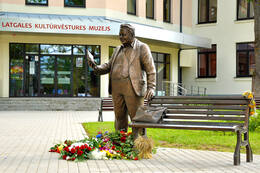
Kulturhistorisches Museum von Lettgallen
Das Kulturhistorisches Museum von Lettgallen in Rēzekne hat drei Dauerausstellungen. Eine davon – „Rēzekne im Wandel der Zeit“ – erzählt die Geschichte der Stadt über sieben Jahrhunderte. Ein großer Teil ist den Ereignissen, Kriegen und Veränderungen des 20. Jahrhunderts gewidmet: Der Erste Weltkrieg, der Unabhängigkeitskrieg, der Zweite Weltkrieg, die Zerstörung von Rēzekne im Jahr 1944 durch sowjetische Bomber und das Kriegsgefangenenlager Stalag 347. Die Ausstellung enthält Fotos über die Schicksale von Soldaten aus Rēzekne während des Krieges.
Während des lettischen Freistaats waren die Soldaten des 9. Infanterieregiments Rēzekne der lettischen Armee ein fester Bestandteil des öffentlichen Lebens und der Sportveranstaltungen der Stadt, insbesondere während der Feierlichkeiten am 11. und 18. November.
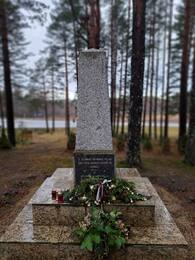
Denkmal für die Opfer des Zweiten Weltkriegs in Ančupāni
Das Denkmal befindet sich in Ančupāni, Bezirk Rēzekne. Es wurde geschaffen, um der Tragödie von Audriņi zu gedenken – der Vernichtung der Zivilbevölkerung während der deutschen Besetzung durch Nazis, die 1942 im Dorf Audriņi, Gemeinde Makašāņi, Kreis Rēzekne, stattfand.
Seit Herbst 1941 versteckten sich mehrere entkommene Kriegsgefangene der Roten Armee in Audriņi. Am 18. Dezember 1941 wurde ihr Aufenthaltsort entdeckt, und vier Hilfspolizisten wurden bei dem Beschuss getötet. Am 24. Dezember wurden 203 Einwohner von Audriņi verhaftet und im Gefängnis von Rēzekne inhaftiert. Am 3. Januar 1942 wurden die meisten Verhafteten in der Nähe des Ančupāni-Hügel, etwa 5 km von Rēzekne entfernt, erschossen, und am 4. Januar wurden 30 Männer, die im Dorf Audriņi verhaftet worden waren, auf dem Marktplatz von Rēzekne öffentlich erschossen, und das Dorf selbst wurde niedergebrannt. Die Gedenkstätte wurde am 27. Juli 1974 eröffnet. Der Autor ist Landschaftsarchitekt Alfons Kišķis (1910–1994). Die immergrünen Tannen auf der rechten Straßenseite symbolisieren die zum Erschießen aufgereihten Menschen, während die Steinmauer auf der gegenüberliegenden Straßenseite die Schützen darstellt. Im unteren Teil, dem Tal des Leidens, führt ein mit Steinen übersäter Weg an den Massengräbern der Erschossenen vorbei und endet an einer Betonwand mit der Inschrift: „Sie sind gestorben, damit du leben kannst.“ Dann führt eine Treppe zum Platz des Lebens, dessen zentrale Skulptur „Mutter Apfelbaum“ von der Bildhauerin Rasa Kalniņa-Grīnberga (1936) stammt.
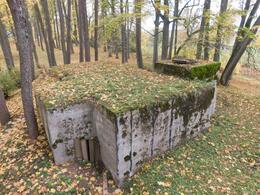
Bunker aus dem Zweiten Weltkrieg in Malnava und Hitlers Besuch im Hauptquartier der Heeresgruppe Nord
Hitlers Besuch im Hauptquartier der Heeresgruppe Nord in Malnava und der Flugabwehrbunker werden in diesem Zusammenhang erwähnt. Abgesehen von dem Standort – dem Gutshof Malnava – gibt es jedoch keine weitere Verbindung zwischen ihnen.
Das Hauptquartier der deutschen Heeresgruppe Nord, die auf Leningrad zustürmte, befand sich vom 12. bis 28. Juli 1941 im Gutshof Malnava. Der Grund für diese Wahl war ein praktischer: Die Landwirtschaftsschule Malnava, die im ehemaligen Herrenhaus untergebracht war, war sehr modern: mit elektrischer Beleuchtung, zentraler Wasserversorgung, Duschen und Kanalisation. Das Hauptquartier der Heeresgruppe Nord befand sich in einem der Seitengebäude des Herrenhauses, während der Rest des Gebäudes weiterhin die Landwirtschaftsschule beherbergte.
Der Hitlers Besuch im Hauptquartier der Heeresgruppe Nord in Malnava fand am 21. Juli 1941 statt. Hitler und sein Gefolge flogen mit zwei Junkers, begleitet von neun Messerschmitt-Jägern. Der Besuch dauerte nur wenige Stunden und ist sowohl in der Kinochronik der deutschen Front als auch in den Erinnerungen der Schüler von Malnava verewigt.
Der Luftschutzbunker, der sich etwa 70 Meter vom Herrenhaus entfernt befindet, wurde Anfang 1944 gebaut, als die sowjetische Luftfahrt in der zweiten Kriegshälfte begann, den Luftraum zu beherrschen. Zu diesem Zeitpunkt befanden sich die deutschen Trup pen auf dem Rückzug. Im Jahr 1944 hielt sich das Hauptquartier der Heeresgruppe Nord von Februar bis Mitte Juli in Malnava auf.
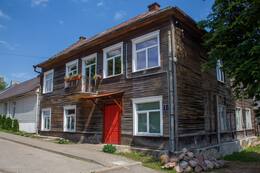
Private exhibition “Abrene Rooms”
The Private exhibition “Abrene Rooms” is located in the town of Viļaka, in a building with a diverse history. Initially, the building was located on the old Marienhausen market square, later it housed apartments, offices and various shops, and during World War II, it was the Latvian self-defence headquarters, the Gestapo and also the Cheka. Several exhibitions reveal diverse events and historical periods in the town of Viļaka and its nearest vicinity covering the time period from 1920 to 1960 when Viļaka was part of Jaunlatgale, later Abrene, district. The exhibit features items from the national partisan camp in Stompaki Swamp, which are related to the national partisan movement in the Latgale region. Documents and photos associated with the War of Independence are also on display. The latest exhibition is dedicated to the once-famous motocross track “Baltais briedis”.
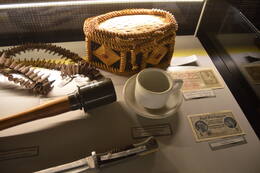
Vilaka Museum
Viļaka Museum operates in two buildings – the Catholic parish house, built in 1913, which is an important cultural heritage object of the town, and the other building of the museum – a former monastery of Capuchin monks, whose cellars are closely related to the national partisan movement in Stompaki and the Soviet Cheka. According to the memories of the locals, people were held and tortured in these cellars. The old museum building houses several exhibitions, with one of the exhibitions dedicated to the 1920 freedom battles in Northern Latgale, and the second – to the events of the Second World War – the Jewish Holocaust in Viļaka and information about the families who were shot. More information about each family is available based on their street address.
The exhibition is supplemented by information about the national partisan movement in Stompaki – various testimonies, photographs and objects. Visitors can learn about the military heritage sites in and around Viļaka, such as the Freedom Fighters Monument in Jaškova, which was demolished during the Soviet era and restored in 1990, and the stele dedicated to the recipients of the Order of Lāčplēsis. The sound of World War II aircraft is incorporated into the exhibition of the museum, as the German Luftwaffe airfield was located near Viļaka. The museum offers an opportunity to see some memories of the Second World War events in Viļaka, as well as to receive information about the German prisoner-of-war camp in Rači.
Nacionālo partizānu mītnes dabas liegumā “Stompaku purvi”
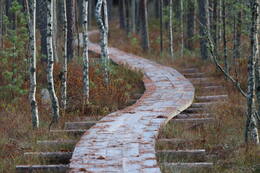
Stompaku purvā Otrā pasaules kara laikā atradās viena no lielākajām nacionālo partizānu nometnēm Baltijā. Šo dien teritorija ir iekļauta dabas liegumā “Stompaku purvi”. Uz purva salām esošajā apmetnes vietā var nokļūt, ejot pa marķētu laipu taku. 1945. gada sākumā Stompaku purvā nacionālo partizānu nometnē dzīvoja 350-360 cilvēku, tostarp 40-50 sievietes.
Nometnē bija 24 dzīvojamie bunkuri – līdz pusei zemē ie dziļinātas būves, kurās varēja dzīvot 3-8 cilvēki. Tajā dar bojās maizes ceptuve, baznīcas bunkurs, un atradās trīs virszemes slieteņi zirgiem. Partizāni no nometnes veica uzbrukumus okupācijas režīma amatpersonām. 1945. gada 2.–3. martā šeit norisinājās Stompaku kauja – lielākā Latvijas nacionālo partizānu vēsturē. Nometnē esošajiem 350–360 partizāniem uzbruka NKVD 143. strēl nieku pulks un vietējie istrebīķeļu (iznīcinātāju) bataljona kaujinieki – kopskaitā 483 vīri. Kauja ilga visu 2. marta die nu. Naktī uz 3. martu partizāniem izdevās izlauzties no no metnes un atkāpties uz iepriekšējām bāzes vietām. Kaujas rezultātā krita 28 partizāni, savukārt NKVD karaspēks zau dēja 32 kaujiniekus. Mūsdienās Stompaku nometnes vietā apskatāmi trīs at jaunoti bunkuri - baznīcas, štāba un dzīvojamais, kā arī 21 bijušo bunkuru vieta. Uzstādīti informatīvie stendi par nometni un kauju. Var pieteikt ekskursijas ar gidu.
Esot pie Stompaku purva takas sākuma var noskenēt QR kodu un noklausīties stāstu par notikumiem, kas saistīti ar nacionālo partizānu vēsturi. Audio stāstu var noklausīties arī IziTravel platformā ŠEIT. Stāsts ir pieejams latviešu un angļu valodās.
Ekspozīcija "Ziemeļlatgale brīvības cīņās" Balvu Novada muzejā
Muzejs atrodas Balvu muižas apbūves kompleksa teritorijā, bijušajā muižas klēts ēkā. Ekspozīcija ļauj ielūkoties Latvijas Neatkarības kara vēsturē no Ziemeļlatgales skatu punkta, izsekojot Latgales partizānu pulka izveidošanās un darbības vēsturei. Apskatāmi iepriekš citur neredzēti foto materiāli un dokumentu kopijas, tostarp, 1919. gada 5. jūlija pavēle par pulka izveidošanu. Unikālas ir pulka darbības iekšējās pavēles, kuras laikā no 1919. gada jūlija līdz oktobrim rakstītas krievu valodā. Tas atspoguļo pulka kā vietējās vienības veidošanās īpatnības un sastāvu, kur kopā cīnījās, latvieši, latgalieši, krievi un ebreji. Uz latviešu valodu iekšējās pavēlēs pulks pārgāja tikai pēc pilnīgas iekļaušanās Latvijas armijas sistēmā, kad to papildināja mobilizētie karavīri no citiem Latvijas novadiem. Ekspozīcijā atspoguļota arī Ziemeļlatgales atbrīvošanas operācija, kuras laikā no 1920. gada 9. līdz 15. janvārim Latvijas armijas Latgales divīzija ar kaujām atbrīvoja Viļakas, Jaunlatgales un Kārsavas apkārtni. Tajā apskatāmas liecības gan par operāciju kopumā, gan Latgales partizānu pulka kaujas darbību Kārsavas atbrīvošanas laikā.
Atrodoties pie Balvu novada muzeja var noskenēt QR kodu un doties pastaigā pa Balvu pilsētu, noklausoties audio stāstu par pilsētas vēstures līkločiem. Audio stāsts ir pieejams arī IziTravel platformā ŠEIT. Stāsts pieejams latviešu un angļu valodās.