



In the footsteps of the Forest brothers in Latvia and Estonia
Pēteris Čevers national partisan bunker
The bunker of the national partisans of Peter Chever is located in Lauciene municipality, about 4 km from the Talsi-Upesgrīva road. A trail covered with wood chips leads to the bunker. The renovated 31 square metre bunker is made of a concrete frame finished with half-logs of logs to create an authentic feel.
Captain Chever's group completed the bunker in the forest near Vangzene at the end of October 1949. It was planned to survive the winter of 1949-50. On 3 February 1950, the local forester betrayed the partisans and the bunker was attacked by a Cheka unit of more than 300 soldiers. At that time there were 19 people in the bunker - 17 men and two women. Six partisans fell in this unequal battle, but the others managed to break through two chains of Cheka siege by fighting their way through. By the end of the winter the partisans took refuge in surrounding houses with their supporters, but in the spring the group reunited until it was captured and destroyed in November 1950. After an attack by Cheka troops, the bunker was blown up and before it could be rebuilt, only a water-filled pit remained.
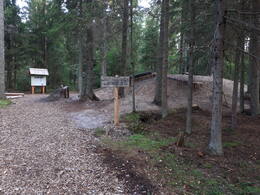
Museum of the National Resistance Movement in Renda
The museum is located a few kilometres from the centre of Renda parish. The exhibit tells about the 50-year-long resistance movement in Latvia: resistance to the first Soviet occupation, resistance to the Nazi German occupation, and the armed and non-violent resistance to the Soviet occupation. The exhibit is located in two buildings. The first building houses evidence of the first Soviet occupation and German occupation. The exhibit showcases a restored barn building where the focus lies on the National Partisan War. Between the two buildings there is a bunker with an authentic layout and trenches used by soldiers. Located near the museum in Renda, excavations, blindages and an obstacle course serve as a training ground for youth guards and anyone interested. Visits must be booked in advance.
One of the largest battles of the national partisans, called the Āpūznieki Battle, took place in January 1946 not far from here. The battle saw the Kabile National Partisan Group overpower much larger forces of the occupying power. Featuring information stands, the battle site is now home to a rest area.
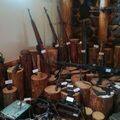
Rubenis Battalion Museum
Rubenis’ Battalion Museum is located in Ugāle. It is dedicated to the Battalion of R. Rubenis, who served and fought under General J. Kurelis in Kurzeme in 1944, the activities of the Kurelians and the national resistance movement. Museum has an exhibit on the activities of the Latvian Central Council (LCC) and its Ventspils group, as well as the LCC Memorandum with 188 signatures and photographs of signatories that is included in the Latvian National Register of the UNESCO Memory of the World Programme. The LCC was a joint centre of Latvia's highest political leadership with an underground government that operated during the occupation of Latvia from 1943 to 1994. It was formed with the aim of coordinating the activities of various Latvian resistance movements in order to restore Latvia's national independence. The museum also offers a trip to places significant to the history of the battalion (settlement with a reconstructed bunker in the Usma parish, battlefields in Renda and Zlēkas parishes, etc.).

Rubenis Battalion Bunker and Combat Sites
The restored dugout of the 2nd Company of the Rubenis Battalion is located in a forest by lake Ilziķi in the Usma parish. The dugout can be viewed from the outside for free at any time. However, tours inside the dugout must be booked in advance.
The Battalion of Lieutenant Robert Rubenis was part of a military unit formed by General Jānis Kurelis, and it is known for not surrendering to the German troops and showing heavy resistance. From November 14 to December 9 in 1944 fierce battles were fought in Ugāle, Usma, Renda and Zlēkas parishes between forces of the 16th German Army, SD and SS units under the command of the Police General Friedrich Jeckeln, and the battalion of the Kurelian unit commanded by Lieutenant Roberts Rubenis. The men under Rubenis’ command were well armed and organized and did not associate themselves with any of the two hostile occupying powers. Their actions are considered to be the most wide-spread and longest in the history of the Latvian national resistance movement. In battles near Renda and Zlēkas about 250 German soldiers fell, while only 50 casualties were suffered by Rubenis’ men. The events of those days are represented by the restored dugout in the forest (sod-covered, log cabin dug in the ground) where the men of the Rubenis Battalion once stayed.
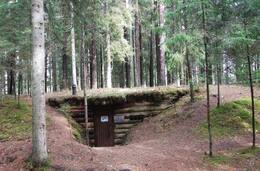
Īle National Partisan Bunker
The bunker is located in the Īle forestry of Zebrene Rural Territory, at the turn-off from the P104 Biksti-Auce Road.
The Kārlis Krauja Group of Īle National Partisans was formed in 1947. V. Z. Brizga (alias K. Krauja) was appointed the commander of the group. In October 1948, the Krauja Group merged with a group of Lithuanian national partisans. Krauja Group operated in Jelgava District and consisted of 27 national partisans.
In October 1948, Krauja Group built an underground bunker in Lielauce Parish, Jelgava County, not far from the Īle Forestry, 300 metres to the north of the “Priedaišu” house. Its total length, including battle passages, was 45 metres. 70 remote-controlled mines were planted around the bunker. The bunker was equipped with a furnace, a well, a toilet, and a storage room.
On 17 March 1949, the 24 partisans who were in the bunker at the time fought their last battle against the 760-strong troops of the Ministry of National Security or Cheka. After the battle, 9 members of the group were arrested, while 15 fell in the battle, with eight of them being Latvian and seven being Lithuanian. In 1992, the Home Guards, together with the Daugavas Vanagi (Hawks of the Daugava), unearthed the bunker that had been blown up. A White Cross, a memorial stone and a granite statue were erected at the site.
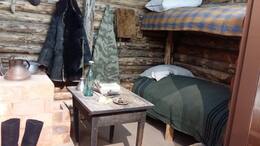
Inside the bunker, you can see a stove, a table, and narrow benches on which the partisans slept. Information boards and memorial stones with the names of the partisans have been installed at the bunker.
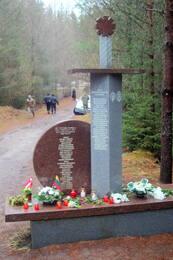
Zlēku Tragedy Memorial Site
The memorial is located near the Zlēki Manor ensemble, in the western part of Karātavkalns. Around twenty boulders with the names of the people killed form a circle, and in the centre is a black marble obelisk about three metres high.
Some of those killed have been reburied at the Zlēki memorial.
In December 1944, in the vicinity of Zlēki, the German Nazi army carried out a large-scale operation against the civilian population.In the combat action log of Army Group Nord, an entry was made at 17.30 on 9 December 1944 that 161 people belonging to the "Rubens Brigade and units of the Red Arrow" had been killed on the enemy side during the action. In Soviet times, this figure was apparently taken as the total number of victims of the Zlēki tragedy, referring to civilians killed.
The course of the action is partly documented in the report of the head of the counter-intelligence section of the German 16th Army of 31 December 1944. It explains that from 5 to 9 December, under the leadership of the highest SS and police leader in Ostland, SS Oberruppenführer and Police General Friedrich Jekeln, a large-scale operation took place at Eichensumpf ("Oak Swamp") against the "Red Arrows" and the remnants of General Kurel's group at Abava.
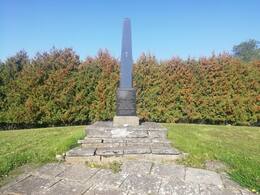
National Partisans Memorial Site on Striķu Street, Saldus
The memorial is located at the intersection of Striķu and Lauku Street.
The tragically bloody event that took place at this place took place during peacetime on 24 February 1950 in Saldus, on Striķu (then 5. augusta) Street, near the 33rd and 35th houses. In the 33rd house of this street, after the destruction of the Zemgale group of forest brigades with its headquarters bunker in the forests of Īle in March 1949, three forest brigades were still alive and uncaptured, including the group commander himself, Kārlis Krauja (real name Visvaldis Brizga), and his associate Vilis Krusts. They had hoped to spend the winter of 1950 at the Bergmanis' home in Saldus, but they were rounded up and tracked down. The two houses were besieged by about 30 Chekists and a fierce battle took place early in the morning. The Chekists were fired on from both houses, but, losing to overwhelming odds, the two partisans tried to escape to the nearby Veide forest. However, the Chekists shot partisan Krusta already on the stairs of the house, and Krauja - about 80 metres further towards the forest.
Both houses were set on fire, the occupants having been asked to come out beforehand and promised that their lives would be spared. There are reports that people did come out, but they were shot on the spot anyway. Among the people shot or suffocating in the smoke were the father and son Kursinski from House 35, who had supported the partisans, but also Leontine Ezerkalni, a resident of the Kursinski house, who had no knowledge of her landlord's connections with the forest brigades, was shot.
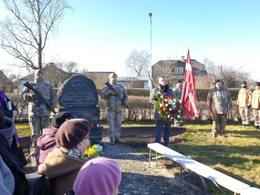
"Mežabrāļi" - National Partisan Bunker
The Forest Brothers’ Bunker is located by the Riga-Pskov (A2) highway 76 kilometres from Riga and 11 kilometres from Cēsis. The Latvian national partisans or Forest Brothers were small, armed groups of local residents who fought their independent battles against the occupation regime of the USSR in the territory of Latvia from 1944 to 1956. Forced to hide in the forests, these were people who could not or did not want to live in the Soviet Union. A total of around 20,193 Forest Brothers operated in Latvia. The bunker was formed based on the stories and memories of former Forest Brothers about life in the forests, hiding and fighting for the independent state of Latvia after 1945. The bunker showcases armaments and household items. The personal belongings, weapons and photos of partisans are on display. The guide’s narration is enriched by a video from interviews with Forest Brothers. There is a place for picnic campfires by the bunker. It is possible to pre-order a soup prepared on the fire or enjoy an evening of outdoor cinema by the fire.
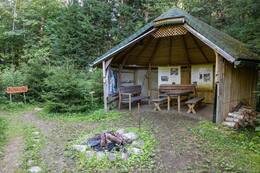
Historic Exhibition "Burning Conscience"
The historical exhibit ‘Fire of Conscience’ is located in Cēsis, near the Cēsis Castle Square. Established in a Soviet-era temporary detention facility, it tells about the occupation of Latvia and reveals surprising and heroic stories of resistance from individuals. The yard features a memorial wall with the names of 643 residents of the former Cēsis district who died in Soviet repressions, including national partisans deported in 1941 and 1949 and those shot and sentenced to death. The exhibit’s timeline encourages visitors to study the course of the occupation of Latvia from 1939 to 1957. Arranged by topics, quotes from local newspapers offer a comparison of the political propaganda of the two occupation regimes. The six cells for temporary detention have survived to the present day in their original form from 1940 to 1941 and the post-war years. Here, the residents of Cēsis district, detained for various anti-Soviet activities, including national partisans, their supporters, young people who distributed anti-Soviet leaflets and other ‘traitors of the motherland’, were held for several days during the initial investigation and interrogation before being sent to the main KGB Building in Riga. Everything here is real: cells with iron doors, built-in ‘kormushkas’ (small openings for providing food), plank beds, a latrine for detainees, a small kitchen with an oven, as well as typical Soviet-era oil paint on the walls. In 2019, the exhibit was ranked third in the national design competition, the Latvian Design of the Year Award.
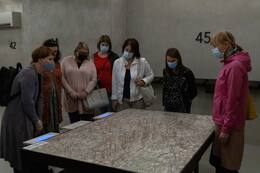
Memorial site of national partisans in Sērmūkši
Sērmūkši is home to one of more than a hundred memorials to partisan battles in Latvia. There are more than six hundred partisan battle sites in Latvia. A Latvian national partisan dugout has been built based on historical evidence, and visitors can spend the night in near-authentic conditions with plank beds, lighting provided by kerosene lamps and a heating device similar to the ones used by partisans. Visits must be booked in advance. The fateful moment for the Sērmūkši National Partisan Group came on 29 November 1946 with the deaths of four fighters from the group: Jānis Zīrāks, Reinholds Pētersons, Jānis Pīlands and Anna Zariņa. Alfrēds Suipe survived, endured deportation, returned to Latvia and saw the restoration of a free state. He initiated the idea to establish a memorial site for his fallen companions in Sērmūkši.
Piebalga Local History Exhibition in Ineši
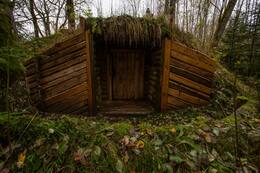
The local history exhibit is located in the wine cellar building of the Vecpiebalga Manor in Ineši. It covers a wide range of World War II events in the area. The exhibit located in the basement features ammunition, weapons, soldiers’ household items, aircraft debris, badges and awards, battle maps and other items related to the war. The front line is marked on a unique map displayed on the ground floor. The map is well preserved despite being located in the swamp for many years. Interesting historical evidence of Voldemārs Ozols (1884–1949), an officer of six armies, is displayed on the first floor. The exhibit on Voldemārs Ozols is significantly enriched by the story told by Mārtiņš Frīdvalds who translated Manfrēds Šneps-Šneppe’s book ‘Pasaules „šaha spēles” un Voldemārs Ozols sešu armiju virsnieks’ (Chess Games of the World and Voldemārs Ozols, an Officer of Six Armies) from Russian. The book is a popular study on General Voldemārs Ozols, a controversial but outstanding Latvian military figure. The story about him covers World War I, the Latvian War of Independence and World War II. Mārtiņš Frīdvalds also talks about the political, economic and cultural history of Piebalga and the manor. The duration of the tour is 1 to 1.5 hours. Also included in the exhibit are farmers’ tools and household items, accounts from witnesses to historical events and the history of the Ineši Theatre. The exhibition is regularly supplemented with newly acquired items and new discoveries related to the history of Piebalga municipality made in recent years.

Broņislava Martuževa Museum
The Broņislava Martuževa Museum is situated on the site of the poet’s childhood home in Indrāni parish, Madona municipality. The museum’s exhibit is located in a renovated barn featuring voice and video evidence from the National Resistance Movement and the work of the poet in publishing an underground magazine, as well as composing poetry and songs for national partisans. Broņislava Martuževa was involved with the resistance movement since its inception. Lazdiņas, Martuževa’s home which has not survived, also served as a place of refuge for Pēteris Supe, Head of the Latvian National Partisan Association, and his comrades-in-arms. The poet spent five years hiding in the basement of her home, meeting with partisans, writing poetry (including work dedicated to partisans Pēteris Supe, Vilis Toms, Smilga Group, Laivenieks, Salns, Celmiņš, Bruno Dundurs and others), as well as writing songs and teaching them to partisans. Now, her songs are sung by the ‘Baltie lāči’ group (literally: ‘White Bears’). In 1950, the ‘Dzimtene’ magazine (literally: ‘Motherland’) was published underground together with Vilis Toms. The poet transcribed 11 issues of the magazine, 10 copies each, by hand. The poet, her brother, sister, mother and Vilis Toms were arrested in 1951. Bronislava Martuževa returned from Siberia in 1956. Recognised locally and nationally, the poetry barn is visited by both local residents and guests of the municipality. Learning about the poet’s life gives you the opportunity to discover the fate of Latvia.
Lubāna Municipality tourism and cultural heritage centre
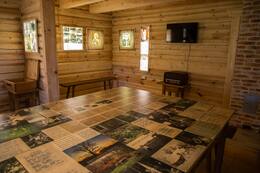
The Lubāna Municipality Tourism and Cultural Heritage Centre is located in the very centre of the city of Lubāna. It features several exhibits, including permanent ones, on the history, culture and traditions of and events at the municipality. The permanent exhibits are dedicated to personalities that Lubāna is especially proud of. They introduce poet Broņislava Martuževa, member of the National Resistance Movement and political prisoner; politician Hugo Celmiņš, a participant of the War of Independence; Oskars Kalpaks, First Commander-in-Chief of the Latvian Army; photographer Alfreds Grāvers; opera singer Jānis Zābers; poet Jānis Gavars; artist Rūdolfs Pinnis, as well as folklorist and pastor Mārtiņš Celmiņš. A guide describes the lives of the Knights of the Lāčplēsis War Order and freedom fighters in Lubāna and its adjacent territory, as well as their resting places in Lubāna’s old graveyard. Available languages: Latvian and Russian. Guided tours with a German and English translation can be booked in advance.

National partisan headquarters in the nature reserve “Stompaki Swamp”
During World War II, one of the largest national partisan camps in the Baltic states was situated in Stompaki Swamp. Today, the territory is included in the nature reserve “Stompaki swamp”. The settlement sites located on the islands in the swamp can be reached via a marked footpath.
In early 1945, about 350 to 360 people, including 40 to 50 women, lived at the camp of National Partisans in Stompaki Swamp. The camp consisted of 24 residential bunkers – buildings that were half-immersed into the ground and could accommodate 3–8 people. There was a bakery, a church bunker and three above-ground rails for horses. Partisans from the camp carried out attacks against officials of the occupation regime. On 2–3 March 1945, the Battle of Stompaki took place here – the largest battle in the history of Latvian national partisans. The 350–360 partisans in the camp were attacked by the 143rd Rifle Regiment of NKVD and local fighters of the so-called ‘istrebitel’ (eliminators) battalion – 483 men in total. The battle lasted for the entire duration of the day on 2 March. On the night of 3 March, the partisans managed to break out of the camp and retreat to their previous base camps. The battle resulted in 28 casualties among partisans, while the NKVD force lost 32 fighters.
Today, the site of the Stompaki camp is home to three restored bunkers – a church, a headquarters and a residential bunker – as well as 21 sites of former bunkers. Information boards about the camp and the battle have been installed at the site. Guided tours can be booked.
Privaatne /Eranäitus „Abrene ruumid”
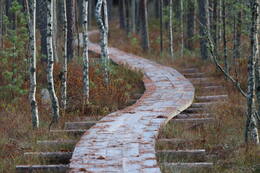
Näitus „Abrene ruumid” on üles pandud Viļaka kesklinna lähedale. See hõlmab ajavahemikku 1920–1960, kui Viļaka kuulus Abrene piirkonna Jaunlatgale haldusüksusesse ja oli Viļaka piirkonna ja Abrene rajooni keskus. Näitus asub Viļaka kõige huvitavama ja mitmekülgsema ajalooga hoones.
Algselt asus see māja kunagisel Marienhauseni turuväljakul, hiljem asusid siin korterid, bürood ja mitmesugused kauplused; Teise maailmasõja ajal tegutsesid siin Läti Omakaitse staap, Gestapo ja KGB. Näitusel eksponeeritakse esemeid, mis on pärit metsavendade laagrist Stompaki soos ning mis on seotud metsavendlusega Latgales, samuti on välja pandud Vabadussõjaga seotud dokumente ja fotosid. Kui tellida giidiekskursioon, tutvustab väljapanekut omanik Dzintars Dvinskis.
Metsavenna talu
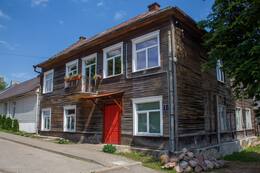
Metsavenna talu asub Eesti-Läti piiri vahetus läheduses, Vastse-Roosa külas.
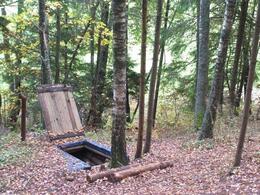
1999. aastal rajatud Metsavenna talu pakub punkriturismi –võimalust osa saada metsavennaretke raames ühest Eesti ajaloo järgust koos metsavenna punkri külastusega. Metsavennaretke käigus saab peidikust otsida metsavendi, viibida punkris, kuulata tõestisündinud lugusid, laulda koos peremehega metsavennalaule ning süüa metsavennaeinet või pidurooga. Peamiseks atraktsiooniks on peente okaspuupalkidega vooderdatud punker, mis on kaevatud mäenõlva sisse. Punkrisse on sisse ehitatud magamisnarid ja pisike laud. Just sarnastes punkrites elasid neljakümnendate teisel poolel ja viiekümnendate alguses sajad vaprad, kuid samas õnnetud mehed oma pealesunnitud hundielu.
Metsavendade muuseumituba Nursi külakeskuses (läheduses ka lahingu mälestuskivi ja punkri koopia)
Juurdepääs vaba, muuseumituba saab külastada raamatukogu lahtiolekuaegadel. Punkri asukoht on kaitseväe Nursipalu harjutusväljal liikumispiiranguteta alal, õppuste ajal tulistatakse lähikonnas erinevatest relvadest. Autotee on viimases lõigus paremat sõiduoskust eeldav, aga siiski ka sõiduautoga läbitav enamuse ajast. Punkri läheduses võib olla vesine.
Lükkä (Nursi) punkrilahing toimus 28. detsembril 1945. aastal. Lahingu käigus tapeti üheksa metsavenda ja maapealne punker põles maha. Kolm meest suutsid piiramisrõngast välja murda ja varjuda. Lahingupaik leiti pärast pikki aastaid otsinguid 2008. aastal. Aasta hiljem avati Võru-Valga maantee ääres lahingu mälestuskivi. 2010. aastal tehti esmased väljakaevamised punkrikohas ja sisustati Nursi endises koolimajas lahingule pühendatud muuseumituba (metsavendade kirjutusmasin on praeguseks viidud Võrumaa muuseumi püsiekspositsiooni).

Vana-Võromaa Kultuurikoda/ Võrumaa muuseum
Muuseum asub Võru kesklinnas.
Muuseumi väljapanek tutvustab põhjalikult Võromaa ajalugu muistsetest aegadest kuni 20. sajandi keskpaigani.
Püsiekspositsioon annab muuhulgas ülevaate Eesti Vabariigi sünnist ja Vabadussõja aegadest Võrumaal. Muuseumis on ka üks Eesti põhjalikeim väljapanek metsavendlusest sh interjöörina sisutatud metsavenna punker.
Ekspositsioonisaalis vahetuvad temaatilised fondiväljapanekud ja viiakse läbi ajalooteemalisi muuseumitunde.
Vastseliina metsavendade memoriaal
Metsavendade matmispaika hakati kavandama 2013. aasta alguses, kui Kaitsepolitseiameti uurimise käigus selgusid Võru lähedalt Reedopalost leitud ühishauas olnute isikud. Tollase Vastseliina valla, Kaitseliidu Võrumaa maleva ja Kaitseministeeriumi koostöös valiti välja koht kalmistul ja tehti vajalikud korrastustööd. Kolmeteistkümne metsavenna matused toimusid 21. septembril 2013. aastal. Aasta hiljem avati siin skulptor Mati Karmini kujundatud mälestuskivid, mis kujutavad endast kivist kuuskesid. 2015. aasta hingedekuu esimesel päeval maeti veel neli metsavenda, kelle säilmed leiti Reedopalo salamatmispaigast ja avati lisaks mälestuskuused kolmes lahingus langenutele. Nende tegelikud hauad on tänaseni teadmata.

Saatse Museum
The Saatse Museum is located in a remote corner of South-Eastern Estonia, near the border control line between Estonia and the Russian Federation. The new permanent exhibition "Everything has a border (s)" in the Saatse Museum introduces the development of cultures in border areas against the background of political and military history, so that the visitor is inspired to think further about the topic "borders around and inside us". The exhibition focuses on the peculiarities of the Saatse region with aspects of unique ethnic and cultural heritage of Setomaa.

Värska Visitor Centre and Northern Camp
The restored Art Nouveau summer home of General Nikolai Reek is situated on the shore of Lake Õrsava in Värska, surrounded by scenic nature.
Värska Visitor Centre opened here in 2020, showcasing the unique heritage of the region. The exhibition provides an overview of the Northern Camp of Petseri established here in the 1920s, the events of the War of Independence and the use of therapeutic mud and mineral water at local resorts.

Northern Camp
The Northern Camp is situated on the shores of Lake Õrsava south of Värska in Võru County.
Officially the Estonian Defence Forces' Northern Camp of Petseri (2nd Division staff headquarters), it was established in the mid-1920s as a summer training centre for cavalry and artillery. The complex comprised barracks, stables, officers' housing, a canteen and an impressive mess. The camp also had sports grounds and courts and swimming facilities by the lake. There were separate swimming areas for officers, soldiers and horses. In the middle of the camp were muster and parade grounds. The artillery camp was situated on the other side of the lake, including a lumber mill.
Most of the buildings have since been destroyed, but the barracks and some of the living quarters have survived. The site can be viewed from the outside.
Upon request, Värska Farm Museum can provide a thematic programme focussing on the Northern Camp.

Pečiorių Laisvės kovų paminklas
Šis paminklas Verskoje buvo pastatytas pagal skulptoriaus Romano Haavamäe 1938 m. projektą ir nuotraukas ir yra unikalus tarp restauruotų Nepriklausomybės karo paminklų Estijoje. Iš pradžių paminklas turėjo būti atidengtas Laisvės parke Petserio mieste, tačiau sovietų okupacija tam du kartus sutrukdė – 1940 ir 1944 m. Jis buvo baigtas po 80 metų ir atidengtas naujoje vietoje Verskoje, naujajame Setomos regiono administraciniame centre. Ant jo puikuojasi Petserio miesto herbas, nes paminklą iš pradžių finansavo miestiečiai. Jis skirtas daugeliui žuvusiųjų – kai kuriais skaičiavimais, Petserio apskrityje vykusiuose mūšiuose žuvo apie 350 žmonių. Paminklas yra penkių metrų aukščio ir jį vainikuoja vyro, laikančio kardą, statula ir skydas su trimis leopardais.
