
Resistance to the Soviet occupation regime in Zemgale
The Brothers' Cemetery of the Īle National Partisans in the Virkus Cemetery, Bērze Parish
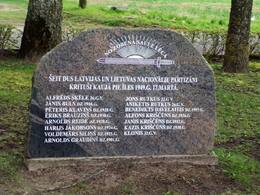
The Īle National Partisan Brothers' Cemetery in the Virkus cemetery of Bērze parish was established on November 14, 1992, when 15 partisans who fell in the Battle of Īle on March 17, 1949, were buried here. This was possible after on July 18, 1992, the National Guard, together with the organization "Daugavas Vanagi" and the Latvian history research working group "Ziemeļblāzma", with the participation of representatives of other nationally-minded organizations, exhumed the remains of 15 Latvian and Lithuanian forest brothers buried in a blown-up partisan bunker in the Īle forest district of Zebrene parish.
The memorial stone to the national partisans who fell in the Battle of Īle was unveiled on May 29, 1993. It was designed by Alfons Kalniņš ("Edgars"), one of the surviving participants in the battle of March 17, 1949. The regular-shaped granite slab depicts a sword and a rising sun, and is engraved with the names of 15 fallen national partisans and the inscription:
“The sun rose from the sword. Here lie the Latvian and Lithuanian national partisans who fell in the battle of Īle on March 17, 1949.”
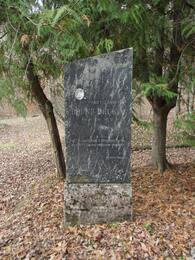
Der Grabstein des nationalen Partisanen Bruno Druķis, der 1941 fiel, auf dem Friedhof Jaunsesava in der Gemeinde Naudīte.
Grabstein für Bruno Druķis, einen Partisanen aus der Gemeinde Naudīte, der am 30. Juni 1941 in einem Gefecht mit den bewaffneten Verbänden der sowjetischen Besatzungsbehörden fiel. Eine Granitstele mit der Inschrift: „Dem Partisanen Bruno Druķis gewidmet. Gefallen am 30. Juni 1941. Dieses Land ist ein heiliges Erbe unseres Volkes. Und gesegnet sei, wer für ihn fällt. Gemeinde Naudīte.“ Das Keramikmedaillon mit dem Porträt von B. Druķis wurde nach dem Zweiten Weltkrieg zerstört.
Nach Beginn des deutsch-sowjetischen Krieges versammelten sich am 27. Juni 1941 etwa zehn örtliche Wachleute im Wald von Ružēni und bildeten unter der Führung von Žanis Gelsons eine nationale Partisaneneinheit. Am folgenden Tag besetzten die Partisanen das Gemeindebüro von Naudīte sowie die örtliche Maschinen- und Pferdevermietung und nahmen die dortigen Traktoren, Landmaschinen und Pferde in Besitz. Am 30. Juni versuchte die Partisaneneinheit aus Naudīte, eine Kolonne von Rotarmisten unter Führung zweier Offiziere auf der Straße bei Meļļi abzufangen. Bei dem Gefecht fielen die beiden sowjetischen Offiziere sowie der pensionierte Korporal Bruno Druķis vom lettischen Kavallerieregiment.
Nationaler Partisanenbunker in Īle
Der Bunker befindet sich in der Gemeinde Zebrene, im Waldgebiet Īle, an der Abzweigung der Straße P104 Biksti-Auce.
Die Kārlis Krauja-Gruppe der nationalen Partisanen von Īle wurde 1947 gegründet. Zum Gruppenführer wurde V.Ž. Brizga (Spitzname K. Krauja) ernannt. Im Oktober 1948 schloss sich die Krauja-Gruppe mit der litauischen Nationalen Partisanengruppe zusammen. Die Krauja-Gruppe agierte im Kreis Jelgava und bestand aus 27 nationalen Partisanen.
Im Oktober 1948 baute die Krauja-Gruppe in der Gemeinde Lielauce, Kreis Jelgava, in der Nähe der Forstwirtschaft Īle, 300 Meter nördlich des Hauses „Priedaiši“, einen unterirdischen Bunker. Seine Gesamtlänge mit den Kampfgängen betrug 45 Meter. Um den Bunker herum wurden 70 ferngesteuerte Minen gelegt. Der Bunker war mit einem Ofen, einem Brunnen, einer Toilette und einem Lagerraum ausgestattet.
Am 17. März 1949 kämpften die 24 Partisanen, die sich zu diesem Zeitpunkt im Bunker befanden, ihre letzte Schlacht gegen die 760 Mann starke Tscheka-Truppe. Nach der Schlacht wurden 9 Mitglieder der Gruppe verhaftet, 15 fielen jedoch in der Schlacht, darunter acht Letten und sieben Litauer.
Im Jahr 1992 grub die Landeswehr zusammen mit den Daugavas Vanagi (lettisch „Düna-Falken“) den gesprengten Bunker aus. An der Stelle wurden ein Weißes Kreuz, ein Gedenkstein und eine Granitstele errichtet.
Im Inneren des Bunkers sind ein Ofen, ein Tisch und schmale Bänke zu sehen, auf denen die Partisanen schliefen. Am Bunker befinden sich Informationstafeln und Gedenksteine mit den Namen der Partisanen.
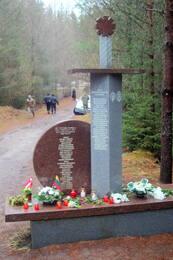
Memorialas kovos su sovietine okupacija ir komunistinėmis represijomis aukoms Zebrenės parapijoje
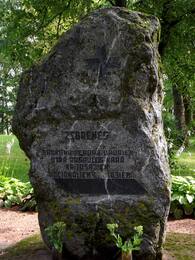
Memorialas kovojusiems su sovietų okupaciniu režimu ir komunistinių represijų aukoms Zebrenės parke, Rengės dvaro parke, buvo atidengtas 1995 m. rugsėjo 1 d. Ant grublėto riedulio pavaizduotas kryžius ir iškalti žodžiai: „Zebrenės raudonojo teroro aukoms, Antrajame pasauliniame kare žuvusiems tautos kovotojams“. Memorialo sukūrimą finansiškai parėmė organizacija „Daugavos Vanagi“.
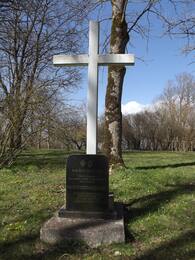
Denkmal für lettische und litauische Nationalpartisanen in der Gemeinde Ukru
Die Gedenkstätte für lettische und litauische Nationalpartisanen in der Nähe der ehemaligen Pfarrschule von Ukru wurde am 21. Oktober 2006 eröffnet und geweiht. Dort wurde ein weißes Kreuz errichtet, an dessen Fuß eine Granitstele mit den Namen zweier lettischer und zweier litauischer Nationalpartisanen und der Inschrift „Für Dich, Vaterland. Den Nationalpartisanen der Pfarrei Ukru 1944–1954. Im Kampf gegen das kommunistische Besatzungsregime fielen am 26. Oktober 1948 Eidis-Eduards Ozols, Kristaps Siļķe, Alfonsas Bugnius und Kostas Norvaitis in der Pfarrei Ukru.“
Die Gedenkstätte wurde vom Lettischen Nationalen Partisanenverband (LNPA) in Zusammenarbeit mit dem Litauischen Freiheitskämpferverband (LLKS) errichtet. An der Eröffnung nahmen der Vorsitzende des Gemeinderats von Ukru, Ainārs Āriņš, der Vorsitzende des LNPA, Ojārs Stefans, der Vertreter des LLKS, Jons Čepons, und weitere Anwesende teil.
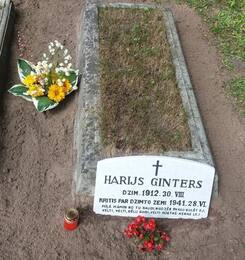
Der Grabstein des 1941 gefallenen Nationalpartisanen Harijs Günters auf dem Friedhof Ūziņi Prieži in der Gemeinde Zaļenieki
Grabstein für den Partisanen Harijs Ginter aus der Gemeinde Jēkabnieki, der am 28. Juni 1941 fiel. Eine Gedenktafel mit folgender Inschrift befindet sich auf dem Grab: „Harijs Ginter. Geboren am 30. August 1912. Gefallen für sein Vaterland am 28. Juni 1941. Liebe Mutter, was du weinst, lösche den Schmerz, schlaf ein. Vergebens, vergebens wartest du auf deinen Sohn, vergebens vergießt du bittere Tränen.“ Der Grabstein wurde 2016 und 2024 auf Initiative von Gunita Kulmane, der Leiterin der Bibliothek Ūziņi der Gemeinde Zaļenieki, und auf ihre persönlichen Kosten restauriert.
In den Tagen nach Ausbruch des Deutsch-Sowjetischen Krieges am 22. Juni 1941 wurde in der Gemeinde Jēkabnieki eine nationale Partisaneneinheit unter der Führung des Wachtzugskommandanten V. Ritums aufgestellt, um für Ordnung zu sorgen und die sowjetische Besatzungsmacht zu beenden. Die anfänglich schwache Bewaffnung – einige Pistolen und Gewehre – wurde durch Beutewaffen von Rotarmisten ergänzt, die bei Kalnanši und anderswo gefangen genommen worden waren. Am 28. Juni 1941 kam es bei Gudēni zu einem größeren Gefecht mit sowjetischen Verbänden, bei dem der Wachmann der Gemeinde Jēkabnieki und nationale Partisan H. Gīnters gefangen genommen und zu Tode gefoltert wurde.
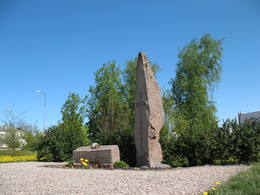
Monument to the defenders of Jelgava against the Soviet occupation in 1944 in Grēbner Park
The memorial site for the participants of the July-August 1944 Jelgava defense battles against the second Soviet occupation was opened on May 8, 1995. In honor of this event, a service was held in Jelgava St. Anna Evangelical Lutheran Church and a flag-draped procession through Jelgava. An irregularly shaped granite stele stands at the memorial site, in which a cross is carved, which grows into the point of a sword. Next to it, to the left, a granite block in the shape of a truncated parallelepiped with the text “To the defenders of Jelgava 1944.28.VII-8.VIII” is placed in a gull-like manner.
The war in Jelgava began after Soviet troops captured Šiauliai in Lithuania on 27 July 1944 and continued their offensive northwards. In an effort to repel the Red Army, the newly appointed military commander of Jelgava, Lieutenant General Johann Flugbeil, declared it a “fortress city” and all available forces were to be used for its defense. Initially, the core of Jelgava’s defenders consisted only of soldiers from the 15th Latvian SS Weapons Division Training and Reserve Brigade under Lieutenant Colonel Herman Jurko and a few small German units. On the afternoon of 27 July, the Soviet 3rd Air Army began bombing Jelgava, attacking not only strategic military targets in the city and its outskirts – the railway station and roads – but also setting fire to some of the residential buildings. The city's buildings and civilians suffered from Katyusha rocket systems, artillery, and mortar fire fired at each other by both warring sides.
On July 28, units of the Soviet 3rd Guards Mechanized Corps launched an attack on the southern outskirts of the city, but were unsuccessful. On the morning of July 30, the attack was reinforced by the 279th and 347th Rifle Divisions of the 51st Army. Although Moscow Radio reported the capture of the city the next day, the USSR troops with reinforcements had managed to break into the city center, but not completely capture it. The right bank of the Lielupe River and the fortified bridgehead at the Driksa Bridge remained unoccupied by the Red Army. Fierce fighting also took place in Jelgava Castle, which came under Soviet control in early August. The Red Army moved cannons into the castle and fired from its windows at the positions of German and Latvian soldiers on the Kalnciema Road. Counterfire from German heavy artillery followed, which thoroughly destroyed the castle. On August 4, with reinforcements from Riga, the defenders of Jelgava temporarily managed to take control of the city. However, a massive Soviet offensive forced the German and Latvian soldiers to abandon Jelgava three days later.
The building of Jelgava Secondary School No. 2 at Filozofu Street 50, where members of the youth resistance organization “Three-Star Column” studied in 1945
The building of the current Pauls Bendrup Elementary School (former School for the Deaf and Dumb) at Filozofu Street 50, after the destruction of Jelgava during the Soviet-German war in July-August 1944 and the city coming under the second Soviet occupation, housed Jelgava 2nd (women's) Secondary School. In the fall of 1945, several members of the youth resistance organization "Three-Star Column" studied there.
In November 1945, Soviet security authorities arrested 20 members of this organization, mostly only 16-17 years old, including 13 boys and seven girls, as well as two more of their supporters. The Jelgava youth were accused of organizing illegal meetings and anti-Soviet agitation, collecting weapons and ammunition, supplying food to prisoners in the Sugar Factory filtration camp, providing support to national partisans in Lithuania, as well as other crimes against the USSR occupation regime.
The Baltic Military District Tribunal convicted 19 members of the Three-Star Column organization on May 23, 1946, sentencing them to 10 years in Gulag camps and 5 years of restriction of rights. After nine years in prison in Perm, Berezniki, Norilsk, and Karaganda, their return to their homeland became possible a year after Stalin's death in 1954.
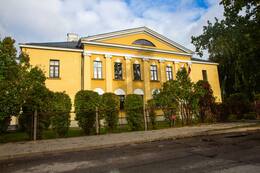
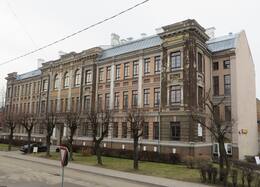
Memorialas sovietų okupacinio režimo represuotų Jelgavos 1-osios vidurinės mokyklos pasipriešinimo judėjimo dalyviams Meiju gatvėje 9
Atminimo vieta Jelgavos 1-osios vidurinės mokyklos jaunimo pasipriešinimo organizacijos nariams, 1941 m. represuotiems komunistinio režimo, 2007 m. buvo įkurta visuomenės-politinio aktyvisto ir istoriko Andrio Tomašūno iniciatyva. Atminimo vietoje prie Jelgavos 1-osios gimnazijos (dabar – Jelgavos aukštesnioji technologijų mokykla) pasodintas ąžuolas ir pastatytas riedulys su iškaltu tekstu: „Atminimo ąžuolas Jelgavos gimnazistams, nacionalinio pasipriešinimo judėjimo dalyviams – žuvusiems Sibire 1940–1948 m. T. Bergui, V. Einfeldui, A. Gaišui, I. Leimaniui, J. Liepiniui, J. Jegermaniui, I. Kārkliņui, O. Ošeniekui, F. Skursteniui, A. Saldenaisui, A. Valkīrui, J. Valūnui. 2000. O. Valkīras, V. Treimanis ir 1-oji gimnazija“.
Jelgavos mokinių pasipriešinimo organizacija „Laisvoji Latvija“ buvo slapta įkurta 1940 m. rugsėjo 30 d. šešių vienuoliktos klasės Jelgavos 1-osios vidurinės mokyklos mokinių Fričo Skurstenio bute, Slimnīcas gatvėje 11-4. Organizacijai vadovavo Juris Valūnas, o jos narių skaičius buvo apie 20 žmonių. Jie rinkdavosi į nelegalius susirinkimus, kuriuose aptardavo organizacijos struktūrą ir veiklą. Jaunimas atspausdino antisovietinį šūkį „Ruoškitės!“, kurio 100 egzempliorių spalio 14 d. buvo iškabinti visame mieste. Nuo 1940 m. spalio 25 d. iki lapkričio 6 d. sovietų saugumo institucijos suėmė trylika Jelgavos 1-osios vidurinės mokyklos mokinių, kurie buvo įkalinti Jelgavos kalėjime ir ilgai tardomi. 1941 m. 1942 m. sulaikytieji buvo išvežti į SSRS, kur 1942 m. vasario 7 d. SSRS Vidaus reikalų liaudies komisariato specialusis posėdis nuteisė juos 10 metų kalėti. Išgyveno ir į Latviją grįžo tik Voldemaras Treimanis, o kiti Jelgavos 1-osios vidurinės mokyklos pasipriešinimo organizacijos nariai žuvo Gulago stovyklose 1942–1943 m.
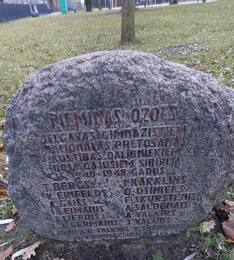
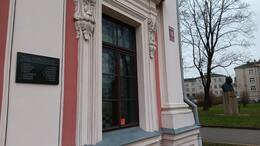
Atminimo lenta sovietų okupacinio režimo represuotiems Jelgavos 1-osios vidurinės mokyklos rezistencijos nariams Akademijos gatvėje 10
Atminimo lenta komunistinio režimo represuotiems Jelgavos 1-osios vidurinės mokyklos (anksčiau Hercogo Pēterio gimnazijos) jaunimo pasipriešinimo organizacijos nariams buvo įrengta Latvijos politiškai represuotųjų asociacijos Jelgavos skyriaus 1996 m. spalio 24 d. Iš pradžių lenta buvo G. Eliaso Jelgavos istorijos ir meno muziejuje, tačiau po pastato fasado ir patalpų renovacijos 2007–2008 m. ji buvo perkelta ant išorinės muziejaus sienos dešinėje nuo pagrindinio įėjimo, šalia atminimo lentų, skirtų kitoms istorinėms asmenybėms. Lentėje iškaltas tekstas: „1940 10 26 suimti ir į Sibirą ištremti Hercogo Jēkabo gimnazijos mokiniai – antisovietinio judėjimo „Laisvoji Latvija“ nariai T. Bergsas, V. Einfeldsas, A. Engursas, A. Gaišsas, O. Leišmanis, I. Leigermanis,, Kārkmanis, I. Ošenieks, A. Saldenais, F. Skurstenis, V. Treimanis, A. Valkīrs, J. Valūns.“
Jelgavos mokinių pasipriešinimo organizacija „Laisvoji Latvija“ buvo slapta įkurta 1940 m. rugsėjo 30 d. šešių vienuoliktos klasės Jelgavos 1-osios vidurinės mokyklos mokinių Fričo Skurstenio bute, Slimnīcas gatvėje 11-4. Organizacijai vadovavo Juris Valūnas, o jos narių skaičius buvo apie 20 žmonių. Jie rinkdavosi į nelegalius susirinkimus, kuriuose aptardavo organizacijos struktūrą ir veiklą. Jaunimas atspausdino antisovietinį šūkį „Ruoškitės!“, kurio 100 egzempliorių spalio 14 d. buvo iškabinti visame mieste. Nuo 1940 m. spalio 25 d. iki lapkričio 6 d. sovietų saugumo institucijos suėmė trylika Jelgavos 1-osios vidurinės mokyklos mokinių, kurie buvo įkalinti Jelgavos kalėjime ir ilgai tardomi. 1941 m. 1942 m. sulaikytieji buvo išvežti į SSRS, kur 1942 m. vasario 7 d. SSRS Vidaus reikalų liaudies komisariato specialusis posėdis nuteisė juos 10 metų kalėti. Išgyveno ir į Latviją grįžo tik Voldemaras Treimanis, o kiti Jelgavos 1-osios vidurinės mokyklos pasipriešinimo organizacijos nariai žuvo Gulago stovyklose 1942–1943 m.
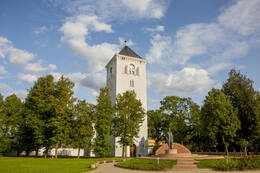
Der Turm der St. Dreifaltigkeitskirche in Jelgava
Der Turm der St. Dreifaltigkeitskirche in Jelgava befindet sich im Zentrum von Jelgava.
Die Geschichte des Turms erstreckt sich über mehr als vier Jahrhunderte und ist ein wichtiger Zeuge sowohl der Entwicklung der Stadt als auch tragischer Ereignisse. Die Kirche wurde 1574 im Auftrag des Herzogs von Kurland und Semgallen, Gotthard Kettler, erbaut und ihr Turm, der 1688 unter der Leitung des Meisters Martin Knoch fertiggestellt wurde, wurde zu einem der bedeutendsten Bauwerke der Stadt. Während des Zweiten Weltkriegs wurde Jelgava stark zerstört und die Kirche brannte 1944 nach einem sowjetischen Luftangriff nieder. Nach dem Krieg sprengten die sowjetischen Behörden den Altar und zerstörten die Mauern. Nur der Turm blieb als strategisches Objekt erhalten, da er der höchste Punkt der Stadt war. Während und nach dem Krieg wurde der Turm für militärische Zwecke genutzt. Vom Turm aus wurden die feindlichen Stellungen beobachtet und das Gebiet kontrolliert.
In den Nachkriegsjahren diente der Turm auch als strategischer Punkt für Widerstandsaktivitäten. Er wurde zu einem geheimen Treffpunkt und einer Basis für die Übergabe von Informationen, die für den Kampf gegen das sowjetische Regime unerlässlich waren. Der Turm hat zwar seine historische Bedeutung behalten, ist aber heute als Kultur- und Bildungszentrum wiedererstanden.
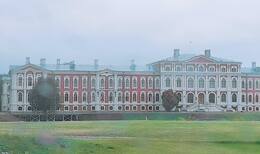
Das Gebäude der Landwirtschaftsakademie in Jelgava in der Lielāja-Straße 2, in dem Mitglieder des Lettischen Zentralrats in den Jahren 1943-1944 arbeiteten.
Mehrere Mitglieder der akademischen Einheit „Austrums“ und des Zentralrats von Lettland, die am 13. August 1943 heimlich in Riga gegründet worden waren, arbeiteten 1943/44 an der Landwirtschaftlichen Akademie in Jelgava (Mītava) (heute Lettische Universität für Biowissenschaften und Technologien) – darunter die Professoren Rūdolfs Markuss, Andrejs Teikmanis und Alfrēds Tauriņš sowie weitere Lehrkräfte. Am 10. März 1944 druckte Vilis Eihe, ein Assistenzprofessor der Landwirtschaftlichen Akademie, zusammen mit seiner Frau Aleksandrs und seinem Assistenten Hermanis Zeltiņš in Jelgava mit einem Vervielfältigungsgerät die illegale Zeitung der LCP, „Jaunā Latvija“. Sie berichtete über die internationale Lage Lettlands und legte weitere Leitlinien für das politische Leben Lettlands fest. Unter den 188 lettischen sozialpolitischen Aktivisten, die in dem Memorandum der LCP vom 17. März 1944 die Notwendigkeit der Wiederherstellung einer unabhängigen und demokratischen Republik Lettland auf der Grundlage der Verfassung von 1922 zum Ausdruck brachten, befanden sich die akademischen Mitarbeiter der Landwirtschaftsakademie in Jelgava – die Professoren Jānis Vārsbergs, Pāvils Kvelde, A. Teikmanis und R. Markuss.
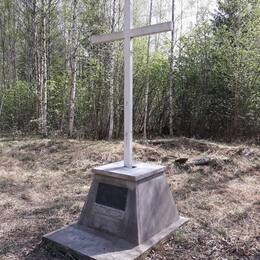
Gedenkstätte für die Mitglieder der nationalen Partisanengruppe J. Rozentāls – J. Freimanis in der Gemeinde Iecava
Die Gedenkstätte für die Mitglieder der nationalen Partisanengruppe Jānis Rozentāls – Jānis Freimanis wurde 1996 in der Gemeinde Iecava am Standort des Bunkers der Waldbrüdergruppe von Jānis Freimanis errichtet. Auf dem Betonsockel unter einem weißen Birkenkreuz ist die Inschrift „Für die Freiheit Lettlands den gefallenen nationalen Partisanen“ sowie die Namen der Waldbrüder Jānis Freimanis, Jānis Kāpostiņš und Laimonis Zīraks zu lesen, die am 11. Januar 1950 im ehemaligen Gebiet der Gemeinde Garoza im Bezirk Jelgava fielen. Hinter dem Denkmal ist der Standort des Bunkers zu sehen, am Rande des Platzes befindet sich ein Stand mit Informationen, die vom Historiker des Bauska Museums, Raits Ābelnieks, über die nationale Partisanengruppe von J. Rozentāls und den Brüdern Dūmiņš zusammengestellt wurden, die in den Jahren 1944-1947 in den Pfarreien Iecava, Misa und Zālīte aktiv war.
Die von Jānis Rozentāls geführte Einheit der Waldbrüder wurde im Sommer 1945 gegründet und zählte bereits im September elf Partisanen. Diese Gruppe war in den Gemeinden Iecava und Zālīte im Bezirk Bauska sowie in den Gemeinden Garoza, Salgale und Pēternieki im Bezirk Jelgava aktiv. Am 13. August 1948 gelang es den Tschekisten, den Einheitskommandanten und seinen Bruder zu töten und drei weitere Partisanen gefangen zu nehmen. Die verbliebenen Waldbrüder setzten den Kampf gegen die Besatzer unter der Führung von Jānis Freimanis jedoch fort.
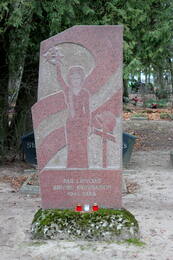
The Brothers' Cemetery of Latvian soldiers who fell in the defense of Bauska against the Soviet occupation in 1944 in the Butki cemetery, Codes parish
The memorial site at the Butki cemetery was established after the Bauska branch of the Environmental Protection Club cleaned up the graves of approximately 30 Latvian soldiers who fell in the battles for the defense of Bauska in 1944, buried in two columns, in the autumn of 1988, and decided to erect a monument. A collection of donations followed for the construction of the monument. The monument made of red granite, dedicated to the soldiers of the Bauska Volunteer Battalion buried here, was unveiled on 25 November 1989, but already on the night of 4/5 December 1990, it was blown up by the USSR occupation army. In 1992, a massive wooden cross was erected in place of the monument. On 13 October 2002, a new granite monument, similar to the previously destroyed monument, was unveiled with the text engraved on it: “For the Freedom of Latvia Those Who Fell in 1944”.
Memorial stone to the Bauska Volunteer Battalion in the Jumpravmuiža Park of Mežotne Parish
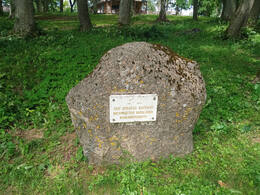
The memorial site for the Bauska Volunteer Battalion in Jumpravmuiža Park was established in 1990 at the initiative of Imants Zaltiņš, a former soldier of this battalion. It is located at the place where Latvian soldiers prevented the first Red Army units from crossing the Lielupe River at the end of July 1944. A white marble plaque is attached to a roughly worked boulder with a gold-colored text engraved on it: “On 28.7.1944, the command post of the Bauska Volunteer Battalion was located here.” Initially, a bronze plaque with an engraving was located in place of the marble plaque, but in the 1990s it was stolen by non-ferrous metal thieves.
At the end of July 1944, as the Soviet troops approached Bauska, there were no significant German forces in the city, which had recently been deep in the rear. The immediate fall of Bauska was prevented by the decisive action of Major Jānis Uļuks, the head of the Bauska district and commander of the guard regiment, who at the end of July formed the Bauska Volunteer Battalion, which consisted of guards of the 13th Bauska Guard Regiment, police officers, as well as volunteers. The battalion took up defensive positions on the banks of the Lielupe River in Jumpravmuiža opposite Ziedoņi islet and on the very first day had to engage in battle with the attacking Red Army. During the battles, a group of Lithuanian police officers who had retreated from Lithuania to Latvia also joined the battalion. Many Lithuanians fell because they fought bravely and without sparing themselves. The first to fall was a Lithuanian police captain, who was buried right there in Jumpravmuiža Park next to the graves of German soldiers from World War I.
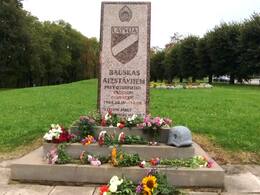
Monument to the defenders of Bauska against the Soviet occupation in 1944 in the Castle Garden
The monument to the defenders of Bauska in 1944 was unveiled on September 14, 2012, at the initiative of former Bauska Volunteer Battalion soldier Imants Zeltiņš and with his and the local government's financial support. The red granite stele, which is mounted on a three-tiered concrete base, is engraved with the text: “To the defenders of Bauska against the second Soviet occupation 1944.28.07.-14.09.” and “Latvia must be a Latvian state. Kārlis Ulmanis.” The unveiling of the monument was followed by protests from the Russian and Belarusian Foreign Ministries and local Russian mass media, but in the spring of 2024 the monument was even attacked by vandals. Despite this, a memorial event dedicated to the defenders of Bauska is held at this location every year on September 14 at 2:00 p.m.
At the end of July 1944, as the Soviet troops approached Bauska, there were no significant German forces in the city, which had recently been deep in the rear. The immediate fall of Bauska was prevented by the decisive action of Major Jānis Uļuks, the head of the Bauska district and commander of the guard regiment, who at the end of July formed the Bauska Volunteer Battalion, which consisted of guards of the 13th Bauska Guard Regiment, police officers, as well as volunteers. The battalion took up defensive positions on the banks of the Lielupe River in Jumpravmuiža opposite the Ziedoņi islet and on the first day it had to engage in battle with the attacking Red Army. Initially, the battalion was very poorly armed, and most of its automatic weapons had to be obtained as trophies. A few days later, the 23rd, 319th-F. and 322nd-F. Latvian police battalions also joined the war effort. Until mid-August, the 15th Latvian SS Reserve and Supplement Brigade Battalion, formed from training and medical companies, also participated in the defense of Bauska against the second Soviet occupation. In total, 3,000-4,000 Latvian soldiers participated in the battles for Bauska, who at the end of the battles had to face a tenfold superiority. Soviet troops managed to take Bauska only on September 14, after a month and a half of resistance by Latvian and German soldiers.
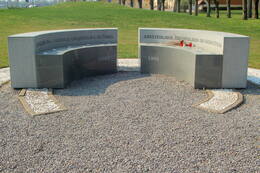
Memorial ensemble for those who fought against the Soviet occupation and the victims of communist repression in the Bauska Castle Garden
The memorial ensemble in the Bauska Castle Garden was opened on the 90th anniversary of the Republic of Latvia – on November 18, 2008. The memorial site was created according to the idea of the Bauska region’s politically repressed club “Rēta”. The two-part grey granite monument was made according to the design of architect Inta Vanaga with the funds of the Bauska city municipality and donors. The text is engraved on it: “To the fighters against the Soviet occupation regime, those arrested, deported and tortured 1940-1990”. Every year on March 25 and June 14, memorial events dedicated to the victims of the deportations of 1941 and 1949 are held at this place
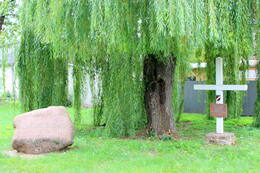
Memorial to the defenders of Bauska against the Soviet occupation in 1944 in the garden of the Holy Spirit Evangelical Lutheran Church
In the garden of the Bauska Holy Spirit Evangelical Lutheran Church, the defenders of Bauska – Latvian soldiers – were buried during the battles of 1944. During the years of the USSR occupation, playgrounds for a kindergarten were set up here. On November 9, 1996, a memorial stone created by sculptor Mārtiņš Zaurs was unveiled in the church garden. The text carved into the roughly worked red boulder under the Latvian Legion sleeve patch – a red-and-white representation of the shield – “Long live Latvia to you! To the defenders of Bauska in 1944.” The memorial stone was erected at the initiative of the Latvian National Soldiers’ Association and the Bauska branch of the organization “Daugavas Vanagi”. Financial support was also provided by the Bauska city and district municipalities. Next to the stone is a white-painted wooden cross, under which is attached a red-white-red painted replica of the legionnaires' shield, and even lower is a pink granite plaque with the text: "Here lie the legionnaires, the heroic defenders of Bauska, 1944.28.VII – 1944.14.IX"
Memorial plaque to the victims of repressions of the Soviet occupation regime in Bauska at Plūdoņa Street 54
House and memorial plaque for victims of Cheka repressions at the building in Bauska at Plūdoņa Street 54, where the Bauska district, later - district Cheka was located after World War II during the Soviet occupation. Here, national partisans and their supporters were imprisoned and interrogated in the basements, and the killed partisans were thrown into the courtyard for identification and intimidation of local residents. The memorial plaque was unveiled after 2000, it depicts stylized barbed wire, prison bars and the text: “The soles of boots clatter, a hundred people groan... Every day is a memory that the heart does not forget. During the Soviet occupation, this building housed the Bauska district department of the repression institution (NKVD, “Cheka”), where people were deprived of their homeland, home, family, freedom and life”. During the occupation, there was a memorial plaque next to this house to three fallen representatives of the occupation authorities who lost their lives in an unsuccessful attempt to defeat a national partisan – Jānis Gudžas.
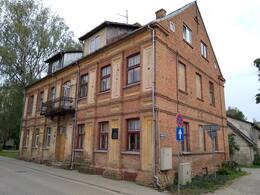
Memorial plaque to the participants of the school youth resistance at the Bauska city elementary school at Rīgas Street 32
A memorial plaque to the members of the youth resistance organization at the Bauska city elementary school at Rīgas Street 32, where the Bauska secondary school was located after World War II. The inscription on the plaque, unveiled in 2000, reads: "... And we carried only our hearts high. A group of youth national resistance studied in this school, which dedicated their youth to the fight against the communist occupation power (1948-1950)."
In the autumn of 1948, a national resistance group of patriotic youth was formed in Bauska, which, in the proclamations and slogans posted in the city, called for a fight against the occupiers and the restoration of Latvia's independence, as well as warned of the deportations expected by the communist regime on March 25, 1949. Several young people from Bauska studied in Riga after graduating from high school, but continued to work in this underground organization. Several young people had purchased weapons and explosives and staged an assassination attempt on the chairman of the collective farm in Codes parish. It was planned to attack other officials of the Soviet occupation authorities, as well as blow up the festive stands in Bauska, Baldone and Eleya. This did not happen, because arrests began in mid-1950. 12 young people were arrested in Bauska and Riga, several of them were arrested on the day of high school graduation – June 22. In February 1951, the Baltic War District Tribunal sentenced the organization's leaders Gunārs Zemtautis and Arvīds Klēugas to death, and six high school students and four students to 25 years in forced labor camps.
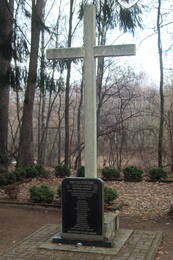
Memorial to Latvian and Lithuanian national partisans at Plūdoņas Cemetery, Ceraukste Parish
The memorial site for Latvian and Lithuanian national partisans was opened on September 11, 2011. It features a white-painted metal cross, at the foot of which is a granite stele with the names of fourteen national partisans and the text: “For You, Fatherland. Latvian and Lithuanian national partisans. Fallen in the fight against the communist occupation in Ceraukste, Panemune, Īslīce and Pabirži parishes (Lithuania) in 1945–1954. Jānis Gudža, Teodors Auniņš, Pēteris Varens, Žanis Strautiņš, Miķelis Dombrovskis, Vilis Krūmiņš, Olģerts Trans, Laimonis Auniņš, Jānis Ulinskis, Jānis Anilonis, Povilas Glinda, Petras Gibrjūnas, Petras Volosklāvičius, Alberts “Voldmerārs” “Director”. Your graves are unknown.”
The memorial site was established by the Latvian National Partisan Association with the support of the Bauska regional government, and the cross was made by precision mechanic Harijs Frīdemans from Dobele with his own money.
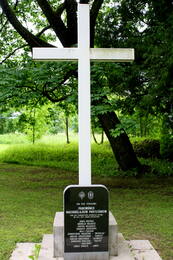
Latvijos ir Lietuvos nacionaliniams partizanams skirtas memorialas Mežgalių mokyklos parke, Brunavo valsčiuje
Latvijos ir Lietuvos nacionalinių partizanų atminimo vieta atidaryta 2007 m. gegužės 25 d. Joje stovi baltai dažytas kryžius, kurio papėdėje – granito stela su iškaltais dešimties nacionalinių partizanų vardais ir tekstu: „Už Tave, Tėvyne! Panėmunės nacionaliniams partizanams. Žuvusiems kovoje su komunistiniu okupaciniu režimu nuo 1944 iki 1952 m. Jāniui Dručkai, Andrejui Bojastui, Arvydui Melduciui, Augustui Juškevičiui, Willi Fischeriui, Stanislovui Naudžiui – „Mykolui“, Juozui Krikščiūnui – „Karliui“, Juozui Balčiūnui – „Klemutei“, Augustui Pareiziui – „Kazys“, „Juozupas“, Jonui Sirbikei – „Janiui““. Atminimo vietą suprojektavo Latvijos nacionalinių partizanų asociacija pagal architekto Gunāro Blūzmos projektą.
Paminklas kapucinų vienuoliams – nacionalinio pasipriešinimo judėjimo rėmėjams prie Skaistkalnės bažnyčios
Paminklas yra netoli Skaistkalnės katalikų bažnyčios ir buvusio Mažesniųjų brolių kapucinų ordino vienuolyno pastato – vietos, kurioje po Antrojo pasaulinio karo, padedami vienuolių, slapstėsi nacionaliniai partizanai ir jų rėmėjai. 2011 m. atidengtoje ir Pauliaus kunigo Jānio Vilakso pašventintoje memorialinėje steloje rašoma: „Kapucinų ordino vienuoliai – nacionalinio pasipriešinimo judėjimo rėmėjai Kārlis Gumpenbergs OMC (1904–1980), Miķelis Jermacāns OMC (1911–1986), Kārlis Kiselevskis OMC (1906–1979), Miķelis Kļaviņš OMC (1906–1986), Jānis Pavlovskis OMC (1914–2001). Jie teikė prieglobstį ir paramą nacionaliniams partizanams ir nelegaliai Rygoje, Skaistkalnėje ir Vilakoje gyvenantiems asmenims 1945–1947 m.“
Kapucinų Tėvams skirto atminimo akmens pašventinimas įvyko 2011 m. spalio 8 d. Akmenį pašventino Skaistkalnės katalikų bažnyčios pauliečių tėvas kunigas Janis Vilaksas. Renginyje dalyvavo Latvijos nacionalinės partizanų asociacijos pirmininkas Ojārs Stefans, Skaistkalnės parapijos administracijos vadovė Ineta Skustā ir kiti vietos gyventojai.
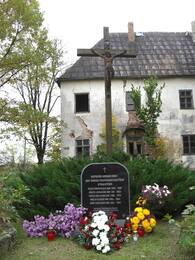
Nacionalinių partizanų memorialas Kurmenės valsčiuje
Nacionalinių partizanų atminimo vieta prie Kurmenės parapijos salės buvo atidaryta 2023 m. gegužės 4 d., vietoje, kur stovėjo SSRS okupacinių kariuomenių atminimo paminklas. Šis paminklas buvo išardytas pagal 2022 m. birželio mėn. Latvijos Respublikos Saeimos priimtą įstatymą „Dėl sovietinį ir nacistinį režimus šlovinančių objektų eksponavimo ir jų išardymo Latvijos Respublikos teritorijoje draudimo“. Atminimo vietoje pastatytas baltai dažytas medinis kryžius, kurio papėdėje – juodo granito stela su iškaltu tekstu: „Kurmenės ir aplinkinių parapijų nacionaliniams partizanams 1944–1953 m. Jie mus sulaužys, bet nepalenks.“
Dešinėje nuo memorialinio ženklo įrengtas Bauskės muziejaus istoriko Raito Ābelnieka parengtas stendas su informacija apie Kurmenės nacionalinius partizanus. Atminimo vieta įkurta vietos gyventojų iniciatyva ir padedant Bauskės krašto pagyvenusių žmonių asociacijos Kurmenės parapijos skyriui bei Bauskės krašto tarybai.
Aktyvi kova su sovietų okupaciniu režimu ir valdžios represijomis vyko rytinėje Bauskės regiono dalyje – Skaistkalnės, Kurmenės, Bārbelės ir Valės valsčiuose. Šioje vietovėje nuo antrosios sovietų okupacijos 1944 m. rudenį nuo valdžios slapstėsi daug vyrų. Mežabraliai buvo pasirengę priešintis valdžios bandymams juos sugauti, todėl jiems buvo tiekiami ginklai ir šaudmenys. Tuo metu tai buvo lengva padaryti, nes buvusiuose mūšio laukuose tokių prekių netrūko.
Buvo užmegzti ryšiai tarp atskirų grupių ir suformuoti didesni partizanų būriai. Prie jų prisijungė buvę Latvijos legiono kariai iš Kuržemės, kurie po vokiečių kapituliacijos nebuvo sudėję ginklų ir nepasidavę, bet toliau kovojo su okupantais. Liepos–rugsėjo mėnesiais buvo suformuotas maždaug 20 vyrų nacionalinis partizanų būrys, kurio branduolį sudarė Kurmenės valsčiaus gyventojai. Jam taip pat priklausė vyrai ir jaunimas iš Bārbelės, Skaistkalnės, Valės ir kaimyninės Mazzalvės valsčiaus Jėkabpilio rajone.
Dalinio vadu tapo Liudvigas Putnieks, gimęs 1912 m., iš Kurmenės parapijos „Nagliņiem“, jo pavaduotoju – buvęs legionierius Viktors Ančevs iš tos pačios parapijos „Mūrniekim“. 4 dešimtmetyje L. Putnieks vadovavo patriotinio jaunimo organizacijos „Latvijas Vanagi“ Kurmenės skyriui.
Šis partizanų būrys 1945 m. rudenį ir žiemą įvykdė keletą išpuolių prieš okupacinės valdžios pareigūnus, taip pat apiplėšė kolaborantus ir valstybines pienines bei parduotuves. Tai buvo padaryta tam, kad miško brolių išlaikymas nebūtų sunki našta jau beveik visiškai bankrutavusiems jų giminaičiams ir kitiems rėmėjams. Nuo partizanų kulkų žuvo keli naikintojų batalionų, vadinamųjų „istrebikų“, kovotojai, okupacinės valdžios įterpiniai Kurmenės parapijos partizanų kaimo taryboje ir Skaistkalnės parapijos vykdomajame komitete. Tokia partizanų veikla gerokai sumažino kolaborantų norą vykdyti okupacinės valdžios įsakymus.
Tačiau į L. Putnieko partizanų grupę buvo infiltruotas agentas, ką liudija vėlesni įvykiai. 1946 m. sausio 14 d., kai V. Ančevas lankė savo motiną „Mūrniekiuose“, ten atvyko milicininkai ir „Istrebiķe“ jį sulaikyti. Kilo susišaudymas, kurio metu nelygioje kovoje žuvo miško brolis ir jo motina.
Vasario 2 d. SSRS vidaus kariuomenės 288-ojo šaulių pulko daliniai puolė partizanų bunkerius Mazzalvės valsčiaus miške netoli Kurmenės valsčiaus sienos. Kruvinoje kovoje prieš didžiulę persvarą žuvo Janis Teodors Meija iš Valės valsčiaus, Vilips Saulītis iš Skaistkalnės valsčiaus, Arnolds Freimanis iš Kurmenės valsčiaus, Fricis Galviņš iš Mazzalvės valsčiaus ir nežinomas Rygos gyventojas, pravarde Ika arba Jonelis. Kitiems miško broliams pavyko atsitraukti ir dingti mūšio šurmulyje. Apie užpuolikų nuostolius informacijos nerasta. Vėlesnių čekistų operacijų metu dar keli partizanai buvo nukauti arba paimti į nelaisvę.
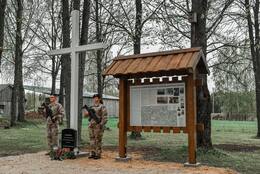
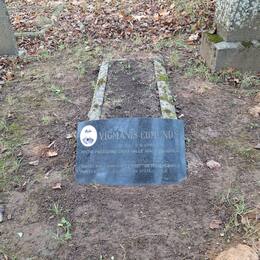
1941 m. žuvusio nacionalinio partizano Edmundo Vigmanio antkapis Valės kapinėse
Antkapis Valės kapinėse buvo pastatytas 1941 m. liepos 4 d. nacionaliniam partizanui Edmundui Vigmaniui, kuris čia buvo palaidotas 1941 m. liepos 30 d. ir žuvo birželio 30 d. susirėmime su sovietų ginkluotais daliniais. Lentoje yra keraminis medalionas su E. Vigmanio nuotrauka, vilkinčia gvardijos uniformą, ir užrašu: „Vigmanis Edmundas. Gimė 1907 m. balandžio 6 d. Žuvo partizaninėse kovose Valėje 1941 m. birželio 30 d. Pro mane einantys tautiečiai dega meile Tėvynei. Už mylimą Tėvynę pažadu savo gyvybę.“
Prasidėjus Vokietijos-SSRS karui ir pabėgus Taurkalnės valsčiaus vykdomojo komiteto darbuotojams, birželio 30 d. vietos gyventojai susirinko Taurkalnės valsčiaus salėje Valle, iškėlė Latvijos vėliavą ant vėliavos stiebo ir suformavo 25 vyrų nacionalinių partizanų būrį, tačiau tik iš dalies ginkluotą šautuvais ir šratiniais ginklais, vadovaujamą sargybinio Osvaldo Ivanovskio. Tą pačią dieną netoli Jaunbruntalų įvyko susidūrimas su maždaug dvidešimčia Raudonosios armijos kareivių, kurio metu buvo gauta papildomų trofėjinių ginklų ir penki žuvo, aštuoni buvo sužeisti, o likę Raudonosios armijos kareiviai buvo išsklaidyti. Mūšyje žuvo nacionalinis partizanas, Jaunbukų savininkas Edmundas Vigmanis, o O. Ivanovskis ir Bārzdinių savininkas Jānis Krūmiņšas buvo sužeisti.