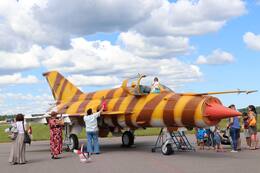

Nuo Kuržemės katilo mūšio iki sovietinio paveldo nuotykių Dundagoje
Lestenės brolių kapinės
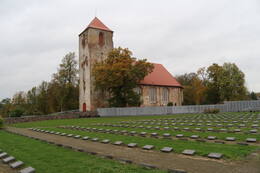
Įsikūręs Tukumo rajone, Lestenėje, šalia bažnyčios.
Masinio kapo kūrimas Lestenėje pradėtas 1998 m. Tai antros pagal dydį karinės kapinės Latvijoje, kuriose palaidota daugiau nei 1300 Latvijos legionierių. Tik atkūrus Latvijos Respubliką atsirado galimybė perlaidoti Antrajame pasauliniame kare žuvusius Latvijos karius iš įvairių vietų.
Latvijos legionas buvo Vokietijos armijos kovinis dalinys, suformuotas daugiausia iš neteisėtai mobilizuotų Latvijos gyventojų. Kareiviai savo buvimą legione suvokė kaip kovą už Latvijos nepriklausomybės atkūrimą, nepaisant to, kad ji vyko Vokietijos ginkluotųjų pajėgų gretose, o Vokietija buvo okupavusi Latviją. Nebuvo jokios kitos karinės jėgos, kuri galėtų atidėti sovietų okupacijos sugrįžimą. Latvijos legionieriai kovojo prieš Raudonąją armiją, kuri likvidavo Latvijos nepriklausomybę, sunaikino jos armiją ir įvykdė nusikaltimus prieš civilius gyventojus. Vokietijos armijos gretose kovojo apie 110 000–115 000 kareivių, apie 30 000–50 000 iš jų žuvo mūšio laukuose.
Šiais laikais Lestenėje galite aplankyti Brolių kapą, šalia kurio stovi Lestenės bažnyčia. Tai išskirtinis baroko sakralinio meno pavyzdys. Senovinėje bažnyčios smuklėje galite susipažinti su paroda, skirta Latvijos legiono istorijai. Centrinį brolių kapo atvaizdą „Tėvynė – Motina – Latvija“ sukūrė skulptorė Arta Dumpė. Netoliese yra Lestenės dvaras, kuris iki Antrojo pasaulinio karo priklausė Latvijos armijos generolui Mārtiniui Hartmaniui.
Ekskursijas po Lestenės bažnyčią galima užsisakyti pas Lestenės evangelikų liuteronų bažnyčios parapijos kunigą Inguną Kokiną, tel. +371 29993743.
Lestene Brothers' Cemetery, Memorial Exposition and bunker
Lestene Brothers’ Cemetery is located in Tukums municipality, Lestene, next to the Lestene church. The construction of the Brothers’ Cemetery in Lestene began in 1998. It is the second largest military cemetery in Latvia, and more than 1,300 Latvian legionnaires are buried here. Only after regaining the independence, it was possible to rebury Latvian soldiers who fell during World War II. The Latvian Legion was a combat unit of the German Army, formed mainly from illegally drafted Latvians. The soldiers thought of their presence in the legion as something that had to be done to be able to restore Latvia’s independence, despite the fact that they were in the ranks of the German armed forces and that Germany had occupied Latvia. Latvian legionnaires fought against the Red Army, which had destroyed Latvia's independence and its army and committed crimes against civilians. Between 110,000 and 115,000 soldiers fought in the ranks of the German Army and about 30,000–50,000 of them never left the battlefield. The Brothers’ Cemetery central theme ‘Motherland – Mother – Latvia’ was created by the sculptor Arta Dumpe. Across the road an exhibit dedicated to the history of the Latvian Legion has been created in a former pub. Right next to it the men of the Latvian Officers Association, under the leadership of Captain Jānis Slaidiņš, have built an underground bunker to show how soldiers and officers lived on the front lines.

Kurzeme fortress museum in Zante
Will be open from May 1st.
Boat trip in Ciecere lake by the boat “Zezer”
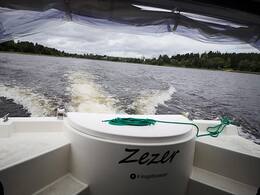
During the ride with the recreational boat “Zezer” along Lake Ciecere near Brocēni you can listen to the audio guide and captain's stories about Lake Ciecere and the city of Brocēni on its shores, World War II events near Lake Ciecere, trenches on both sides of the lake and the Oak Island, as well as the tank route running along an observation tower and the tank that is said to be sunk in the lake. The audio guide is available in Latvian, Lithuanian, English, and Russian languages. The ride takes 1 hour 15 min.
Saldus German Soldiers' Cemetery
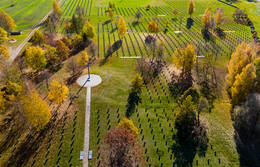
The Saldus German Soldiers' Cemetery is located on the Saldus–Ezeres highway. The cemetery, which covers an area of 8 hectares, contains the remains of around 25,000 German soldiers, as well as some Latvian legionnaires. Reburials have been taking place since 1997.
From May 1 to October 1, an exhibition about the battles of Courland can be viewed in the memorial room. During this period, the memorial room is open on weekdays from 9:00 to 17:00, and on Saturdays and Sundays a guide is also working in the cemetery. Registers of soldiers buried in the Saldus German soldiers' cemetery and soldiers who fell throughout Latvia are also available.
Ezere local history repository “Muitas Nams” (Customs House)
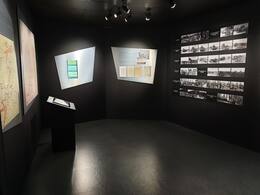
The Ezere Customs House is located in Ezere near the Saldus-Mažeikiai highway at the Latvian-Lithuanian border. The act of surrender of the German Army units ‘Kurzeme’ (Kurland) surrounded in the so-called ‘Courland Pocket’ was signed in this building on 8 May 1945. It is believed that World War II actually ended in Ezere. The customs house has an exhibit covering the events of the end of World War II and exhibits detailing the history of Ezere parish from ancient to modern days. In the morning of 7 May 1945, the commander of the Leningrad Front, Marshal L. Govorov, sent an ultimatum to the command of the army group ‘Kurzeme’ to lay down arms. The act of surrender was signed by the involved parties on May 8 and it detailed the procedure of surrender, weapons collection points, documents and information to be submitted and other practical measures.
Vaiņode air base
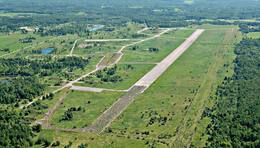
Vaiņode airfield still has 16 Soviet-era aircraft hangars and an 1800 m section of the once 2500 m long runway. The airfield can only be visited with a previous booking. Vaiņode airfield was established during the Latvian independence as one of the cradles of Latvian aviation and was later one of the largest military airfields in the Baltic States. In 1916, two hangars for German Army airships were built. Airships were used to gather intelligence and bomb the positions of the Russian Army. Later the city of Riga bought the airship hangars and used their roof structures to build the pavilions of the Riga Central Market. In May 1940, the 31st Fast Bomber Aviation Regiment of the Red Army moved to Vaiņode, and the construction of a standardized concrete slab runway began. At the end of the summer of 1944 the partially completed airfield was used by various German aviation units, however, at the end of World War II, the same airfield was used by the Red Army aviation units fighting the German Army group called ‘Kurzeme’. After World War II the Soviet Air Forces were stationed in Vaiņode until 1992.
Priekule Memorial Ensemble of Warrior’s Cemetery
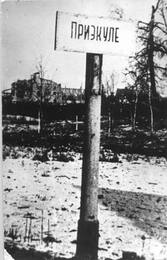
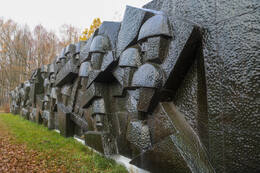
The Priekule Memorial Ensemble of Warrior’s Cemetery is on the Liepāja-Priekule-Skoda road and is the largest burial site of Soviet soldiers of World War II in the Baltics. More than 23,000 Soviet soldiers are buried here. Operation Priekule was one of the fiercest battles in Kurzeme Fortress that took place from October 1944 to 21 February 1945. The Battle of Priekule in February 1945 lasted seven days and nights without interruption and had a lot of casualties on both sides. Until Priekule Warrior’s Cemetery was transformed into a memorial, the last monument of the outstanding Latvian sculptor K. Zāle (1888-1942) was located here to commemorate the independence battles in Aloja. Between 1974 and 1984, the 8 ha Priekule Warrior’s Cemetery was transformed into a memorial ensemble dedicated to those who fell in World War II. It was designed by the sculptor P. Zaļkalne, architects A. Zoldners and E. Salguss, and the dendrologist A. Lasis.
The centre of the memorial holds a 12 m tall statue called the ‘Motherland’, and names of the fallen are engraved on granite slabs. Until Latvia regained its independence, the Victory Day was widely celebrated every year on May 9.
Cattle wagon used for deportations – museum at Skrunda train station
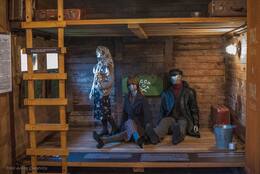
To commemorate the deportations of June 1941 and March 1949, a memorial stone and a four-axle wagon, which also serves as the museum dedicated to deportations, was erected at the Skrunda railway station. This is the first wagon-type museum in Latvia that holds a permanent exhibit of photos, letters, memoirs, documents and various items made by the people deported from the Skrunda station. Skrunda station was a location where deportees were gathered, and one of the three stations in the region to which people from the Skrunda and the Kuldīga area were brought. In 1941, the family of the first President of the restored Republic of Latvia, Guntis Ulmanis, was deported from here to Krasnoyarsk Krai in Siberia.
With the help of deportations, the Soviets dealt with supporters of the national partizans’ and at the same time intimidated the remaining rural population, forcing them to join the collective farms.
Skrunda Manor and exposition of Skrunda locator
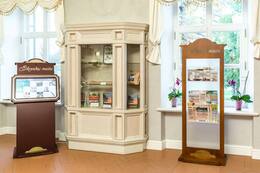
Skrunda manor has an exhibit about the Skrunda radar (Skrunda radio location station) and the activities of the Latvian Popular Front in Skrunda. The Skrunda radio location station nicknamed ‘Kombināts’ (The Plant) was a USSR missile early warning system in the western sector. Location ‘Skrunda-2’ was a special town (в/ч 18951) created 5 km from Skrunda in the direction of Kuldīga for the needs of the USSR military. The radar station Dņepr operated from here and a new, more modern station Darjal was being built. Construction was stopped and the radar station Darjal was blown up on 4 May 1995. In compliance with an international agreement the radar station Dnieper was shut down on 31 August 1998.
Pelči Manor
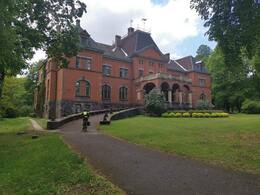
The Pelči Manor is located in Pelči parish, Kuldīga municipality. Tours of the manor house must be booked in advance. The Pelči Manor was built between 1903 and 1904, and this work by architect Wilhelm Neumann is one of the most outstanding manors of the early 20th century in Latvia. Its architectural language involves compositional principles and elements from Renaissance, Baroque and Art Nouveau. Between the late 19th century and 1920, the manor was owned by the Fürst von Lieven family.
From 1944 to 1945, the Pelči Manor was used as headquarters of the German Army Group ‘North’ (known as Army Group ‘Kurzeme’ as of 25 January 1945).
The headquarters of the Army Group ‘North’ moved from Sigulda to the Pelči Manor on 23 September 1944 in view of the planned retreat of the 18th army force from Estonia. The headquarters remained there approximately until mid-May 1945 when, after the capitulation of Army Group ‘Kurzeme’, information and documents were handed over to Red Army officers.
Museum of the National Resistance Movement in Renda
The museum is located a few kilometres from the centre of Renda parish. The exhibit tells about the 50-year-long resistance movement in Latvia: resistance to the first Soviet occupation, resistance to the Nazi German occupation, and the armed and non-violent resistance to the Soviet occupation. The exhibit is located in two buildings. The first building houses evidence of the first Soviet occupation and German occupation. The exhibit showcases a restored barn building where the focus lies on the National Partisan War. Between the two buildings there is a bunker with an authentic layout and trenches used by soldiers. Located near the museum in Renda, excavations, blindages and an obstacle course serve as a training ground for youth guards and anyone interested. Visits must be booked in advance.
One of the largest battles of the national partisans, called the Āpūznieki Battle, took place in January 1946 not far from here. The battle saw the Kabile National Partisan Group overpower much larger forces of the occupying power. Featuring information stands, the battle site is now home to a rest area.
Rubenis Battalion Bunker and Combat Sites
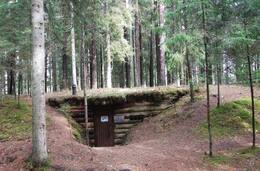
The restored dugout of the 2nd Company of the Rubenis Battalion is located in a forest by lake Ilziķi in the Usma parish. The dugout can be viewed from the outside for free at any time. However, tours inside the dugout must be booked in advance.
The Battalion of Lieutenant Robert Rubenis was part of a military unit formed by General Jānis Kurelis, and it is known for not surrendering to the German troops and showing heavy resistance. From November 14 to December 9 in 1944 fierce battles were fought in Ugāle, Usma, Renda and Zlēkas parishes between forces of the 16th German Army, SD and SS units under the command of the Police General Friedrich Jeckeln, and the battalion of the Kurelian unit commanded by Lieutenant Roberts Rubenis. The men under Rubenis’ command were well armed and organized and did not associate themselves with any of the two hostile occupying powers. Their actions are considered to be the most wide-spread and longest in the history of the Latvian national resistance movement. In battles near Renda and Zlēkas about 250 German soldiers fell, while only 50 casualties were suffered by Rubenis’ men. The events of those days are represented by the restored dugout in the forest (sod-covered, log cabin dug in the ground) where the men of the Rubenis Battalion once stayed.
Rubenis Battalion Museum
Rubenis’ Battalion Museum is located in Ugāle. It is dedicated to the Battalion of R. Rubenis, who served and fought under General J. Kurelis in Kurzeme in 1944, the activities of the Kurelians and the national resistance movement. Museum has an exhibit on the activities of the Latvian Central Council (LCC) and its Ventspils group, as well as the LCC Memorandum with 188 signatures and photographs of signatories that is included in the Latvian National Register of the UNESCO Memory of the World Programme. The LCC was a joint centre of Latvia's highest political leadership with an underground government that operated during the occupation of Latvia from 1943 to 1994. It was formed with the aim of coordinating the activities of various Latvian resistance movements in order to restore Latvia's national independence. The museum also offers a trip to places significant to the history of the battalion (settlement with a reconstructed bunker in the Usma parish, battlefields in Renda and Zlēkas parishes, etc.).

Коллекция автомобилей советской армии
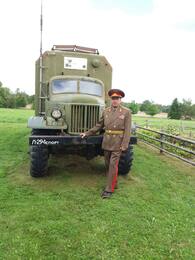
Владелец гостевого дома «Pūpoli» Эдгарс Карклевалкс в Дундагском крае уже более 15 лет предлагает отправиться в историческую ознакомительную поездку по северу Курземе на собственноручно отремонтированном грузовике Советской Армии ГАЗ-66 (до 24 человек) и УАЗ-3151 (до 6 человек). Маршрут включает бывшие военные объекты. На территории гостевого дома можно осмотреть автомобили советской армии и другую технику.
Советский мемориал «Родина-мать» в Тукумсе (Tukums)
Мемориал братского кладбища времен Второй мировой войны в Тукумсе - один из крупнейших памятников времён советской оккупации в Латвии. Он находится на Калненском кладбище и виден с улицы Революцияс. Мемориал был открыт во время советской оккупации в 1985 году в честь победы Красной Армии над Германией. Он посвящен погибшим в разное время за советскую власть. «Родина-мать» была одним из самых распространенных образов, использованных при создании многих мемориалов.
Памятник служил средством коммунистической идеологии и пропаганды, символически усиливая присутствие оккупационного режима в Латвии. После капитуляции Германии Красная Армия воспринимала Курземе как территорию, отвоёванную у врага, а не освобожденную часть СССР. Репрессивные власти и армия начали «зачистку Курземе».
Были задержаны, зарегистрированы и проверены мужчины в возрасте от 16 до 60 лет. По опасности мужчины – жители Курземе приравнивались к военнослужащим капитулировавшей Германии. Наступила вседозволенность Красной Армии и волна преступлений - убийства, изнасилования, грабежи, аресты и «исчезновения людей». Только национальные партизанские отряды оказали вооруженное сопротивление. Для ликвидации всякого сопротивления советские власти сформировали карательные батальоны, в том числе в Тукумсском уезде. Волна насилия и террора достигла пика в 1949 году, когда по всей Латвии прошли депортации жителей.

Музей авиации «Скай Зоо» («Sky Zoo»)
Музей авиации «Sky Zoo» находится в Смардской волости Тукумсcкого района, на территории аэропорта «Jūrmala Airport», на территории бывшего военного аэродрома Тукумса. Выставлены самолеты ЯК-40, Ан-2, СУ22М4, ПЗЛ ТС-11 «Искра», вертолет МИ-24. В экскурсию по аэродрому входит осмотр ангаров, капониров, техники инженерно-технической службы. Аэродром использовался для нужд как немецкой, так и советской армии. Во время советской оккупации аэродром был одним из важнейших армейских аэродромов на территории Латвии.
Размещенные там истребители предназначались для атаки кораблей противника и бомбардировки береговых укреплений. В ночь на 9 ноября 1975 года на аэродром Тукумса поступила боевая тревога - вражеский военный корабль был обнаружен и подлежал уничтожению в территориальных водах Советского Союза, в Рижском заливе. Несколько самолетов вылетели из Тукумса. Оказалось, что это был советский военный корабль «Сторожевой», на котором произошло вооруженное восстание против действующейсоветской власти. Когда самолеты достигли военного корабля, произошел двусторонний бой. Лидер повстанцев Валерий Саблин, офицер ВМФ СССР, был ранен, что положило конец восстанию. Он был приговорен к смертной казни как предатель Родины. Это было одно из самых драматических событий, свидетельствовавших о недовольстве существующим режимом и приближении его краха.