



Along the Baltic Way from Vilnius to Riga
Day 1.
180 km
Vilnius - Moletai - Panevėžys
Practical info
- The itinerary is intended as a guide - how to optimally travel a region or country, or two countries, with the aim of getting to know their military heritage;
- The driver must plan for himself - how many of the recommended objects and places he can explore in one day;
- Before traveling, you should check the opening hours of sightseeing places (museums, collections, fortifications, etc.);
- For places where advance booking is required (local guides, private collections, etc.), a visit must be booked, specifying the date and time. If the trip is cancelled, the places booked must be informed;
- Accommodation must be booked in advance. Accommodation may be unavailable during the summer season, especially on the coast. Some catering establishments may not be open during the winter season;
- Choose not only summer for your trip, but also other seasons;
- The Latvian-Lithuanian-Estonian borders can be crossed by road freely without restrictions and at any time of the day. When entering from one country to another, you must have an ID card or passport with you;
- Visit tourist information centers where you can get additional information, brochures, and maps.
Sights
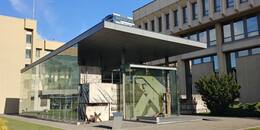
January 13th Memorial of the Seimas of the Republic of Lithuania
The monument is located in Vilnius, in front of the Second Palace of the Parliament (Seimas) of the Republic of Lithuania. In January 1991, the people of Lithuania surrounded the Par liament Palace with barricades, in a fight for and in defence of their freedom. It was an attempt to protect Lithuania from military aggression by the Soviet Union of the time – Soviet at tempts to stage a coup d’état in Lithuania and restore Soviet rule. Barricades surrounded the Parliament building until the end of 1992. In 1993, in front of the Palace of the Seimas of the Republic of Lithuania, a unique memorial was erected – made of parts of the barricades and other relics – it was dedicated to the Lithuanian people who sacrificed their lives for freedom. On 13 January 1991, tragic events unfolded, as the Soviet Army and special forces occupied the Lithuanian Radio and Televi sion Centre building and the television tower, killing 14 freedom fighters and injuring around 600 people. As the tenth anniversary of the Defenders of Freedom Day was approaching, a decision was made to preserve the composition by creating a memorial to 13 January. The Memorial was inaugurated in 2008. The memorial preserves an authentic fragment of the 1991 par liamentary barricades and has a chapel with an icon to the Blessed Virgin Mary. The memorial displays objects brought by people and provides an insight into the events that took place during the defence of the independence of Lithuania.
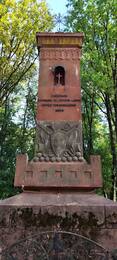
1920. aastal Leedu vabaduse eest langenud sõdurite mälestusmärk
Monument asub Giedraičiais.
19. juunil 1932 avati Giedraičiais langenud Leedu vabadusvõitlejatele pühendatud monument. Monumendi ehitamise algatasid Giedraičiai elanikud – maalikunstnik ja monumendi autor Antanas Jaroševičius, pastor Meigis, Malvina Valeikienė ja Matas Valeika, kes toetasid lahingus Leedu sõdureid, Širvintose kogukond ja Leedu armee; monumendi ehitamiseks koguti 11 000 litti. Monumendi annetuste üleskutses öeldakse, et see ehitatakse „võidu ja meie igavese rõõmu auks, mis tuletab meile meelde paiga ajaloolist tähtsust ja avaldab austust Giedraičiais maetud sõduritele“. Avatseremoonia oli pidulik. Sellel osalesid Leedu Vabariigi president A. Smetona – Leedu relvajõudude ülemjuhataja, 2., 4., 7. ja 9. rügemendi esindajad ning ohvitserid, kes osalesid Giedraičiai lahingutes. Sõjalennukitelt langes monumendile lilli ning silmapaistev leedu isiksus ja monumendi ehitustööde üks korraldajaid Malvina Valeikienė luges ette Giedraičiais hukkunud Leedu sõdurite nimed ning talle autasustati III klassi Rüütliristi ordenit. Monumendi juures pühitseti kohaliku laskurüksuse lipp. Aastatel 1962–1964 tehti Nõukogude administratsiooni korraldusel edutu katse monumenti lammutada, kuid hiljem kuulutati see ajaloomälestiseks.
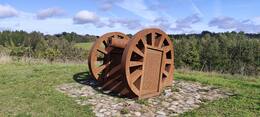
Stiliseeritud kahur Giedraičiai lahingu 100. aastapäeva tähistamiseks
Giedraičiai lahingu 100. aastapäeva tähistav stiliseeritud kahur asub Giedraičiai linna taga, 200 m pärast maanteelt nr 172 mahapööret.
21. novembril 2020 avati Giedraičiai lahingu toimumiskohas künkal skulptor Džiugas Jurkūnase loodud monument võidu tähistamiseks. Monument on stiliseeritud tõlgendus Leedu armee ja Poola armee lahingutest sõdadevahelisel perioodil. Püüdes konflikti kirjeldusest eemalduda, rõhutab monument kahe riigi liidu olulisust tänapäevaste sündmuste kontekstis. Roostes kahur sümboliseerib Leedu ja Poola vabariikide tugevat liitu – kahte riiki, mis võitlesid omavahel sajand varem. Monumendi külgedel on kirjeldatud tolleaegset olukorda; mainitakse lahingus osalenud Leedu ja Poola armee üksusi ning antakse lühike kirjeldus lahingust. Leedu relvajõud on monumendi püstitamise algataja ja rahastaja.
Eastern Lithuania (King Mindaugas) region Lithuanian partisan command post
After driving past Andrioniškis Cemetery (there is a signpost), there is a preserved hideout – a command post. From 1944– 1949, a command post of the Lithuanian partisans of the Eastern Lithuania (King Mindaugas) region operated in this hiding place. In the summer of 1944, Balys Žukauskas, with brothers Petras and Juozas Jovaišos, established the hiding place to evade the mobilisation announced by the Red Army in 1944. At the end of 1945, Antanas Slučka-Šarūnas started to use the hiding place. He was the first one to form a partisan unit in the Troškūnai area and later united the partisans of Rokiškis, Anykščiai, Kavarskas, Troškūnai, and Andrioniškis to form the Šarūnas Unit. In 1947, A. SlučkaŠarūnas became the commander of the Algimantas district, and in 1949 – the commander of the Eastern Lithuania partisan region. This means that from 1949, the hiding place became the command post of the Lithuanian partisans in the Eastern Lithuania region. The hiding place, which had successfully sheltered partisans for five years, was betrayed on 28 October 1949. The farm where the partisans were hiding was besieged by KGB troops; the partisans refused to surrender and blew themselves up.
The bunker has been preserved, and a cross and a monument to the fallen have been installed.

Denkmal den Partisanen des Militärbezirks Algimantas
Das Denkmal befindet sich im Zentrum von Troškūnai, Bezirk Anykščiai, in der Nähe der St. Dreifaltigkeitskirche. Während des Partisanenkrieges von 1944–1953 war das litauische Staatsgebiet in neun militärische Partisanengebiete aufgeteilt. In den Jahren 1947–1950 waren Partisaneneinheiten der litauischen Algimantas-Region, deren Entstehung eng mit Troškūnai verbunden ist, im Gebiet von Panevėžys und Anykščiai aktiv. Die Einwohner dieser Stadt organisierten Partisaneneinheiten in Aukštaitija. Der erste Partisanenkommandant der Region Algimantas, Antanas Slučka-Šarūnas, wurde in Troškūnai geboren und lebte dort. Auf Initiative des Litauischen Zentrums für Genozid- und Widerstandsforschung wurde 1996 in Troškūnai ein Denkmal für die Partisanen des Militärbezirks Algimantas errichtet. Das Denkmal wurde von dem Bildhauer Jonas Jagėla und der Architektin Audronė Kiaušinienė geschaffen. Der wichtigste Teil des Denkmals ist ein schwarzes Steintor, das die gefallenen Verteidiger des Vaterlandes symbolisiert. Die Bronzekreuze an den Seiten der Tore symbolisieren den christlichen Glauben, während das Bronzeschwert, wie das Schwert des Erzengels St. Michael, das Licht und die Hoffnung symbolisiert. Auf dem Platz vor dem Denkmal erinnert eine schwarze Steintafel an die drei Einheiten der Region Algimantas: Šarūnas, Žaliosios und Kunigaikštis Margiris.

Orte zum Essen
- In Vilnius siehe govilnews.lt.
- Restaurant „Atradimai“, Moleta
- Informationen zu Krankheiten finden Sie unter truelithuania.com
Orte zum Übernachten
- In Vilnius siehe govilnius.lt.
- Hotel Vila Kelmyne, Moletai
- In Panevėžys siehe truelithuania.com