



Partisan Roads and Trails in Aukštaitija
Museum of the Battles for Freedom in Utena
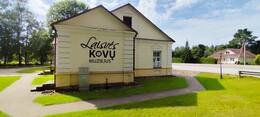
The museum is located in Utena, near the junction of the Kaunas-Daugpilis (A6) and Vilnius-Utena (A14) trunk roads. The museum was established in 2015 at the former narrow gauge railway station building of Utena. The museum claims to be a form of poetry that tacitly exposes the post-war truth. The exhibition “A Common European Identity in the Context of Totalitarian Regimes” offers to explore the past of Lithuania and Europe through the history of one Lithuanian region. It tells the story of secret documents and the division of Europe in 1939, the Soviet occupation of Lithuania, the forced participation of Lithuanians in World War II, exile, post-war resistance and the organisation of collective farms in the Utena region. The painful events of 1940–1965 in the Utena region and the events in Lithuania are contrasted with life behind the Iron Curtain. The history of the narrow-gauge railway station also has tragic pages. From here, in 1941 and from 1945–1953, train cars with deportees were sent to Siberia.
Along the Trails of the Partisan Battles of the Algimantas Military District
Located in Šimonys Forest, along road No. 1216 (a sign and a stand have been installed). Šimonys Forest was known in the post-war Lithuanian partisan struggle as the centre of activity of the largest partisan unit in Aukštaitija, the Algimantas military district. Approximately 200 partisans were operating in the area in 1945, while by 1952, there were only 20–30. From 1947 to 1949, the Šimonys Forest was used by the commander of the East Lithuania (King Mindaugas) partisan territory, Captain Jonas Kimštas-Žalgiris, and in 1949, by the commander who took over from him, Antanas Starkus–Montė, as hiding places – command posts from which the partisan movement in Aukštaitija was coordinated. The route of the partisan battles of the Algimantas military district invites you to get acquainted with six partisan hideouts of the Algimantas military district, created by the partisans of the Žalioji, Šarūnas and Kunigaikštis Márgiris (King Márgiris) units, who hid and fought here. There are two walking routes of different lengths (5 and 10 km) in Šimonys Forest, which invite you to follow the paths of the partisans.

Eastern Lithuania (King Mindaugas) region Lithuanian partisan command post
After driving past Andrioniškis Cemetery (there is a signpost), there is a preserved hideout – a command post. From 1944– 1949, a command post of the Lithuanian partisans of the Eastern Lithuania (King Mindaugas) region operated in this hiding place. In the summer of 1944, Balys Žukauskas, with brothers Petras and Juozas Jovaišos, established the hiding place to evade the mobilisation announced by the Red Army in 1944. At the end of 1945, Antanas Slučka-Šarūnas started to use the hiding place. He was the first one to form a partisan unit in the Troškūnai area and later united the partisans of Rokiškis, Anykščiai, Kavarskas, Troškūnai, and Andrioniškis to form the Šarūnas Unit. In 1947, A. SlučkaŠarūnas became the commander of the Algimantas district, and in 1949 – the commander of the Eastern Lithuania partisan region. This means that from 1949, the hiding place became the command post of the Lithuanian partisans in the Eastern Lithuania region. The hiding place, which had successfully sheltered partisans for five years, was betrayed on 28 October 1949. The farm where the partisans were hiding was besieged by KGB troops; the partisans refused to surrender and blew themselves up.
The bunker has been preserved, and a cross and a monument to the fallen have been installed.

Algimantase sõjaväeringkonna partisanidele pühendatud monument
Monument asub Troškūnai kesklinnas Anykščiai rajoonis Püha Kolmainu kiriku lähedal. Aastatel 1944–1953 toimunud partisanisõja ajal oli Leedu territoorium jagatud üheksaks partisanide sõjaväepiirkonnaks. Aastatel 1947–1950 tegutsesid Panevėžysi ja Anykščiai piirkonnas Leedu Algimantase piirkonna partisaniüksused, mille loomine on tihedalt seotud Troškūnais. Selle linna elanikud organiseerisid partisaniüksusi Aukštaitias. Algimantase piirkonna esimene partisanide ülem Antanas Slučka-Šarūnas sündis ja elas Troškūnais.
1996. aastal püstitati Troškūnais Leedu Genotsiidi ja Vastupanu Uurimise Keskuse algatusel Algimantase sõjaväeringkonna partisanidele pühendatud monument. Monumendi autoriteks on skulptor Jonas Jagėla ja arhitekt Audronė Kiaušinienė. Monumendi põhiosa on must kivivärav, mis sümboliseerib langenud kodumaa kaitsjaid. Värava külgedel olevad pronksist ristid sümboliseerivad kristlikku usku, pronksist mõõk aga, nagu ka peaingel Miikaeli mõõk, usu ja lootuse valgust. Monumendi ees oleval väljakul mälestab must kivitahvel Algimantase piirkonna kolme üksust: Šarūnas, Žalioji ja Kunigaikštis Márgiris.

Nõukogude okupatsioonile vastupanu ja Sąjūdise näitus Panevėžyse koduloomuuseumis
Ekspositsioon asub autentses kohas – Leedu reformiliikumise „Sąjūdis“ Panevėžyse grupi ruumides. Panevėžyse Sąjūdis on siin tegutsenud alates 1988. aasta oktoobrist.
2004. aastal avati hoones Nõukogude okupatsioonile vastupanu käsitlev ekspositsioon ja Sąjūdisele pühendatud näitus. Ekspositsioon paljastab rahva vastupanu ulatuse ja vormid alates 15. juunist 1940 kuni 11. märtsini 1990 ning tutvustab nõukogudevastase liikumise olulisemaid etappe ja sündmusi, samuti nõukogude repressioone.

Näitused „Okupatsioonide surve all“ ja „Punane terror“ Panevėžyse koduloomuuseumis
Ekspositsioonid asuvad Panevėžyse kesklinnas. Nõukogude võim konfiskeeris maja, mis ehitati 19. sajandi lõpus Panevėžyse silmapaistvale Moigiai perekonnale. Aastatel 1940–1941 asusid seal Nõukogude sõjaväeosa peakorter, Panevėžyse rajooni NKGB (Riikliku Julgeoleku Rahvakomissariaat) ülekuulamisosakond ja miilits. Aastatel 1944–1953 oli see Panevėžyse maakonna NKGB-MOI-KGB peakorter. Nüüd asub seal Panevėžyse koduloomuuseum.
Näitus „Okupacijų gniaužtuose“ („Okupacijų kitsikuses“) esitleb natside ja nõukogude okupatsioone. See tutvustab juudi ja mustlaste genotsiidi, küüditamise ja partisanisõja teemasid. Näituse osa, mis on pühendatud aastatele 1953–1990, jutustab Hruštšovka igapäevaelust, Nõukogude valitsuse pingutustest luua nõukogude ühiskond, inimeste vastupanust sellele vägivallale ja põrandaaluse tegevusest. Kuulda saab välismaiste raadiosaadete salvestisi, mida tolleaegsed inimesed salaja pealt kuulasid ja mille raadiosaatjaid Nõukogude võim häiris.
Näitus „Raudonasis teroras“ („Punane terror“) on pühendatud selle maja keldris tapetud ja Panevėžyse suhkruvabrikus maha lastud ohvrite mälestusele ning Nõukogude okupatsioonirežiimi poolt toime pandud kuritegude ajaloole. Vabade inimeste lootused ja nende häving Nõukogude võimu all on allegooriliselt kujutatud ajas ja ruumis – halastaja õe Zinaida Kanis-Kanevičienė korteri interjöör iseseisvusajal, kes piinati surnuks, ja NKGB ülekuulamisruumi koopia.

Partisanide punker Žadeikiai metsas
Piirkonda pääseb metsateelt, mis asub Rinkūnaist möödudes mööda teed nr 3111 ja Pyvesa jõge ületades.
Pärast Vabadussõda (1918–1940) oli Põhja-Leedus, eriti Pasvalysi ja Joniškise rajoonis, tugev partisanivõitluse traditsioon. Siin organiseeriti esimesed partisaniüksused. See traditsioon, ehkki mitte eriti väljendunud, jätkus ka pärast Teist maailmasõda ning 1944. aastal hakkasid piirkonnas moodustuma eraldi partisaniüksused.
Aastatel 1944–1946 oli Jonas Alenčikas-Dragūnas Žadeikiai metsas tegutseva partisanide üksuse ülem. 1945. aastal rajasid tema juhitud partisanid Žadeikiai metsa üsna suure punkri – see oli 30 meetrit pikk ja 6 meetrit lai. Selline punker peegeldab suurepäraselt Leedu partisanide võitluse esimest faasi, mil partisanid tegutsesid suurtes üksustes ja elasid suurtes punkrites või metsalaagrites. Punker hävis lahingu käigus, kuid kui Leedu taasiseseisvus, ehitas selle uuesti üles Pasvalyse jalaväekompanii. Punkrit haldab praegu Pasvalyse koduloomuuseum. Punkri kõrval on taastatud partisanide asula ning paigaldatud on uus mälestusrist ja infostend.

Partisanide punker ja mälestusrist Plunksnotai metsas
Partisanide punkri ja mälestusristi leiate, kui keerate Juodupė ja Žiobiškise vaheliselt piirkondlikult maanteelt 3604 (Rokiškis-Maineivos-Naujasodė) ära Plunksnočiai metsa suunas.
1947. aastal asusid Plunksnočiai metsatukas Kunigaikštis Márgirise (Kuningas Márgirise) üksuse Gediminase kompanii partisanid, mida juhtis Juozas Bulavas-Iksas, asuma. Kuni 1948. aastani polnud neil püsivat talvituskohta, seega otsisid nad varjupaika neid toetavate inimeste juures. Pärast Teist maailmasõda oli Plunksnočiai mets soine ala, mille keskel asus väike küngas. 1949. aastal rajasid partisanid sinna peidupaiga. Nad reetis aga sisseimbunud Vene julgeolekuagent, kes teadis punkri asukohta. 14. novembril 1949, pärast seda, kui partisanid olid magama jäänud, viskas ta punkrisse tankitõrjegranaate. Seitse partisani hukkus.
Partisanide punker on taastatud ja püstitatud on mälestusrist seal hukkunute nimedega. Tänapäeval on ümbritsev mets roheline ja jalutuskõlbulik. Rokiškise noorte laskurite algatusel on punkrist mõnekümne meetri kaugusele väikesele väljakule püstitatud monument ja infosildid.

Museum of the History of Freedom Struggles in Obeliai
The Museum of the History of Freedom Fights is located on Vytauto Street, Obeliai (Obeliai-Zarasai road KK117) on the left side (a road sign is installed on the road).
Founded in 1998, the museum introduces the development of the Lithuanian state, the history of the Obeliai region and Lithuanian folk art. A large part of the exhibition is devoted to the theme of freedom fights.
The evidence of the freedom fights was collected and donated to the museum by a teacher and former partisan, Andriejus Dručkus (1928–2018).
In addition to the themes of Soviet repressions, deportations, the partisan war, the anti-Soviet resistance movement, and the rebirth of independence, which reflect the experiences of the Obeliai region, the museum also stands out due to its peculiar accents. The museum presents the history of the erection, destruction and restoration of the unique monument dedicated to the participants of the June 1941 uprising and the victims of Soviet terror. An overview of the Lithuanian defence system after 1990 is also provided, as well as uniforms of the Lithuanian Armed Forces and other services. The open-air exhibition of the museum has replicas of a Lithuanian partisan bunker and a Siberian barracks for deportees on display. The sites can be visited individually, and special educational programmes are also offered, which enable visitors to experience the everyday life of partisans and deportees to understand what it was like to live in a bunker or barracks.

Antazavė Battle Site and Partisan Dugout Shelter at Lake Vincežeris
The site can be accessed from the town of Antazavė by forest roads.
At the end of 1944, the Lokio Unit of Lithuanian partisans was formed in the area of Antazavė in north-eastern Lithuania. It was led by a former Lithuanian Army officer, Captain Mykolas Kazanas. The unit established five dugout shelters at Lake Vinčežeris, in the uplands of the dense spruce and pine forests of Antazavė.
On 26 December 1944 (27 December according to other sources), the Battle of Antazavė Forest took place here. It was one of the largest partisan battles in eastern Lithuania. The partisan camp was surrounded by Soviet Army units from Utena and Zarasai, as well as soldiers stationed in Antazavė Parish. After a day-long struggle, 85 partisans managed to break the siege and successfully retreated. One partisan died during the retreat.
Currently, two partisan dugouts have been built on the site of the partisan camp, and battle positions, a cross, a memorial plaque, and benches for visitors to the camp have been installed at the site. The partisans’ dugouts are outstanding in terms of their size – they are relatively large and massive underground structures and differed significantly from partisan bunkers that were later built in the forests of Lithuania.
