



Armed resistance to Soviet occupation power in Sēlia
Day 2.
86 km
Susēja - Rubene parish - Dunava parish - Asare parish - Gārsene parish
Practical info
* Driving distance: ~86 km. Most of the roads are paved, but access to more remote areas may be via gravel roads.
* There are very few places to eat lunch and dinner along the route. You can order a meal in advance or bring your own food for lunch.
* The former Rubene parish house can be viewed by prior arrangement.
* Memorials can be viewed at any time
* LIEPAS only offers banquet service and accommodation, it does not operate as a daily café.
* The itinerary is intended as a guide - how to optimally travel around a region or country with the aim of getting to know its military heritage;
* The traveler plans how many of the recommended objects and places he can explore in one day;
* Before traveling, you should check the opening hours of sightseeing places (museums, collections, fortifications, etc.);
* For places where advance booking is required (local guides, private collections, etc.), a visit must be booked, specifying the date and time. If the trip is cancelled, the places booked must be informed;
* Accommodation must be booked in advance. Accommodation may be unavailable during the summer season, especially on the coast. Some catering establishments may not be open during the winter season;
* Choose not only summer for your trip, but also other seasons;
* Visit tourist information centers where you can get additional information, brochures, and maps.
Sights
Memorial to Latvian and Lithuanian national partisans in Slate
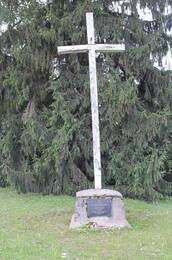
The white cross with a stele to the Slate national partisans in Rubene parish was consecrated on October 25, 2002.
It was a joint group of Latvians and Lithuanians led by Jāzeps Fričs (1920-1947). The group also included Lithuanian partisan commander Jozas Streikus (1923-1962), Jānis Ruzga (1924-1948) and other national partisans who actively resisted the Soviet occupation regime in the Slates and surrounding parishes.
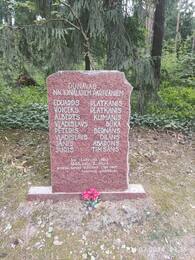
Memorial at the site of the July 2, 1945 battle of the national partisans on the Danube
Memorial stone to the national partisans Jānis Abaronas, Vladislavs Būkas, Pēteris Bernāns, Alberts Klimanis, Vladislavs Dilāns and Juris Timšāns who fell in the Battle of the Danube on July 2, 1945 and were later burned in Rubene parish.
The Battle of Dunava broke out after two officers of the People's Commissariat of the Interior of the Latvian SSR and one militiaman were killed in clashes between foresters and representatives of the Soviet occupation authorities in Atauga, Dunava parish, on the evening of June 30 and July 1. On July 2, 16 national partisans led by Eduards Platkanis fought a battle with destroyers, militiamen and Cheka troops at the turn of the Rubene road behind the Dunava cemetery. A few days later, in retaliation, the Cheka officers burned down the houses of Atauga, and publicly burned the bodies of six national partisans who had fallen in the Battle of Dunava near the Rubene parish hall.
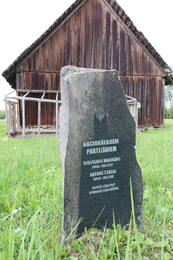
Monument to national partisans B. Mikulas and A. Staris
The monument to the national partisans Boleslavs Mikulāns (1918 - 1951) and Antons Staris (1909 -1953) of the Ilūkste Partisan Regiment of the Latvian Fatherland Guards (Partisans) Association was unveiled on November 1, 2003, at the “Kuršu” farm in Celminiekis, Dunava parish, at the initiative of Gunārs Blūzma, a researcher of national partisans from Sēlija.
B. Mikulāns from August 1944 was active in various national partisan groups, including the Bebrene company and the Dignāja group in 1949. In 1949/1950. B. Mikulāns, together with A. Stari, hid with Jānis Brakovka in Curonian Spit on the edge of the large forest of Bebrene Celminieki. When B. Mikulāns went to get products on May 9, 1951, he was murdered by Švarojs, an officer of the 2-N unit of the Cheka. A. Stari committed suicide in March 1953 after Curonian Spit was surrounded by Cheka officers.
On a memorial stele made of granite, next to the names of the fallen national partisans B. Mikulāns and A. Staras, the inscription is engraved: "Fallen in the fight against the communist regime."
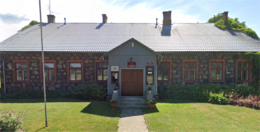
Rubene parish house - a place of Cheka repressions
Rubene parish hall, near which the Chekists burned the bodies of six national partisans who fell in the Battle of the Danube on July 2, 1945. For the purpose of intimidation, the employees of the Rubene parish hall were also forced to watch this action.
A cross and an inscription are carved on the memorial stone:
"I am dying for faith and free Latvia. Jānis Abarons, Vladislavs Būka, Pēteris Bernāns, Alberts Klimanis, Vladislavs Dilāns, Juris Timšāns fell and were burned in the battle of July 2, 1945."
Memorial to J. Fričis Latvian and Lithuanian National Partisan Group at Emsini Cemetery
White cross with a stele in Asare parish at the Emsiņi cemetery at the beginning of the alley. Consecrated on September 10, 2005.
Dedicated to the commanders of the Latvian-Lithuanian national partisan group in the fight against the Soviet occupation power.
The names of Oskars Kalnietis (1915-1945) (who fell on January 10, 1945 near Dīviņas) and Jāzeps Fričis (1920-1947) (who fell on September 7, 1947 in Abarkalni) are engraved on the memorial stele.
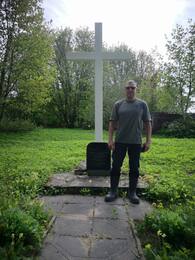
The hiding place of the national partisan A. Blumbergs
Not only the forests of Latvia, but also the houses still hide information about the tactics and methods of the national partisans' struggle. The forest brothers' hideouts have not survived in Latvia, so this is a unique discovery, which also gives it cultural and historical significance. The national partisans were mostly men in their prime, with a desire to build relationships with the opposite sex. They would hardly have been able to endure all the difficulties if they had not had the support of a woman standing by their side in the fight. This helped to endure the severity of the partisan war, which was often also based on the consciousness of being doomed to death. Unfortunately, most of these relationships were tragic.
Alfreds Blumbergs (1917-1949), being in the Forest Brothers group, maintained a romantic relationship with Milda Purene (1913-2010), a resident of Gārsene parish, from whom he received food, which also became known to the Soviet security authorities. On July 27, 1949, a military unit of the Ministry of State Security of the Latvian SSR set up a hideout in the yard of the Puķīši houses in Gārsene parish. Forced to cooperate with the Cheka, M. Purene betrayed Alfreds Blumbergs, who fell during the Cheka operation against him.
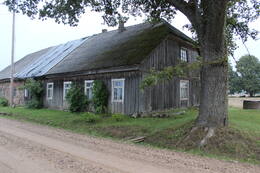
**************************************
The Rural Traveler's tourism route through Sēlija offers a detailed summary with additional places of interest :
https://site-244605.mozfiles.com/files/244605/ Selija-LAT-3 .pdf
Places to eat
The “Gulbji” Selonian homestead
The “Gulbji” Selonian homestead is one of the very few places in Latvia where you can see a farm typical of the historical region of Selonia with its typical buildings. “Gulbji” is comparatively far from major roads and populated areas. It is on the so-called Dronku Island, not far from the beginning of the ancient Dviete River valley. The owners of “Gulbji” have collected a wealth of ancient household objects. Visitors can study the farm, examine a collection of medicinal plants, enjoy Selonian foods, or take a “black sauna.” It could be said that people at “Gulbji” have a natural farm which nurtures and maintains the traditions of the historical region.
Latvian cuisine: Crepes, grit soup, cream of potato soup, beans sautéed in a special sauce, fruit dessert, bread soup with whipped cream, tortes, herbal teas.
Special foods: Zeppelins.
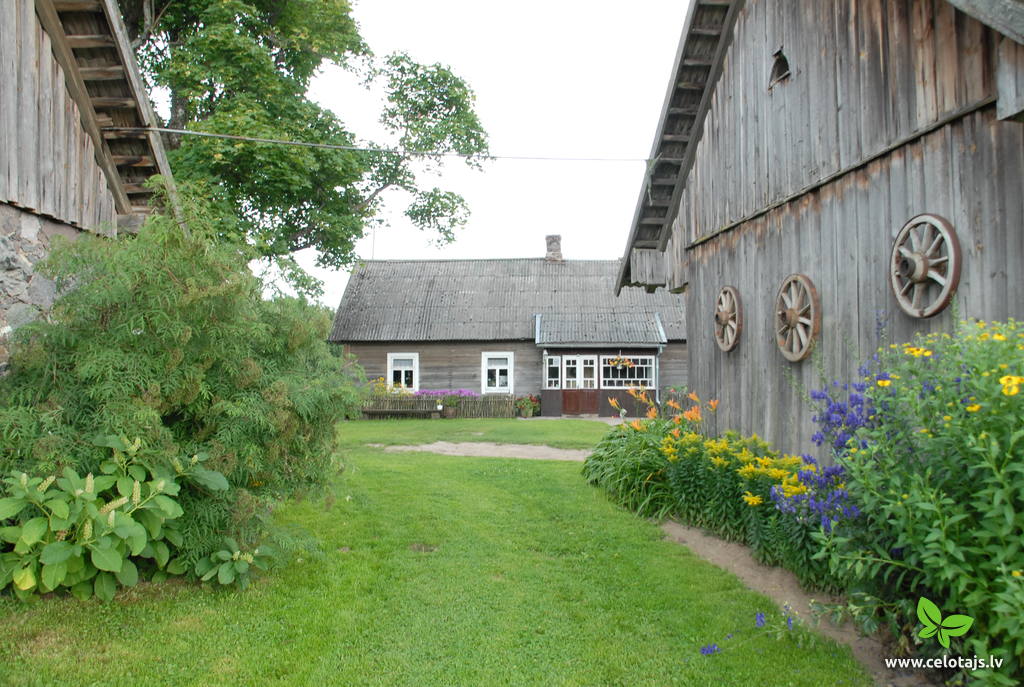
Cafe "Kalniņa" offers high-quality meals, snacks, various drinks and cocktails. Both a bistro-style buffet and pre-prepared portions are available. Group catering is also provided upon prior arrangement.
https://visit.jekabpils.lv/lv/objekti/paliec/edinasana/vieta/kafejnica-kalnina-akniste/ or https://www.facebook.com/kafejnicakalnina
Places to stay
RUBEŅI
The house Rubeni is situated in Pilskalne, not far from a natural elevation Pilskalnes Siguldina. The house offers double rooms, a room for three and four people, a guest room (till 15 people), a kitchen, shared WC and a shower. In the summer it is possible to spend the night in a small logged threshing barn without facilities (up to 5 people).
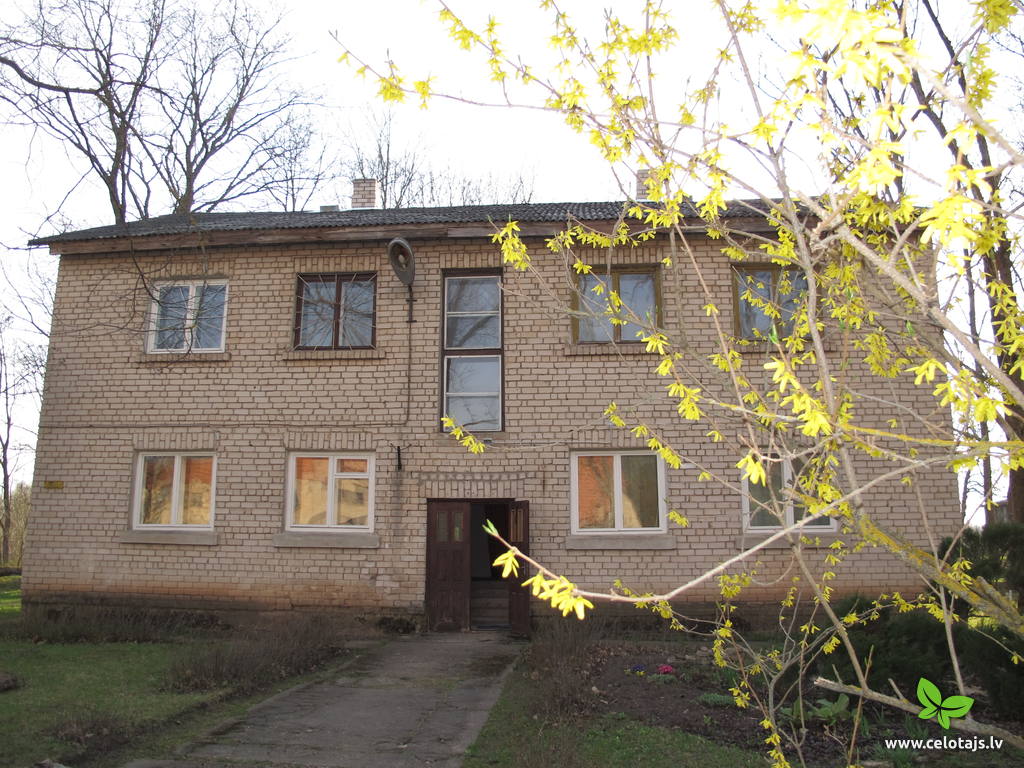
The “Gulbji” Selonian homestead
The “Gulbji” Selonian homestead is one of the very few places in Latvia where you can see a farm typical of the historical region of Selonia with its typical buildings. “Gulbji” is comparatively far from major roads and populated areas. It is on the so-called Dronku Island, not far from the beginning of the ancient Dviete River valley. The owners of “Gulbji” have collected a wealth of ancient household objects. Visitors can study the farm, examine a collection of medicinal plants, enjoy Selonian foods, or take a “black sauna.” It could be said that people at “Gulbji” have a natural farm which nurtures and maintains the traditions of the historical region.
Latvian cuisine: Crepes, grit soup, cream of potato soup, beans sautéed in a special sauce, fruit dessert, bread soup with whipped cream, tortes, herbal teas.
Special foods: Zeppelins.
The Gārsene Castle Hostel offers accommodation in both beds and mattresses, and the capacity of the rooms also varies greatly - double, quadruple, six-person, etc.
In total, the castle can accommodate 45 guests in beds and 37 guests on mattresses at a time.
All guests have access to shared showers, toilets and a kitchenette. It is possible to stay overnight in tents in the castle park.
http://www.garsenespils.lv/naksnosana/