



Suur piiriülene ringreis - Läti ja Eesti 100-aastase iseseisvuse sõjaajalooline pärand
Päev 1.
255 km
Rīga – Tīreļi – Lestene – Kandava – Sabile – Renda – Stende – Dundaga
Praktiline teave
- Vahemaa: ~255 km
- Jõululahingu muuseumi siseekspositsioon on avatud kolmapäevast pühapäevani. Väliekspositsioonid on avatud ööpäevaringselt.
- Mälestusnäitus ja Läti Leegioni sõdurite punker on avatud tööpäeviti 08.00-16.00. Nädalavahetustel külastus ettetellimisel telefonil +371 26247095. Lestene vennaskalmistu on avatud ööpäevaringselt.
- Lestene luteri kirikuga tutvumine eelneval kokkuleppel telefonil +371 29299064.
- Muuseumi külastus Rendas ainult ettetellimisel telefonil +371 26559172.
Vaatamisväärsused
Jõululahingu Muuseum ja vabaõhunäitus
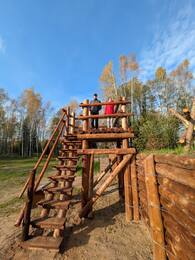
Jõululahingu mälestuspark ja -muuseum asub Jelgava piirkonnas Valgunde vallas Mangaļi talukohas. Muuseum on Läti Sõjamuuseumi filiaal, see avati 2005. aastal ja see asub piirkonnas, kus toimus Jõululahing. Lahingupaikades on ikka veel säilinud ainulaadsed Esimese maailmasõja aegsed kaitserajatised. Muuseumis eksponeeritakse lahinguväljalt leitud esemeid. Vabaõhuekspositsioon tutvustab rekonstrueeritud kaitserajatisi. Muuseumi ümbruses asuvad turismimarsruudid ja õpperajad. Esimese maailmasõja aegsete kaitserajatiste vabaõhuekspositsioon ja siseväljapanekud on külastajatele avatud iga päev. Ložmetējkalnsi ümbrusest võib endiselt leida ainulaadseid tõendeid Esimese maailmasõja aegsetest kaitserajatistest. Seal asub 27 m kõrgune vaatetorn, kust avaneb panoraamvaade piirkonnale, kus toimus Jõululahing, mis on tõenäoliselt kõige tuntum ja dramaatilisem Esimese maailmasõja sündmus Lätis. Sellel on eriline koht Läti sõja- ja kultuuriajaloos. Jõululahingut seostatakse peamiselt Läti küttide rünnakuga Saksa armee üksuste vastu äärmiselt rasketes ja ebasoodsates oludes. See oli ainulaadne olukord, kus suurt lahinguoperatsiooni alustati ilma suurtükiväe toetuseta.
Lestene Brothers' Cemetery
Located in Tukums region, Lestene, next to the church.
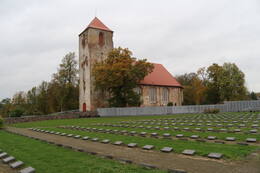
The creation of the mass grave in Lestene began in 1998. It is the second largest military cemetery in Latvia, where more than 1,300 Latvian legionnaires are buried. Only after the restoration of the Republic of Latvia was it possible to rebury Latvian soldiers who fell in World War II from various places.
The Latvian Legion was a combat unit of the German army, formed mainly from illegally mobilized Latvian residents. The soldiers perceived their presence in the legion as a fight for the restoration of Latvian independence, despite the fact that it took place within the ranks of the German armed forces and Germany had occupied Latvia. There was no other military force that could delay the return of the Soviet occupation. The Latvian legionnaires fought against the Red Army, which had liquidated the independence of Latvia, destroyed its army and committed crimes against the civilian population. About 110,000–115,000 soldiers fought in the ranks of the German army, about 30,000–50,000 of them lost their lives on the battlefields.
Nowadays, in Lestene you can visit the Brothers' Grave, next to which is the Lestene Church. It is an outstanding example of Baroque sacred art. In the ancient church tavern you can get acquainted with an exhibition dedicated to the history of the Latvian Legion. The central image of the brothers' grave, "Homeland - Mother - Latvia", was created by sculptor Arta Dumpe. Nearby is the Lestene Manor, which belonged to Latvian Army General Mārtiņš Hartmanis before World War II.
Tours of the Lestene Church can be booked with the parish priest of the Lestene Evangelical Lutheran Church, Inguna Kokina, phone +371 29993743.
Other viewing areas in and around Sabile

Museum of the National Resistance Movement in Renda
The museum is located a few kilometres from the centre of Renda parish. The exhibit tells about the 50-year-long resistance movement in Latvia: resistance to the first Soviet occupation, resistance to the Nazi German occupation, and the armed and non-violent resistance to the Soviet occupation. The exhibit is located in two buildings. The first building houses evidence of the first Soviet occupation and German occupation. The exhibit showcases a restored barn building where the focus lies on the National Partisan War. Between the two buildings there is a bunker with an authentic layout and trenches used by soldiers. Located near the museum in Renda, excavations, blindages and an obstacle course serve as a training ground for youth guards and anyone interested. Visits must be booked in advance.
One of the largest battles of the national partisans, called the Āpūznieki Battle, took place in January 1946 not far from here. The battle saw the Kabile National Partisan Group overpower much larger forces of the occupying power. Featuring information stands, the battle site is now home to a rest area.
Places to eat
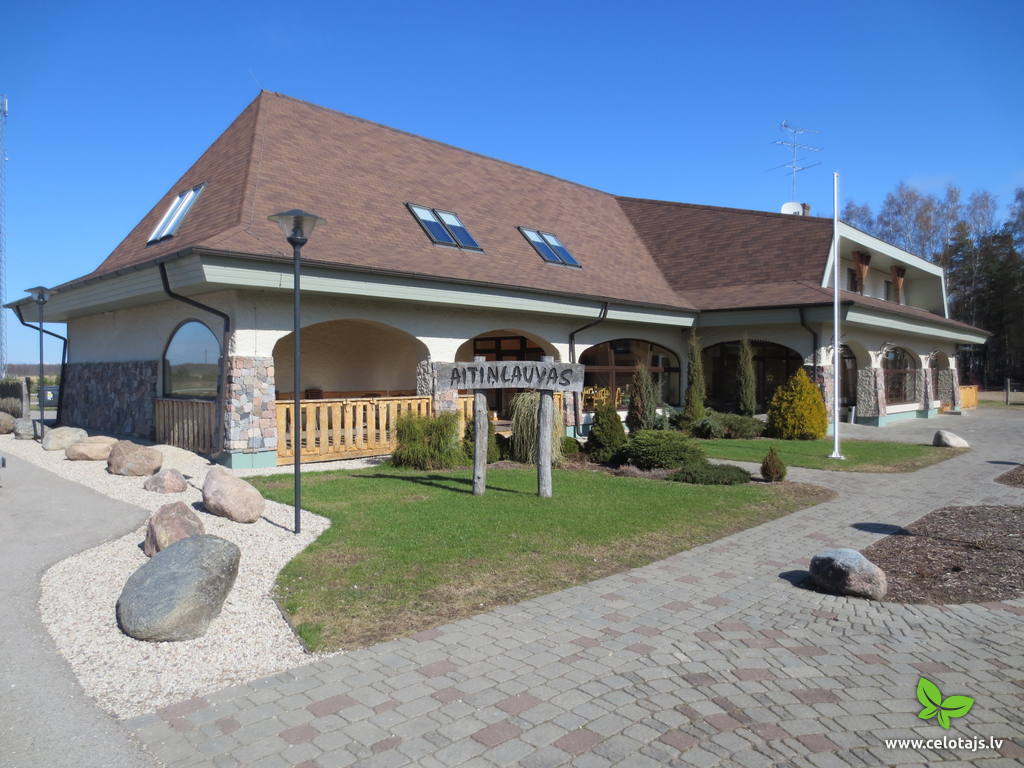
Pub “Aitiņlauvas”, the 22nd km on A9 road
The saloon is on the edge of the Rīga-Liepāja highway (A9) at the 22 km road marker. Most of the dishes are based on ingredients from the forest. The interior design is based on hunting, and there is a paddock of wild deer alongside the restaurant.
Latvian cuisine: Roast buck, roast wild boar, venison steak, roast lamb, stuffed river trout.
Cafe “Plostkrogs” near Sabile
This saloon is in a lovely place – the ancient Abava River valley between Kandava and Sabile. It is housed in an historical building with among the largest chimneys in the Baltic States. A camp for water tourists is alongside the saloon.
Latvian cuisine: Chilled beet soup, dumpling soup, sorrel soup, sauerkraut soup, chicken livers, homemade steak haché, dried pork ribs, roast pork, grilled pork, potato pancakes with cream, crepes, herbal teas.
Special foods: Cabbage stuffed with smoked meat, cottage cheese and onions.

Kalnmuiža manor near Sabile
Located in Kalnmuižas Castle. The pride of the restaurant's menu are the greens, fruits and vegetables from the ancient valley of the River Abava, wild game and mushrooms from Kurzeme forests, meat, crayfish, trout, goat’s cheese and home-made bread from the district’s farms. The menu depends on the season. Offer includes seasonal specialities.

Cafe “Abavas Pagrabiņš” in Renda
Atrodas Rendā, pie tilta pār Abavu. Mazs, jauks krodziņš, kas atrodas vēsturiskā ēkā ar patīkamu interjeru. Piemērota maltītes ieturēšanas vieta ne tikai tiem, kas pārvietojas pa ceļu, bet arī Abavas laivotājiem. Strādā g.k. vasaras sezonā.

Guesthouse “Pūpoli” in Dundaga
A country house near Dundaga. A room for celebrations with a firelplace (for 30 people), a sauna with a swimming pool and a tub. Bedrooms with WC and shower. On the lawn there are places for tents and a campfire. A small island for the moorage of boats in the Dundaga pond. Driving trips by an army car GAZ – 66.

Bistro “Vecā Pirts” in Dundaga
Atrodas Dundagas centrā, Talsu un Pils ielas krustojumā. Bistro tipa ēdināšanas uzņēmums, ko iecienījuši vietējie iedzīvotāji un pilsētas viesi.

Places to stay
Guesthouse “Pūpoli” in Dundaga
A country house near Dundaga. A room for celebrations with a firelplace (for 30 people), a sauna with a swimming pool and a tub. Bedrooms with WC and shower. On the lawn there are places for tents and a campfire. A small island for the moorage of boats in the Dundaga pond. Driving trips by an army car GAZ – 66.