


Museum Railway and Põrgupõhja Bunker
Day 1.
55 km
Lavassāre – Pērnavas-Jēgupi – Pergupehja (Hell's Bottom)
Practical info
Excursions and educational programs must be booked in advance and a specific time must be reserved.
- Start : Lavassaare.
- Finish : Pergupehja bunker.
- Duration : 4 – 5 hours.
- Additional options : The Railway Museum has specially organized days when it is possible to ride a steam train.
Sights
Estonian Museum Railway in Lavassaare
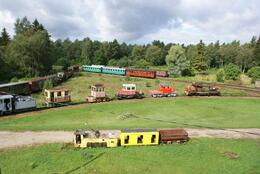
The Estonian Museum Railway is situated on the old peat industry site in Lavassaare, 17 km north-east of Pärnu.
The museum is the only narrow-gauge railway museum in the country, displaying, among other exhibits, a functioning steam locomotive. It has in its collection over 80 railroad cars, including five locomotives and a variety of technical apparatus, most of it on display outdoors. The peat workers’ residential building on the museum premises houses an indoor exhibition displaying over 700 historical photos, items and documents related to narrow-gauge railways in Estonia.
The narrow-gauge network in the Governorates of Estonia and Livonia was established during the 19th and 20th centuries for the development of regional industry.
German prisoner of war cemetery in Pärnu
The German prisoner of war camp in Lavassaare was established in spring 1945. It had to accommodate 1200 prisoners, who were put to work in the peat industry. The last German prisoners of war left Estonia in 1948 and 1949. Prisoners who died in Lavassaare were buried then and there by the bog. It is estimated that 60 German prisoners of war are buried here. The German prisoner of war cemetery in Lavassaare was renovated by the German Bundeswehr in 2008. They repaired the road, restored the fencing and repainted the bridge and benches.

Põrgupõhja Forest Brothers' Bunker
Põrgupõhja Bunker is situated in the woods near the village of Tiduvere in Rapla County.
By 1945 anti-Soviet dissent had developed into organised resistance movements in many occupied lands, including Estonia. Attempts were made to unify fighter groups and establish a network. This bunker, built in 1947, was an important stronghold for the Forest Brothers.
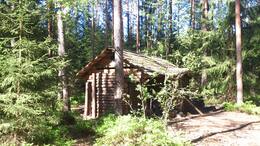
Fully reconstructed, Põrgupõhja Bunker was opened in 2015, showcasing the everyday life of the Forest Brothers. Anyone interested can spend the night in the bunker and imagine what it must have been like to live in hiding.
Adjacent to it is the original site of the bunker, which was destroyed by the NKVD on 31 December 1947, plus its surrounding dirt wall and a memorial to the fallen Forest Brothers.
Memorial to Forest Brothers in Ertsma
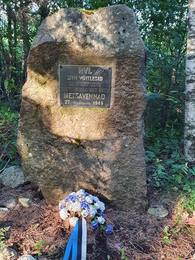
The Battle of the Bunker in Ertsma took place on 27 February 1949. Constructed near the village of Ertsma, the bunker was home to a large group of Forest Brothers, the leaders of the Union of Armed Struggle and army privates. At 6.00 am that day, NKVD units surrounded the bunker. As many as 15 agents of the Ministry of State Security of the Estonian SSR and 350 soldiers are said to have taken part in the raid. Nine people were killed in the attack. One of the two surviving men was wounded and captured, while the other managed to escape. The wounded Forest Brother, Mihkel Ellermaa, was deported to Siberia. His wife and two-year-old daughter were among those killed. His older daughter had been at her grandmother's at the time. It is still unknown where the dead were buried.
On 27 February 1994, exactly 45 years after the shootout, this memorial was unveiled by Kodesmaa Bog near the former site of the bunker.