



The First World War on the Latvian-Lithuanian border
Day 1.
31 km
Medumi – Zarasai – Turmantas - Kimbartiške
Practical info
Excursions and educational programs must be booked in advance and a specific time must be reserved.
Start : Medumi, World War I Museum
Finish : Kimbartiške, German army positions
Duration : about 4 hours
Additional options : The route can be started in Daugavpils, combining it with a visit to the Daugavpils Fortress (+ 1-2 h)
Educational programs : At the World War I Museum: "Future Soldier's Escape Game" , "Traces of the First World War in the Augšdaugava Region" .
Sights
First World War Museum
The fiercest battles of the First World War in Latvia took place near Daugavpils in August and October 1915, in the highlands of Ilūkste and Medumi. The Germans tried to break through to Daugavpils, but the Russians – to push them back. Both sides were unsuccessful and began to build trenches, creating in depth defence positions consisting of three lines.
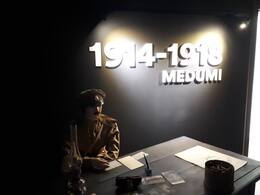
The First World War Museum in Medumi is dedicated to these battles. The first part of the exhibition presents the history of the vicinity of Medumi, providing testimonies that bear evidence that Medumi was a well-populated and developed area before the war. Part 2 focuses on the events of the First World War in Europe and Latvia. Here, you can learn about the lives of soldiers and the innovations that emerged during the war, as well as examine the weapons used by the German and Russian armies. In the third hall of the exhibition, visitors can put themselves in the shoes of a soldier by experiencing bunker life. In this hall, a replica of a Russian bunker has been created – a fragment of a trench with a small shelter, elements of a battlefield and dummies of soldiers. Since the wooden bunkers of the Russian Army did not survive, they have been reconstructed at the museum, while the concrete bunkers of the German Army can be seen by visiting the International route of WWI Bunkers. The hall, with the imitation of a shelter, audio and video equipment, creates an authentic atmosphere of the battlefield.
Bunker of the 77th Reserve Division of the German Army near the Egyptian Lutheran Church
Located on a slope near the A13 motorway. Easily visible, access from a small gravel road leading from the side of the Egyptian Church.
The bunker is located on the second line of defense (Zweite Stellung, later also Hintere Linie) several kilometers from the main battle or first line (Hauptkampflinie). It served as the headquarters of the 257th Reserve Infantry Regiment, where the officers of the regiment worked and lived. Therefore, the name “Officers’ Bunker” has become popular. The bunker had electricity. The bunker has a porch with simulated windows, which is a solution that is rarely seen on average. Initially, when the front stabilized in the autumn of 1915, trenches and wooden bunkers were built. The concrete bunkers that have survived to this day were built later – the pioneer battalion of the 77th Division received an order to build concrete structures on the second line in January-February 1916. The task was difficult, because the ground was frozen and unsuitable for digging, so it was blown up.
The bunker is closed during the day. Visitors can view the bunker from the outside and enter the porch.

World War I Exposition in Turmantas
The exposition is located in Turmantas of Zarasai district.
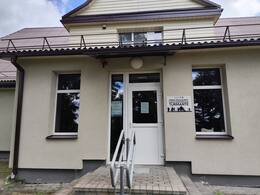
During World War I, Turmantas was an important logistical point for the German 88th Division on the Eastern Front. The World War I exposition in Turmantas is part of the international route “Along the Trails of the First World War” and is located in the primary school building of the town. The modern and virtualreality- enhanced exposition features many unique artefacts, replicas and photographs of World War I, as well as introduces the combat conditions and lives of soldiers on the Eastern Front, their weapons and ammunition, as well as uniforms and equipment.
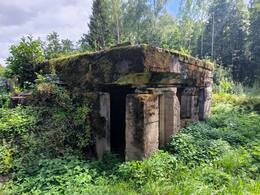
German army artillery positions in Kimbartiškė Village
The site can be reached by turning off road No. 5303 and continuing along forest roads.
From 1915–1918, this was the site of a complex of four artillery battery positions of the 88th Division of the German 8th Army, which fought against the Russian Army on this front. A German artillery battery consisted of 2–3 fire platoons and a fire control platoon or division. One battery had two covered casemates for the guns, staff quarters and ammunition depot. The casemates had to not only protect the guns, ammunition and personnel from shelling but also from aerial reconnaissance. All artillery gun emplacements, the fire correction point and the fire control section were connected by a telephone line. A concrete fire correction point, observation and shelter bunkers are preserved in this position.
Places to eat
Services: Dining venues: