



Defense lines in the First and Second World Wars
Day 1.
51 km
Tīnūži - Ropaži - Allažmuiža - More
Practical info
Gravel roads in the Mores area can be of poor quality in spring or after rain. Excursions and educational programs must be booked in advance and reserved for a specific time.
- Start : Cultural Heritage Center "Tīnūži Manor".
- Finish : Mores Battle Memorial Park.
- Duration : about 4 hours.
- Additional options : The route can be extended (or started) in Ogre, adding one of the Ogre attractions.
- Educational programs : at the Mores Battle Museum: “Memorial sites of the Mores Battles of World War II” .
Sights
Cultural Heritage Centre "Tīnūži Manor"
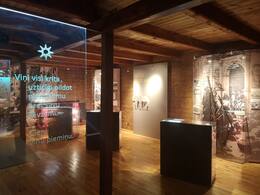
The Cultural Heritage Centre ‘Tīnūži Manor’ is located in Ogre municipality, Tīnūži village, 7 km from the cities of Ogre and Ikšķile. The first written evidence about the manor dates back to the 16th century. Until the mid-18th century it was considered an economic production unit with small and insignificant buildings. But over time it grew into a large farm. During World War I, battles between the Russian and German armies took place here, and the Latvian Riflemen were also involved. During the War of Independence Tīnūži manor was used as the headquarters and armoured car park of the 1st Valmiera Infantry Regiment of the Latvian Army. In 1932, the manor was given to the Union of the Latvian War Invalids, which provided accommodation and care for war veterans. During World War II (in 1943) the German Army unit FAT 212 was transferred from Estonia to Tīnūži manor. It was a saboteur unit that prepared soldiers to fight the Red Army. Latvian soldiers were also trained in the arts of intelligence gathering, guerrilla warfare tactics and sabotage. The lord house of Tīnūži manor was destroyed when the Red Army was moving towards Riga. Nowadays it is a place with a beautiful landscape and historical buildings on the banks of the Little Jugla River. Exhibits dedicated to historical events, including the ones concerning the Latvian Riflemen, can be seen at the Cultural Heritage Centre ‘Tīnūži manor’.
Monument to the Battle of the Mazā Jugla at Tīnūži
Located in the village of Tīnūži in Ikšķile municipality, on the side of the highway near the Tīnūži elementary school.
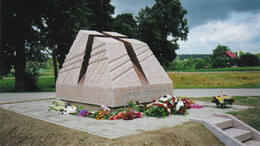
A memorial to the Latvian riflemen who fought against the German army during World War I. The Battle of the Mazā Jugla River on September 1-2, 1917 was the culmination of the Riga Operation. The German army launched an attack against Ikšķile with the aim of taking Riga and capturing the Russian 12th Army. German army units, crossing the Daugava on pontoon bridges, reached the area around the Mazā Jugla River, where they were blocked by Latvian riflemen. They were ordered to delay the enemy until the entire Russian 12th Army escaped the encirclement without being captured by the German army. The fighting took place with heavy losses for both warring sides.
Today, you can visit the monument "Altar of Heroes" by sculptor Jānis Karlovs, dedicated to Latvian fighters, unveiled in 2005. 300 meters away is the Tīnūži Manor, where an exhibition is located.
Museum of Battles in More
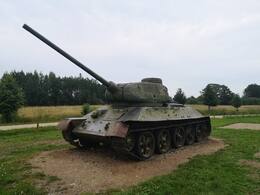
The museum is located in More, on the side of the V319 motorway. It is dedicated to the Battles of More between the Red Army and the Latvian Legion of the German Army in the autumn of 1944. The exhibit includes a mock-up of the battlefield, weapons, awards, soldiers’ uniforms and military equipment. The Battles of More Museum and Memorial Park was established by former soldiers of the Latvian Legion who participated in the Battles of More. The memorial park features trenches, dugouts and battlefields. The battles in the More area were only part of a large-scale operation of the Red Army Baltic Offensive involving a total of 900,000 soldiers and large numbers of military equipment units. A part of the German Army fortification system where Latvian legionnaires prevented the Red Army’s attempt to break out to Riga was located in the vicinity of More. This allowed the German Army to withdraw its forces from Estonia and avoid defeat. Red Army leaders expected the enemy’s resistance near More to be short-lived and stubbornly continued its unprepared and uncoordinated attacks, suffering heavy losses. Local advantages and the combat capabilities of the Latvian legionnaires played a significant role in the subsequent course of the war. More is home to the Latvian Legionnaires’ Brothers’ Cemetery and a Red Army Soldiers’ Cemetery.
Mores Battle Memorial Park
The park was created in the former battle place in the Centre of More Parish where during the first two weeks of 1944 in the Second World War, major battles were held, holding thestrategically created defence line and preventing the Red Army from breaking through to Riga, thus affecting the further course of history.
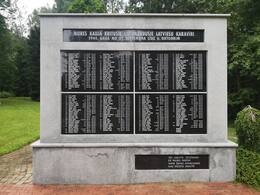
You can see fragments of wartime relics and bunker sites here. A commemorative stone created by the sculptor H. Sprincis, as well as a Memorial Plaque with 186 soldiers names carved into the granite, are located in the Battles of More Memorial Park.
Places to eat
Cafe "Vēja Ligzda", Ropaži, Rigas Street 13