



On the Path to Freedom: Soldiers' Memorial and Battle Sites in Kurzeme
Day 1.
85 km
“Airites” - Skrunda – Liepaja - Karosta
Practical info
Excursions and educational programs must be booked in advance and a specific time must be reserved.
- Start : O. Kalpaks Museum “Airītēs”.
- Finish : Karosta.
- Duration : 5 – 6 hours.
- Educational programs : in Redan ( “Mystery Island Redan” , “Redan” ), in Karosta prison ( Spy game “Escape from the USSR” , show “Behind Bars” , excursion with show elements , etc.).
Sights
Oskars Kalpaks Museum and Memorial Site “Airītes”
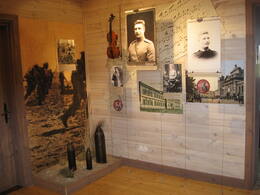
The Oskars Kalpaks Museum and Memorial Site Airītes is located between Saldus and Skrunda near the A9 highway. The exhibit has extensive information about Colonel Oskars Kalpaks and his battalion, and shows the history of the Latvian National Army and the memorial site Airītes. The exhibit reveals Colonel Oskars Kalpaks as a personality, as a soldier and as a fighter for Latvia's independence. Audio logs in Latvian, English and German are also available as part of the exhibit. They emphasize the importance of the historic events of 1918/1919 in the protecting the statehood of Latvia. The museum building has been restored.
Entry is free; guided tour – for a fee. The complex has a recreation area, a park, an obstacle course, it is possible to take various classes, and there is a seminar hall for up to 30 people.
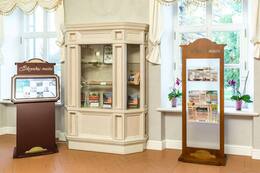
Skrunda Manor and exposition of Skrunda locator
Skrunda manor has an exhibit about the Skrunda radar (Skrunda radio location station) and the activities of the Latvian Popular Front in Skrunda. The Skrunda radio location station nicknamed ‘Kombināts’ (The Plant) was a USSR missile early warning system in the western sector. Location ‘Skrunda-2’ was a special town (в/ч 18951) created 5 km from Skrunda in the direction of Kuldīga for the needs of the USSR military. The radar station Dņepr operated from here and a new, more modern station Darjal was being built. Construction was stopped and the radar station Darjal was blown up on 4 May 1995. In compliance with an international agreement the radar station Dnieper was shut down on 31 August 1998.
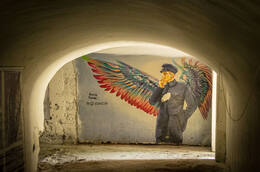
Redan of Karosta Fortifications
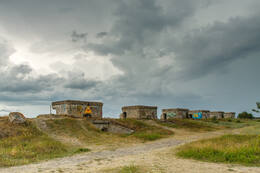
Redans, or Redana Fort, is located in Karosta, 14. novembra Street, about 1.5 km from the Northern Forts, in the nature reserve "Tosmare".
Historically, redans were elements of fortifications where longer sections of fortress walls were divided into shorter sections by building V-shaped positions facing the enemy, which allowed for better protection of the fortification wall. Karostas Redan is a late 19th century Liepaja Sea Fortress, projecting towards Lake Tosmare. As the fortress lost its fortress role, the fortifications and forts around it were partially blown up and rendered unusable. However, Redan remained almost intact.
In November 1919, after the failure at Riga, Pavel-Bermont Avalov's forces launched an intensive attack on Liepaja. The battle was also fought at Redan, where 80 soldiers of the Liepaja Military Port Commandant's Office under the command of Lieutenant Commander Radzins fought. In a swift attack on 14 November, the Bermontians managed to take Redan. This was followed by a counter-attack by Latvian troops and Redan was retaken.
In June, July and August, a knowledgeable guide will be waiting at Redan every day from 11.00-17.00, ready to tell you more about Liepāja Fortress and the historical events in the Karosta.
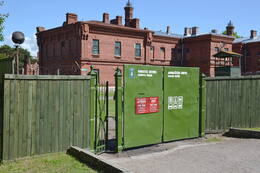
Karosta Military Prison
Karosta Prison is a unique historical and tourist attraction in Liepāja, allowing visitors to learn about the more than century-old history of the military prison and the fates of those imprisoned there. The building was built around 1900 and served as a place of disciplinary punishment for military personnel until 1997.
From the very beginning, it has been a gloomy place for breaking people's destinies and suppressing free spirits. Various unexplained phenomena have been observed in the prison - knocking footsteps, electric bulbs unscrewing themselves, closed cells opening, and apparent images appearing in the corridors.
Today it is an important cultural and historical object that allows you to get to know the military history of Latvia and preserves memories of people's destinies at different stages of history. This is not an ordinary museum tour - it is a story about people's destinies and the harsh reality of history. During the tour, you have the opportunity to see the prison, which has remained almost unchanged since the times of the Tsar. Hear stories about the history of Karosta and unusual events from the daily lives of prisoners. Enter the cells and the solitary confinement, looking into the darkest places of the prison. Get to know the exhibitions about World War II, the Kurelians and the Soviet era.
Karosta Prison is not just a tourist attraction – it is a living witness to history.
Liepāja Northern Fort and Battery Nr.1 in Karosta
The Northern Forts are the best known and visually most impressive part of the Liepāja Fortress. Built by the Russian tsarist army in the late 19th century, their historical name is Fortress Battery No 1.
In November 1908, less than 10 years after its construction, the Liepāja Fortress ceased to operate, because its construction was acknowledged as a strategic mistake. Some of the cannons were dismantled and taken to the Kaunas Fortress in Lithuania, while others were remelted. Fortification structures were detonated twice in an attempt to destroy the fortifications. Elements surviving to the present day include artillery batteries not fully destroyed in the explosions and underground structures. Just like the Karosta, the Northern Forts were a closed military territory during the Soviet occupation. Visitors to the Northern Forts should be very careful. As in other places on the Latvian coast, the steep shore of the Baltic Sea in the Karosta is dangerous due to potential coastal landslides. Therefore, it is not allowed to walk under the ruins of the forts.
In the northern part of the fortress was located one of the four coastal defence batteries, Battery No.1. The battery was to house six 6-inch (152 mm) guns of the 1892 model of the Canet system, six 11-inch (280 mm) guns of the 1887 model and two 57 mm Nordenfeld anti-ship guns. Only the guns of the Canet system had a long enough firing range to withstand possible shelling by the German Navy. Thus, at the time of the liquidation of the fortress, the armament was only partially installed.
Places to eat
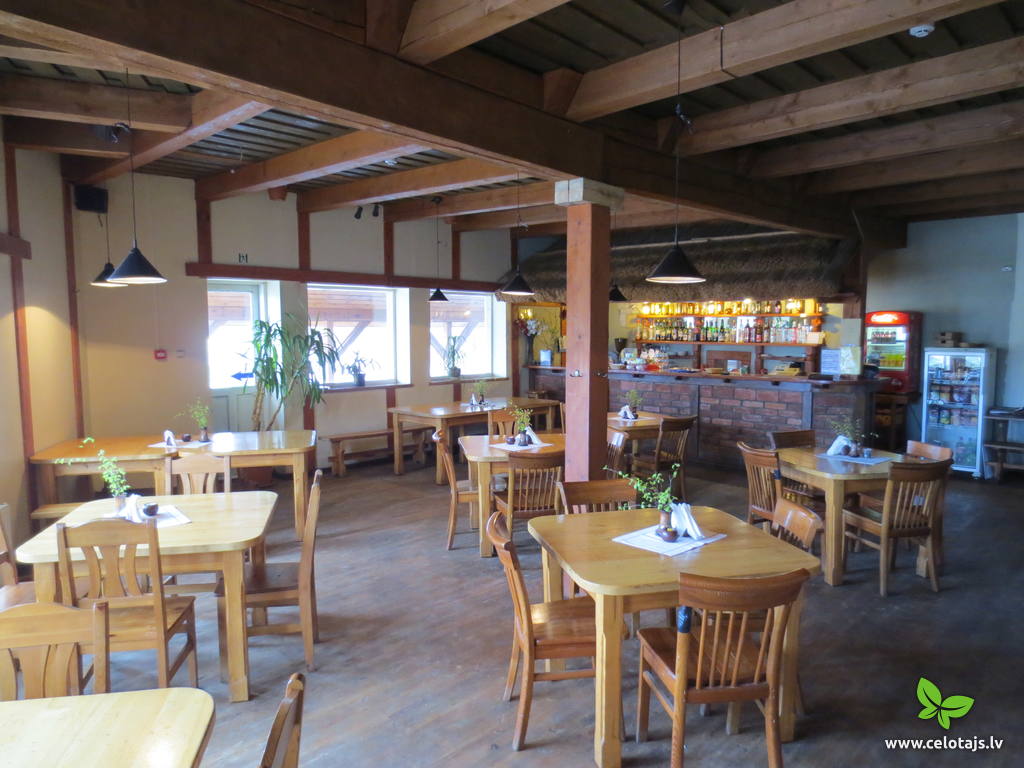
The “Jumis” café
The "Jumis" café is on the side of the Rīga-Liepāja highway (A9). The interior is finished in wood.
Latvian cuisine: Cottage cheese with herring and soured cream, farmer’s breakfast, mushroom soup, pork cooked in onions, sautéed liver, homemade steak haché, grilled pork ribs, potato pancakes, stuffed pancakes.
Special foods: The “Jumis” pot of ham.
Places to eat in Liepaja: https://liepaja.travel/est-un-izklaideties/kur-paest/