


Blizzard of Souls on the Plain of Tireli
Day 1.
22 km
Christmas Battle Memorial Site at the Antiņi Brothers Cemetery – Machine Gun Hill – Christmas Battle Museum “Mangaļi”
Practical info
The area around the Mangaļi houses has poor mobile coverage. In the spring, when the snow melts, the roads can be difficult to drive on. Excursions and educational programs must be booked in advance and a specific time must be reserved.
- Start : Christmas Battle Memorial Site at the Antiņi Brothers Cemetery.
- Finish : Christmas Battle Museum “Mangaļi”.
- Duration : 4 – 5 hours, if supplemented with a hiking route, then 6 – 8 hours.
- Additional options : A circular hiking route begins at “Mangaļi” - an educational trail approximately 7 km long, which leads along easy-to-walk, marked forest roads, trails and wooden bridges, offering 18 informative stopping points. The trail can be walked in different seasons, except when there is deep snow. The route takes about two to three hours to complete.
Length (by bus) : About 22 km.
Educational programs : “ Latvian Rifleman in the Christmas Battles ”.
Sights
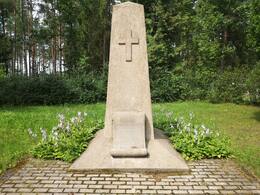
Christmas battles memorial at Antinu Brethren Cemetery
Located in Babīte district, on the side of the road near the former Antiņi house and the old medicine warehouse.
The Antiņi or Tīreļi Soldiers' Cemetery was established during World War I. The area was home to defensive positions of the Russian Empire Army. In 1917, during the Christmas Battles, the headquarters of the 5th Zemgale Latvian Rifle Regiment, a hospital with a medicine warehouse, were located nearby.
In 1917, on the night of January 5-6, under the illumination of eight huge bonfires, 105 fighters of the 5th Semigallian Latvian Rifle Regiment were buried with military honors. They fell in battles against the German army or died of wounds. The burial ceremony was led by the regiment's commander, Jukums Vācietis. In later years, soldiers from other units of the Russian army were also buried in the cemetery. In 1925, a monument by architect Eižens Laube was unveiled in the cemetery, and the territory was landscaped. Information about 3,800 soldiers buried in the cemetery is found in many places, but it should be considered unlikely and unverified.
Latvian soldiers’ former medical warehouse
Located in Babīte district, near the Antiņi soldiers' cemetery and the renovated trenches.
During World War I, the defensive positions of the Russian Empire's army were located in this area from 1915. In 1917, during the Christmas battles, the headquarters of the 5th Zemgale Latvian Rifle Regiment and a hospital with a medicine warehouse were located near the Antiņi house, which was headed by the prominent Latvian military doctor Pēteris Snīķeris.
During the Christmas battles, Latvian riflemen attacked German army units in particularly harsh and unfavorable conditions. The injuries sustained in the battles were of various kinds - gunshot wounds, contusions and traumas, as well as frostbite. Timely medical assistance had to be provided to thousands of Latvian soldiers. It was organized so that the wounded could receive care as quickly as possible. Unarmed paramedics operated on the battlefield, providing first aid and taking the wounded out of dangerous places. Dressing points were set up near the battlefields, where care was continued and triage was carried out. More seriously wounded soldiers were evacuated to infirmaries or hospitals by carts and cars. Cemeteries were established near the infirmaries, where those who died from injuries were buried.
Today, you can visit the old medicine warehouse. Nearby is the Antiņi soldiers' cemetery, as well as reconstructed World War I trenches and dugouts. The environment is suitable for walks in the forest, revealing vivid evidence of military heritage.
Nordeķi – Kalnciemas dune ridge
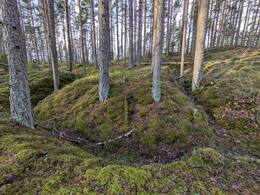
The approximately 30 km long dune ridge, which can be traced in nature from Iļģuciems (with minor interruptions) to Tīreļi today, is one of the most impressive landforms of the Seaside Lowlands, which is rarely perceived as a single natural formation. The dune was formed on the shores of one of the last Baltic glacial lakes, as the waters of the Baltic glacial lake receded. The dune ridge consists of two parallel 50–100 m wide dune belts. They are usually 6–10 m high, but their highest points reach 16–19 m above sea level. In the vicinity of Kleisti, Imanta and Beberbeķi, the beautiful pine forests covering the dunes are a popular place for walking, recreation and sports, and in winter - cross-country skiing. The part of the dune in the vicinity of Lāčupīte is associated with the events of the Bermontiades. On the dune in Pārdaugava is the Lāčupe or Lācaras cemetery . Between Pinkie and Babīte, the Beberbeķi Nature Park has been established to preserve the dunes. The western part of the Nordeķi-Kalnciemas dune ridge, approximately 10 km long, is called the Long Dune . Near the Long Dune (south of Trenči) is the Antiņi Brothers Cemetery , the Latvian Riflemen's Hospital medicine warehouse , and the renovated Latvian Riflemen's dugouts . South of the Long Dune is a massif of swampy forests and marshes, including Rāvājs and Maztīrelis . Opposite Maztīrelis is Ložmetējkalns with a viewing tower and a resting place and the so-called German rampart section . Even further west, near the Long Dune are the Latvian Riflemen Brothers Cemetery and the Piķi Brothers Cemetery. With greater or lesser interruptions, trenches are visible almost along the entire Nordeķi-Kalnciemas dune ridge. In the southwestern part of the Long Dune – in the swampy forests that adjoin it from the south, bomb craters from the First World War are visible. Along the entire length of the Long Dune (south of it), small forest paths run, suitable for walks and longer hikes – a great opportunity to explore the sites of the First World War battles.
Ložmetējkalns (Machine Gun Hill) in Tīreļpurvs Bog
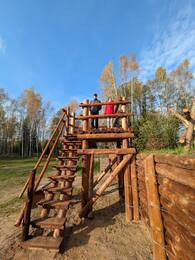
Ložmetējkalns is located in Valgunde Rural Territory, Jelgava Municipality, close to the A9 motorway. It is the site of a World War I battle and the only cultural heritage conservation site of national importance in Latvia. Ložmetējkalns is located on Garā Kāpa Dune, which is a part of the Nordeķi-Kalnciems dune ridge. The name originated at a time when it was the site of impregnable fortifications of the German Army, which was defended by heavy machine-gun fire.
The Christmas Battles are one of the best-known and most dramatic events of World War I in the history of Latvia. In 1917, the units of Latvian Riflemen and Siberian riflemen of the Russian Army attacked and took Ložmetējkalns, capturing at least 600 enemy troops and valuable trophies. The riflemen believed that they were the ones who deserved the honour of captors of the highlands.
The area around Ložmetējkalns Hill is home to commemorative marks and other evidence of the battles that took place here. Every year, in January, memorial events are held in the surroundings of Ložmetējkalns to remember the Christmas Battles. Nowadays, Ložmetējkalns has become a symbol and a memorial site dedicated to the heroism of Latvian Riflemen. A 27-metre-high observation tower offers panoramic views of the site of Christmas Battles.
Christmas Battle Museum
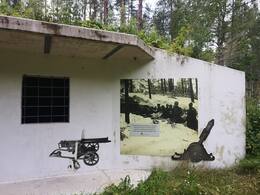
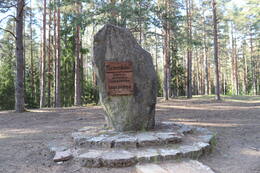
The museum is located in “Mangali” house, Valgunde Rural Territory, Jelgava Municipality, and it is a branch of the Latvian War Museum. It was unveiled in 2005 at the site of the Christmas Battles that occurred during World War I. Unique World War I fortifications still remain at the battle sites. The open-air exhibition of the Christmas Battle Museum reconstructs a section of the fortification system – the trench shelter and part of the first line of German defence – the “German rampart”, which is the only object of this kind in the Baltic states.
The Christmas Battles are one of the best known and most dramatic events of World War I in Latvia. They are an event of special importance in Latvian military and cultural history. Intense fighting took place for six days, leading to heavy casualties. The battles are mainly associated with the attack of Latvian Riflemen against the German Army units, which took place in particularly severe and unfavourable winter conditions. This is an unprecedented case of a major combat operation launched without artillery support.
Today, the museum artefacts found at the sites of the battle are on display. The indoor exhibition is open at certain times, while the exhibition of outdoor fortifications is open every day. Tourist routes and nature trails have been created in the surrounding area.
German rampart
A "German Rampart" is a defensive fortification built by the German army and used during the Christmas Battles of 1916. It consists of an earthen rampart reinforced with wooden structures and barbed wire, forming a shield against attack. This type of fortification was common during World War I to strengthen front lines and protect troops.
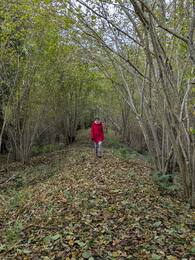
The "German Wall" can be viewed by following a 7 km long hiking route, which begins at the Mangaļi House - the Christmas Battle Museum. In the vicinity of the museum - in the nearby forests, a natural trail runs along the "German Wall", which is also managed, that is - easily accessible for pedestrians. It should be taken into account that the "German Wall" is an open-air object - there may be a fallen tree, the terrain is uneven. The "German Wall" also extends further north and crosses the Maztīreļa Bog, but in this area it is overgrown and is more suitable for "adventure" and "expedition" seekers, not "Sunday walkers".
Places to eat
Bakery and tavern LĀČI
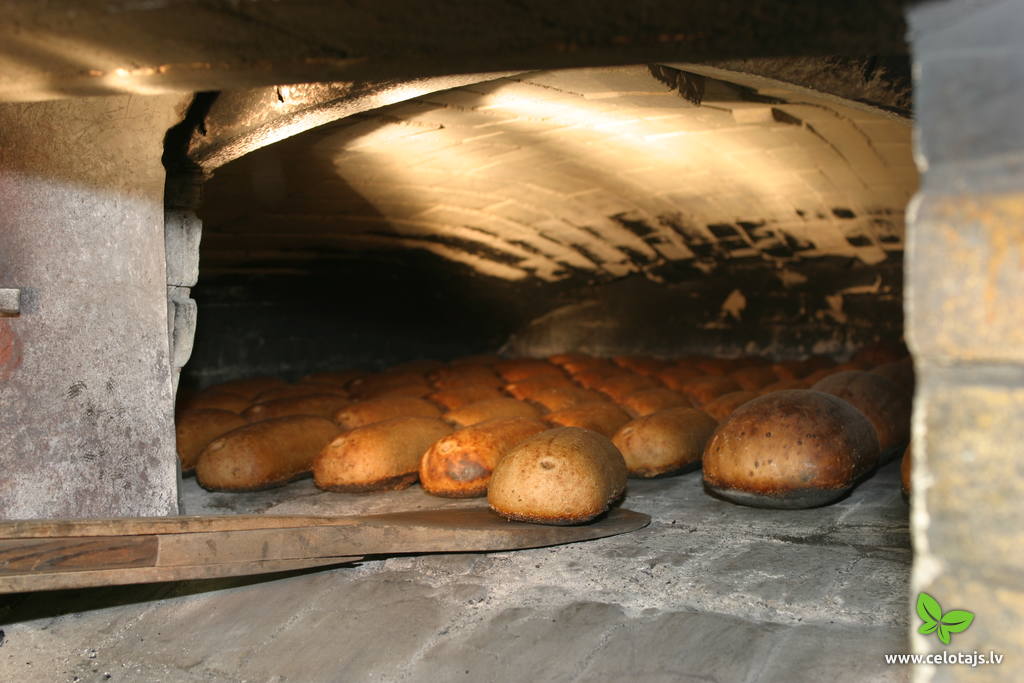
Lāči brand bread is popular in Latvia and abroad, because the bakery uses ancient mastery and skills. Baking traditions are supervised by 2 master bakers and 4 journeymen. You can take a tour of the bakery, knead and bake your own little loaf of bread, have lunch at a cosy saloon and purchase the bakery’s products. Lāči uses its own ingredients for its dishes, combining them with seasonal products from local farms. The bakery shop offers a wide range of products from bread to confectionery.
Latvian cuisine: Cream of mushroom soup, various hot potted dishes, bread soup, baker’s dessert.
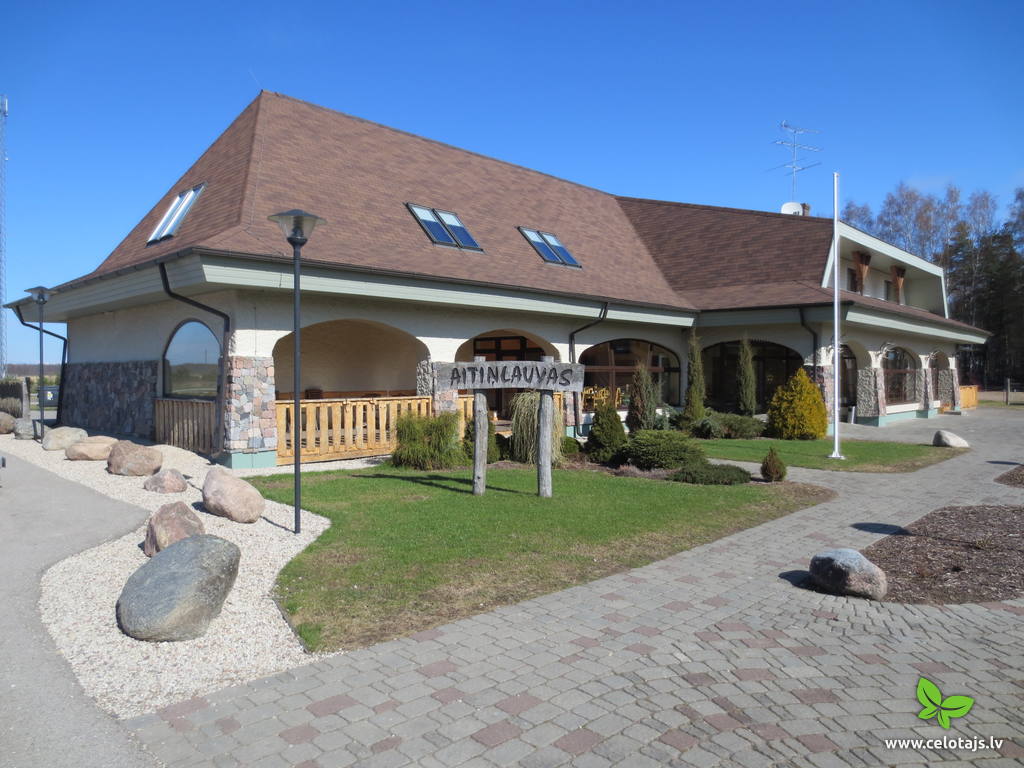
The “Aitiņlauvas” saloon
The saloon is on the edge of the Rīga-Liepāja highway (A9) at the 22 km road marker. Most of the dishes are based on ingredients from the forest. The interior design is based on hunting, and there is a paddock of wild deer alongside the restaurant.
Latvian cuisine: Roast buck, roast wild boar, venison steak, roast lamb, stuffed river trout.