



The Sites of Battles of Latvian and Lithuanian National Partisans – the Forest Brothers
Day 1.
70 km
Jekabpils - Akniste
Practical info
- The itinerary is intended as a guide - how to optimally travel a region or country, or two countries, with the aim of getting to know their military heritage;
- The driver must plan for himself - how many of the recommended objects and places he can explore in one day;
- Before traveling, you should check the opening hours of sightseeing places (museums, collections, fortifications, etc.);
- In places where advance registration is required (local guides, private collections, other), a visit must be booked, specifying the date and time. If the trip is canceled, the registered places must be informed;
- Accommodation must be booked in advance. Accommodation may be unavailable during the summer season, especially on the coast. Some catering establishments may not be open during the winter season;
- Choose not only summer for your trip, but also other seasons;
- The Latvian-Lithuanian-Estonian borders can be crossed by road freely without restrictions and at any time of the day. When entering from one country to another, you must have an ID card or passport with you;
- Visit tourist information centers where you can get additional information, brochures, and maps.
Sights
Memorial stone to Rihards Pārups' national partisan group
Located on Riga Street near the Krustpils Lutheran Church.
On September 22, 1996, a memorial stone was unveiled in Krustpils to Rihards Pārups and the national partisan group he led. The memorial stone was created by sculptor Ilgvars Mozulāns, and its creation was financially supported by the Speaker of the Saeima, Ilga Kreituse. This event was organized by the board of the Latvian National Partisan Association.
To the national partisans of Rihards Pārup,
who were murdered by a Cheka special group
Richard Parups (1914 – 2nd July 1946)
Group commander
Richard Stulpins (1923 – 1946. 2. VII)
Alberts Avotiņš (1912 – 2 July 1946)
Erik Juhna (1928 - 2 July 1946)
Aleksandrs Lācis (1919 – 2 July 1946)
Peter the Bear (1921 – 1946, 2nd July)
Jānis Ēvalds Zālītis (Āboliņš) (1911 – 1946, 2nd July)
Siegfried Bimstein, Theodore Schmidt (… – 2 July 1946)
Uldis Šmits (... - 1946. 2. VII)
Peter Lazdans (1926 – 1947)
Erik Konval (1929 – 1947. VI)
Niklāss Ošiņš (1908 – 12 October 1954) – executed in Riga
Alberts ħiķauka (1911 – 1972 II) – imprisoned in the Mordovian camp
Rihards Pārups was born on June 11, 1914 in “Kaķīši” of Krustpils parish. During World War II, he was a sergeant of the anti-tank division of the 15th Latvian division. He participated in national partisan operations in the Jēkabpils and Madona areas and was a member of the National Resistance Movement, the leader of a unit in the Jēkabpils and Madona areas. Rihards Pārups fell in battle with Cheka troops on July 2, 1946 in Vietalva parish. Unfortunately, the place of burial is unknown. A memorial plaque has been installed in the Riga Brothers' Cemetery. In the autumn of 1945, a national partisan group was formed in Jēkabpils district, led by R. Pārups. During its short existence, it participated in more than twenty armed clashes with units of the then Ministry of the Interior. The report of the Cheka Colonel Kotov to the Riga leadership states that the activities of the Soviet government in the Jēkabpils and Madona districts were effectively paralyzed during this time as a result of the group's activities. The national partisans led by R. Pārup found and destroyed several lists of deportations, thus saving the lives of many people. The leadership of the Security Committee, unable to destroy the national partisan unit in open battle, infiltrated it with four people from the Cheka special group, who shot ten partisans of the unit, including R. Pārup. In 1947, two more were shot near Jaunkalsnava, and in 1951 — one member of this unit. After twenty-five years of hard labor in a Mordovian camp, the fourteenth partisan of the group led by R. Pārup died a few days before liberation.
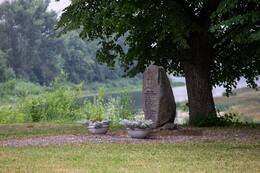
Memorial site to the members of the P. Prauliņš national partisan group and the site of the bunker
Pēteris Prauliņš (1911-1949) Birži parish national partisan group was part of the group led by Mārtiņš Pokļevinskis (1902-1951). The group carried out several partisan actions, in which Soviet collaborators were punished and food and property of the economic institutions of the occupation authorities were requisitioned. P. Prauliņš's group partisans did not observe sufficient conspiracy, many persons visited their settlement, which created an opportunity for betrayal. The lack of military experience was one of the shortcomings of the partisan armed movement.
P. Prauliņš's partisan group in the Kalna forest in the Birži parish was destroyed on May 16, 1949, during an operation by the Ministry of State Security of the Latvian SSR, in which military units also participated. The forest brothers had set up a bunker with perimeter defense, which was well camouflaged and was located at an undetermined height in a swampy area. The partisans fiercely resisted the Cheka troops for at least 40 minutes, but the entire group fell: Pēteris Prauliņš, Artūrs Bružuks, Jānis Kalvāns, Edvīns Slikšāns and Francis Skromanis. The shot forest brothers were thrown near the parish house, but their remains were later buried in nearby gravel pits. Irma Bružuka was seriously wounded, who was captured and died on May 17 in Jēkabpils Hospital. She was buried outside the cemetery, but when the cemetery was expanded after Latvia regained its independence, a monument was placed on her grave.
A memorial stone to the partisans of P. Prauliņš' group in Kalna parish was consecrated in November 1998. The site of P. Prauliņš' bunker is located in section 4 of Vidsala 99th block, Kalna parish. The stone on which P. Prauliņš sat has been preserved.
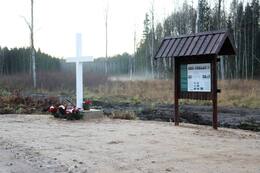
Memorial site at the site of the national partisan battle of February 13, 1945 in the Diamond Forest of Kalna Parish
The memorial site was created on the regional road P74 Siliņi - Aknīste, 12 kilometers from Aknīste, turning onto the Latvian State Forest "Žagari ceļa".
The vast forest massif of the northern part of Elkšķi parish already at the end of the summer of 1944 became a gathering place for people who were preparing for armed struggle against the Soviet occupation power. At the end of 1944, national partisan groups began to form in the Aknīste area. A suitable place for establishing a partisan camp was the Diamond Forest , which was located on the southern edge of the Elkšķi large forest, near the Aknīste Great Swamp. There, less than 10 kilometers from Aknīste parish, the national partisans created three winter bunkers for wintering. Communications of the men gathered in the forest were ensured with the support of nearby houses - Baltimores, Gargrodes, Līči, Priedes, Krūmi and residents of other houses, neighbors and partisans.
The partisan battle with the soldiers of the Latvian SSR Ministry of State Security in the Diamond Forest took place on February 13, 1945. The Chekists, having taken hostages, drove them forward to reveal the partisan bunkers. The Forest Brothers, seeing the danger, opened fire, not sparing the hostages. 10 representatives of the Soviet occupation troops, eight national partisans and four hostages fell in the battle. Despite the losses of the Forest Brothers, the Chekists failed to capture the partisan bunkers. The surviving partisans waited for darkness and left the settlement. The Chekist soldiers wounded in the battle, groaning, were unable to leave the battlefield. After this battle, which can be considered the forest brothers' first "baptism of battle", the partisans felt like brothers and the rifle seemed more precious than anything, like the only reliable savior.
The White Cross and information stand in the Diamond Forest were installed on Lāčplēsis Day - November 11, 2022. The creation of the memorial site was supported by the Jēkabpils regional government, the association "Tēvzemes sargi" and the Latvian State Forests. The author of the content of the information stand is historian Haralds Bruņinieks.
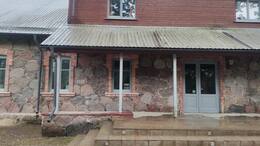
Former Susēja parish house, site of attack by national partisans on July 7, 1945
Today, the former Susėja parish house houses the Sanssouci residence center. The facade of the building still bears traces of the attack left by bullets fired by national partisans during the attack on July 7, 1945.
The former Susēja parish house, which at that time functioned as the local executive committee of the Soviet occupation authorities, suffered an attack by the Sēlija national partisans on July 7, 1945. The attack on the Susēja executive committee was part of a wider national partisan campaign and took place simultaneously with the attacks on the Vilkupe butter factory and the house of the destroyer Kaunackas.
According to the instructions of the commander of the Susėja national partisan group, Albert Kaminskis (1920-1946), the Forest Brothers were to destroy the security of the local executive committee, take weapons, militia uniforms, documents and damage telephone communications. About 17 Forest Brothers under the leadership of the Lithuanian partisan commander Jozas Kuveikis participated in the attack on the Susėja executive committee. The battle lasted 15-20 minutes, one Lithuanian partisan fell during the firefight, and on the other side - a fighter of the destroyer battalion Jānis Kakarāns. During the firefight, the windows of the executive committee were broken and the telephone was damaged.
The second attack on the Susēja Executive Committee took place on July 16, 1945, when a prolonged firefight took place between the Forest Brothers and fighters of the destroyer battalion who had sought refuge in the Executive Committee building. During the battle, a group of Soviet soldiers came to the aid of the latter, who opened machine-gun fire from the flank and forced the partisans to retreat. At least five Forest Brothers and five destroyers fell in the battle. The attacks on this administrative object of the occupation power confirmed the nature of the armed resistance of the partisan war and were a warning about the people's resistance to the Soviet occupation power.
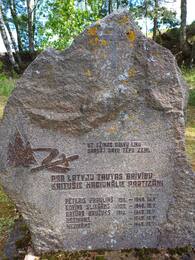
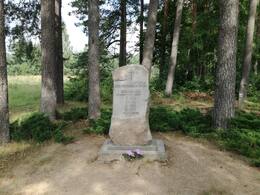
Monument to the National Partisans of Susėja
The Susēja national partisan unit was formed from smaller fragmented forest brotherhood groups, because initially there was no leader who could unite them. For a short time, Artūrs Grābeklis tried to coordinate the activities of the Susēja partisans, and later Markejs Gorovņovs, who fell in the winter of 1945. The Susēja national partisan unit was strengthened after the former legionnaire Alberts Kaminskis arrived in Courland, Sēlija, after the general capitulation of Germany. He established stricter discipline and united smaller groups for a joint fight against the Soviet occupation power. Cooperation was also established with forest brotherhood groups from nearby parishes and areas, especially with the Gārsene group and Lithuanian partisans who had settled on the border of Lithuania and Latvia.
In the early stages of the armed movement, it is clear that the Forest Brothers were not prepared for attacks, unable to occupy either the Kaunacki farmstead or break into the building of the Susėja executive committee. The partisans suffered losses and were unable to resist the Cheka troops for a long time, and the main method of fighting was to think about retreating in time. There was also a problem with the supply of the partisans. Despite the existing difficulties, the Susėja national partisan unit was still able to actively resist the Soviet occupation power in the first post-war years. This partisan group ceased to exist after the fall of its commander A. Kaminskis on May 14, 1946. This was also followed by the legalization of several Forest Brothers, as well as joining other partisan groups.
The monument to the national partisans of the Susēja company was opened on November 11, 1997, at the initiative of Gunārs Blūzmas, a researcher of the history of the national partisans of Sēlija. Next to the names of the fallen Susēja national partisans, a text is carved into a roughly worked boulder under the sign of a cross: “On the head of a hedgehog, I ordered you to protect your father’s land.” The monument mentions those who fell in the attack on the Susēja executive committee on July 16, 1945 - Jānis Grābeklis (1923-1945), Ādolfs Rācenis (1919-1945), Broņislavs-Arvīds Bīriņš (1919-1945) and Edgars Ērglis (1920-1945), and later the names of the murdered Līna Kaminska (1917-1945) and Albert Kaminskas (1920-1946) were added. The monument is missing the names of Arnolds Dombrovskis (1923-1945) and other national partisans who were active in the Susēja national partisan groups and who fell in 1945-1946.
Places to eat
- In Jēkabpils, see visit.jekabpils.lv
- Cafe "Kalniņa" in Aknīste
Places to stay
- In Jēkabpils, see visit.jekabpils.lv
- Liepas Guest House & Catering services, Aknīste, https://www.celotajs.lv/lv/e/liepasalksnite